
Life, 1900-01-18 · page 6 of 20
Life — January 18, 1900 — page 6: what you’re looking at
What you’re looking at
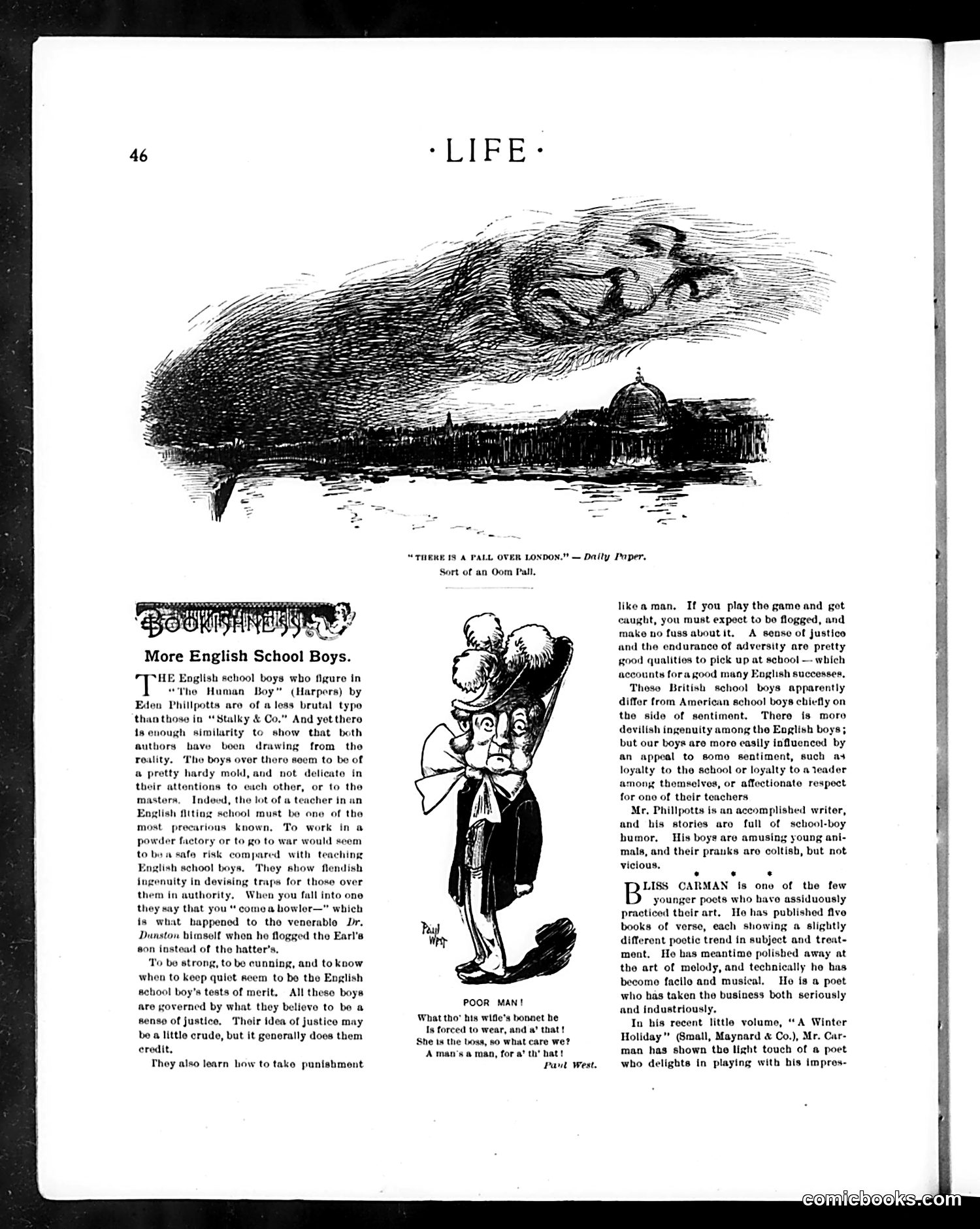
This page satirizes English school boys through a caricatured figure labeled "Poor Man!" The cartoon depicts a stern, thin schoolmaster or headmaster carrying a cane—the symbol of corporal punishment in British schools. The accompanying text explains that English schoolboys endure harsher discipline than American counterparts, showing "devilish ingenuity" in resisting authority. The joke plays on the contrast between the boys' cleverness and their vulnerability to punishment. The caption references a wife's bonnet and "a man's a man, for a' that"—likely quoting Scottish poet Robert Burns to mock the schoolmaster's authority over boys, ironically suggesting even strict discipline cannot diminish their essential humanity or spirit.
📄 Transcribed text from this page (OCR, searchable)
Machine-transcribed from the original scan — historical spelling and the odd misread are preserved.
ok More English School Boys. SHE English school boys who figure in T “The Human Boy" (Harpers) by Eden Phillpotts aro of a less brutal typo than those in “Stalky & Co.” And yet thero is enough similarity to show that both authors bave been drawing from the roality. ‘Tho boys over there seem to be of a pretty hardy mold, and not delicate in their attentions to each other, or to the mastera, Indeed, the lot of a teacher in an English fitting school must be one of the most precarious known, To work in a powder factory or to go to war would seem to by asafe risk compared with teaching English school boys, They show flendish ingenuity in devising traps for those over them in authority, When you fall into one they say that you “ comea howler—" which is what happened to tho venerable Dr. Dunston bimself whon ho flogged the Earl's son instead of the hatter’s, ‘To be strong, to be cunning, and to know when to keep quiet seem to be the English school boy’s tests of merit, All these boys are governed by what they believe to be a senso of justice, Their idea of justice may be a little crude, but it generally does them credit, They also learn how to take punishment “THERE IS A PALL OVER LONDON.” — Daily Paper, Sort of an Oom Pall, POOR MAN! What tho’ his wife's bonnet he Is forced to wear, and a’ that! She ts the boss, 80 what care we? A man’s a man, for at th’ hat! Paut west. likea man. If you play the game and got caught, you must expect to be flogged, and make no fuss about it. A sense of justice and the endurance of adversity aro pretty good qualities to pick up at school — which accounts fora good many English successes, These British school boys apparently differ from American school boys chiefly on the side of sentiment. There is moro devilish ingenuity among the English boys; but our boys are moro easily influenced by 4n appeal to somo sentiment, such as loyalty to the school or loyalty to a teader among themselves, or affectionate respect for ono of their teachers Mr, Phillpotts is an accomplished writer, and bis stories aro full of school-boy humor, His boys are amusing young ani- mals, and their prauks aro coltish, but not vicious. . . LISS CARMAN {8 ono of the few younger pocts who havo assiduously practiced their art. Ho has published five books of verse, each showing a slightly different pootic trend in subject and treat- ment. Ho has meantime polished away at tho art of molody, and technically ho bas become facilo and musical. Ho is a poet who has taken the business both seriously and industriously. In his recent little volumo, “A Winter Holiday” @mall, Maynard & Co.), Mr. Car- man has shown the light touch of a poet who delights in playing with bis impros-