
Life, 1899-09-14 · page 13 of 20
Life — September 14, 1899 — page 13: what you’re looking at
What you’re looking at
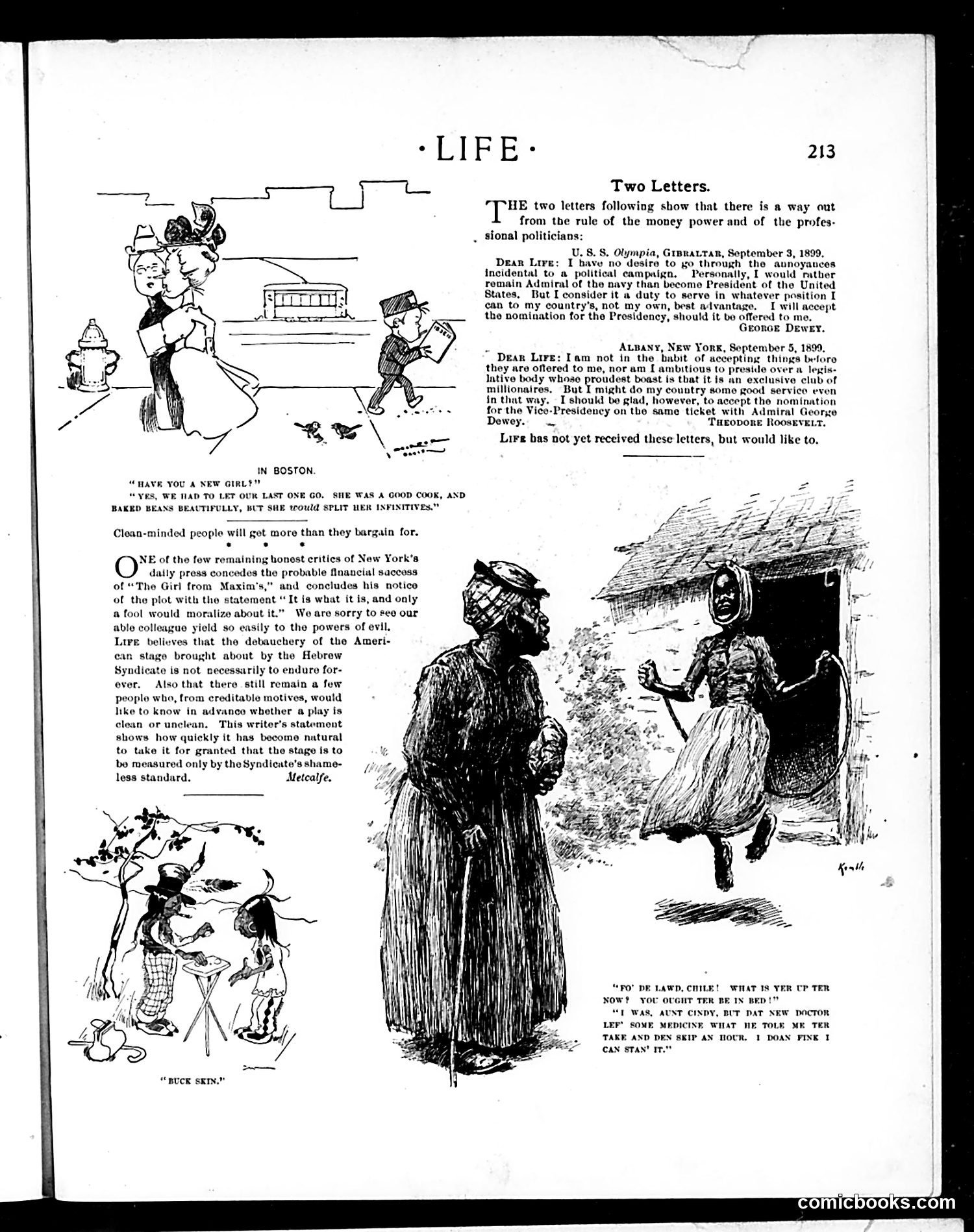
This page contains three satirical items from a 1899 American weekly: **Top cartoon** mocks Boston's pretensions: a servant is dismissed for being an excellent cook who nonetheless commits the social sin of splitting infinitives—a grammar rule. The joke: Boston values rigid linguistic propriety over practical competence. **Middle section** critiques New York theater's moral decline, blaming the "Hebrew Syndicate" (a reference to theater producers perceived as Jewish) for degrading stage standards. The author laments that critics accept immorality as inevitable rather than demanding clean entertainment. **Two Letters** parody political ambition. Admiral George Dewey (a celebrated Spanish-American War hero) claims reluctance about a presidential nomination, while Theodore Roosevelt similarly feigns hesitation about the vice-presidency—both transparently angling for these positions while performing false modesty about accepting them. **Bottom cartoon** uses racist dialect to show a Black child taking medicine that prevents sleep, unable to "stan' it"—a crude joke about medication side effects.
📄 Transcribed text from this page (OCR, searchable)
Machine-transcribed from the original scan — historical spelling and the odd misread are preserved.
* LIFE IN BOSTON. “HAVE YOU A NEW GIRLY” “YES, WE HAD TO LET OUK LAST ONE GO. SHE WAS A GOOD COOK, AND BAKED BEANS BEAUTIFULLY, BUT SHE trould SPLIT MER INFINITIVES.* Cloan-minded people will get more than they bargain for. . . . E of tho few remaining honest critics of New York's daily press concedes the probable fnancial saccoss of “Tho Girl from Maxim's,” and concludes his notice of the plot with the statement “It is what it is, and only fool would moralize about it.” We are sorry to seo our able colleague yield so easily to the powers of ev Lire. believes that the debauchery of the Ameri- can stago brought about by the Hebrew Syndicate is not necessarily to enduro for- ever. Also that there still remain a few people who, from creditable motives, would like to know in advanco whether a play is clean or unclean. This writer's statemont shows how quickly it has become natural to take it for granted that the stage is to bo measured only by the Syndicate’s shame- less standard. Metcalfe, “BUCK SKIN.” 213 Two Letters. T= two letters following show that there is a way out from the rule of the money power and of the profes- sional politicians: U. 8. 8, Olympia, Grarattan, September 3, 1899, Dear Lire: I have no desire to go through the aunoyances incidental to a political campaign. Personally, I would ‘rather remain Admiral of the navy than becomo President of the United States, But I consider it a duty to serve in whatever position I can to my country’s, not my own, best advantage. I will accept the nomination for the Presidency, should it be offered to m Geonoe Dewey. Axuany, New York, September 5, 1899, Dear Lire: Tam not in the babit of accepting things before they are offered to me, nor am [ ambitious to preside over a legis- lative body whose proudest boast is that it is an exclusive club of millionaires, But I might do my country some good service even in that way. I should be glad, however, to accept the nomination for the Vico-Presidency on the same ticket with Admiral Georxe Dewey. Tacovone Roosevest. Lirg bas not yet received these letters, but would like to. “FO! DE LAWD, CHILE! WHAT 18 YER CP TER NOW? YOU OUGHT TER BE IN BED!” “TWAS, AUNT CINDY, BUT DAT NEW DocTOR LEF’ SOME MEDICINE WHAT HE TOLER ME TER TAKE AND DEN SKIP AN TOUR. 1 DOAN FINE I CAN STAN! IT."