
Life, 1899-05-25 · page 8 of 20
Life — May 25, 1899 — page 8: what you’re looking at
What you’re looking at
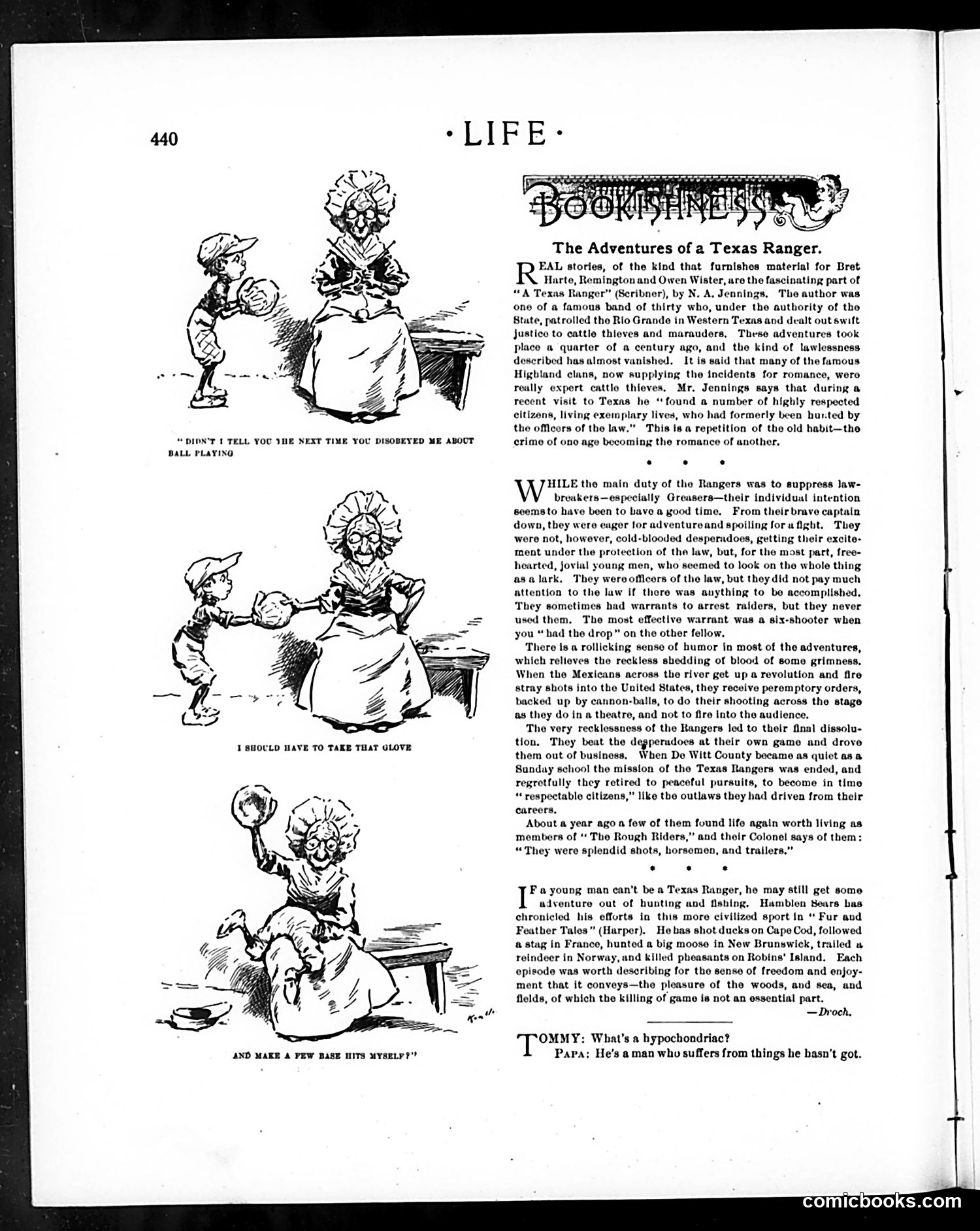
This page features three cartoon panels (left) and an article (right) about Texas Rangers—historical lawmen who patrolled the Rio Grande frontier. The sketches show a child character interacting with an adult woman, depicting humorous domestic situations with captions like "Didn't I tell you the next time you disobeyed me about ball playing" and "I should have to take that quote." The accompanying article describes Rangers as adventurous but ultimately lawless enforcers who suppressed outlaws and cattle rustlers. It humorously notes that when De Witt County became peaceful, Rangers "regretfully retired to peaceful pursuits, to become in time 'respectable citizens.'" The piece celebrates their colorful exploits while gently satirizing their transition to civilian life.
📄 Transcribed text from this page (OCR, searchable)
Machine-transcribed from the original scan — historical spelling and the odd misread are preserved.
The Adventures of a Texas Ranger. EAL stories, of the kind that furnishes material for Bret Harte, Remington and Owen Wister, are the fascinating part of A Texas Ranger” (Scribner), by N. A. Jennings. The author was one of a famous band of thirty who, under the authority of tho State, patrolled tho Rio Grande in Western Texas and dealt out swift justice to cattle thieves and marauders, These adventures took place a quarter of a century ago, and tho kind of lawlessness described has almost vanished. It is said that many of the famous Highland clans, now supplying the incidents for romance, wero really expert cattle thieves, Mr. Jennings says that during a recent visit to Texas he “found a number of highly respected citizens, living exemplary lives, who had formerly been hunted by the officers of the law.” This is a repetition of the old habit—tho “ DIDN'T 1 TELL YOU 1HE NEXT TIME YOU DISOBEYED ME ABOUT crime of ono age becoming the romance of another, BALL PLAYING . . . HILE the main duty of the Rangers was to suppress law- breakers—especially Greusers—their individual intention seomsto have been to have a good time. From theirbrave captain down, they were eugor for adventureand spoiling foruflght. They wore not, however, cold-blooded desperadoes, getting their excite ment undor the protection of the law, but, for the most part, free- hearted, jovial young men, who seemed to look on the whole thing asalark. They were oficors of the law, but they did not pay much attention to the law if thore was anything to be accomplished, They sometimes had warrants to arrest raiders, but they never used them, The most effective warrant was a six-shooter when you “had the drop” on the other fellow. ‘There isa rollicking sense of humor in most of the adventures, which relieves the reckless shedding of blood of some grimness, When the Mexicans across tho river get up a revolution and fire stray shots into the United States, they receive peremptory orders, backed up by cannon-balls, to do their shooting across the stago as they do in a theatre, and not to fire Into the audience. ‘The vory recklessness of the Rangers led to their final dissolu- tion, They beat the degperadoes at thelr own game and drove them out of business, When Do Witt County became as quict as a Sunday school the mission of the Texas Rangers was ended, and regrotfully they retired to peaceful pursuits, to become in time “ respectable citizens,” like the outlaws they had driven from their careers. About a year ago a fow of them found life again worth living as mombors of “ The Rough Riders,” and their Colonel says of them: “They were splendid shots, horsomen, and trailers.” Fa young man can’t be a Texas Ranger, he may still get some adventure out of bunting and fishing. Hamblen Sears has chronicled his efforts in this more civilized sport in “ Fur aud Feather Tales” (Harper). He bas shot ducks on Cape Cod, followed a stag in France, hunted a big moose in Now Brunswick, trailed a reindeer in Norway, and killed pheasants on Robins’ Island, Each episode was worth describing for the senso of freedom and enjoy- ment that it conveys—the pleasure of the woods, and sea, and flelds, of which the killing of game is not an essential part. —Droch. OMMY: What's a hypochondriac? AND MAKE A PEW BASE TITS MYSELF?" Papa: He's aman who suffers from things he hasn't got. comicbooks.com