
Life, 1899-05-04 · page 9 of 20
Life — May 4, 1899 — page 9: what you’re looking at
What you’re looking at
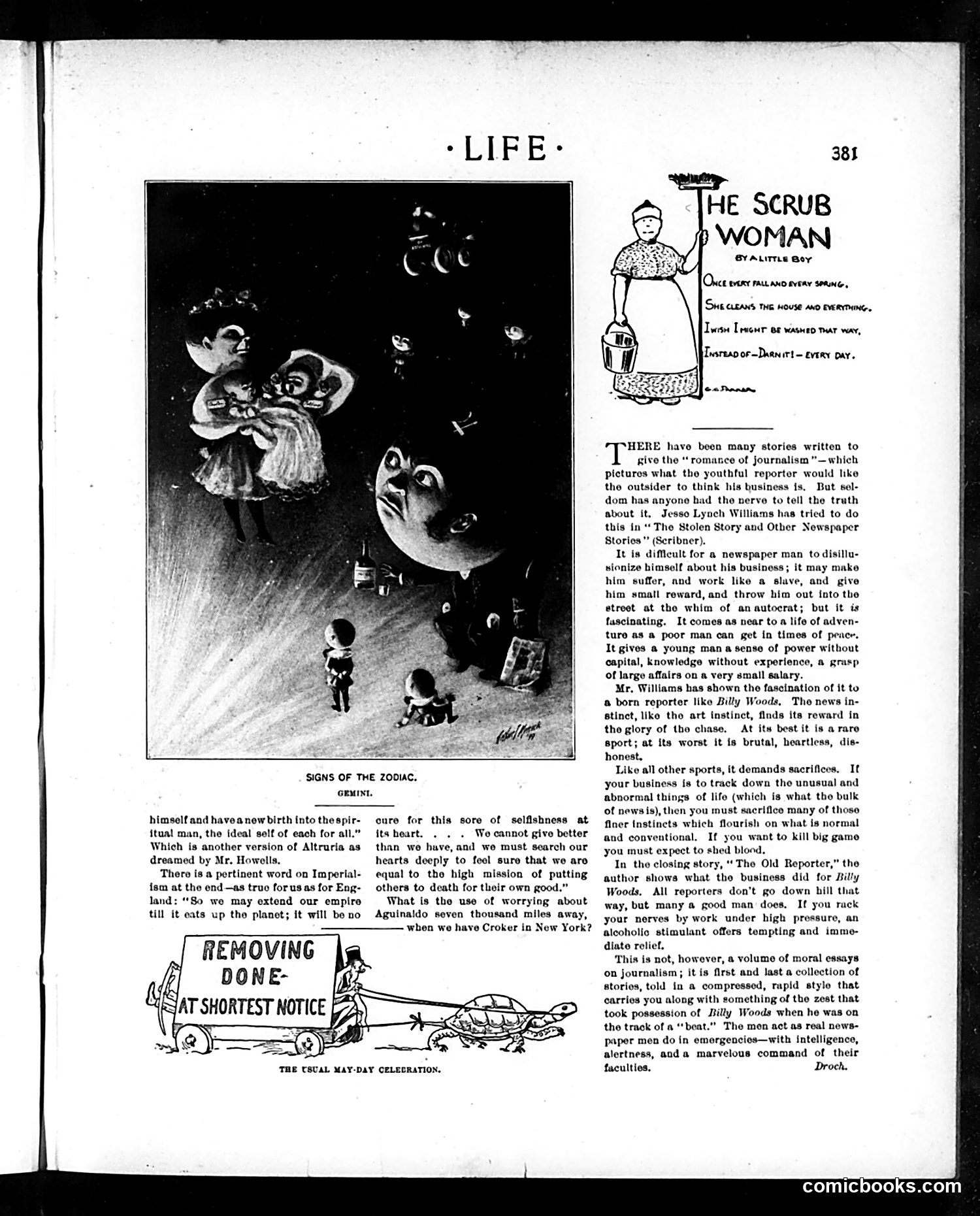
The page features two distinct pieces: **"Signs of the Zodiac: Gemini"** (left illustration) appears to be an astrological satire, though the specific meaning is unclear from the image alone. **"The Scrub Woman"** (right) is a humorous poem by "A Little Boy" celebrating domestic labor, presenting an idealized portrait of a cleaning woman who works tirelessly daily. Below is an advertisement-style cartoon labeled **"The Cruel May-Day Celebration"** showing figures with a cart, likely satirizing May Day labor celebrations or demonstrations—a reference to early 20th-century labor activism that would have been contentious in America. The page also includes a book review discussing Jesse Lynch Williams' journalism stories, praising newspaper reporting as adventurous work despite low pay.
📄 Transcribed text from this page (OCR, searchable)
Machine-transcribed from the original scan — historical spelling and the odd misread are preserved.
SIGNS OF THE ZODIAC. ORMINt. himself and haveanow birth into thespir- itual man, the ideal self of each for all.” Which is another version of Altruria as dreamed by Mr. Howells. Thoro is a pertinent word on Imperial- ism at the end—as truo forus.as for Eng- land: “80 wo may extend our empiro till it cats up tho planct; it will be no REMOVING cure for this sore of selfishness at its heart. . . . Wo cannot givo better than we have, and wo must search our hearts deeply to fecl sure that we aro equal to tho high mission of putting others to death for their own good.” What is the use of worrying about Aguinaldo seven thousand miles away, when we have Croker in New York? ‘THE USUAL MAY-DAY CELECRATION. ev Auris eer Once evar rau. ano even somnic, Swe CLEANS THE HOUSE AND EVERTON, Tuesu Trvonr oF wasneo tar war, Tresreap of ~Daanirt — EVERY Day. HERE have been many stories written to give the “romance of journalism "— which pictures what tho youthful reporter would like the outsider to think his business is, But sel- dom has anyone had the nerve to tell the trath about it, Jesso Lynch Williams has tried to do this in “Tho Stolen Story and Other Newspaper Stories" (Scribner). It is diMcult for a newspaper man to disillu- sionize himself about his business; it may make him suffer, and work like a slave, and give him small reward, and throw him out into tho etreet at the whim of an autocrat; but it is fascinating. It comes as near to a life of adven- ture as a poor man can get in times of peace. It gives a young man a sense of power without capital, knowledge without experience, a grasp of large affairs on a very small salary. Mr. Williams bas shown the fascination of it to a born reporter like Billy Woods, Tho news in- stinct, liko tho art instinct, finds its reward in tho glory of tho chase, At its best it is a rare sport; at its worst it is brutal, heartless, dis- honest, Like all other sports, it demands sacrifices, If your business is to track down the unusual and abnormal things of life (which is what the bulk of news is), then you must sacrifice many of those floer tnstinets which flourish on what is normal and conventional, If you want to kill big gamo you must expect to shed blood, In the closing story, The Old Reporter,” tho author shows what tho business did for Billy Woods, All reporters don’t go down bill that way, but many @ good man does, If you rack your nerves by work under high pressure, an alcoholic stimulant offers tempting and imme- diate relief. This is not, however, a volume of moral essays on journalism; it is first and last a collection of storios, told in a compressed, rapid style that carries you along with something of the zest that took possession of Billy Woods when he was on the track of a “beat.” The mon act as real news- paper men do in emergencios—with intelligence, alertness, anda marvelous command of their faculties. Droch, comicbooks.com