
Life, 1899-01-05 · page 12 of 20
Life — January 5, 1899 — page 12: what you’re looking at
What you’re looking at
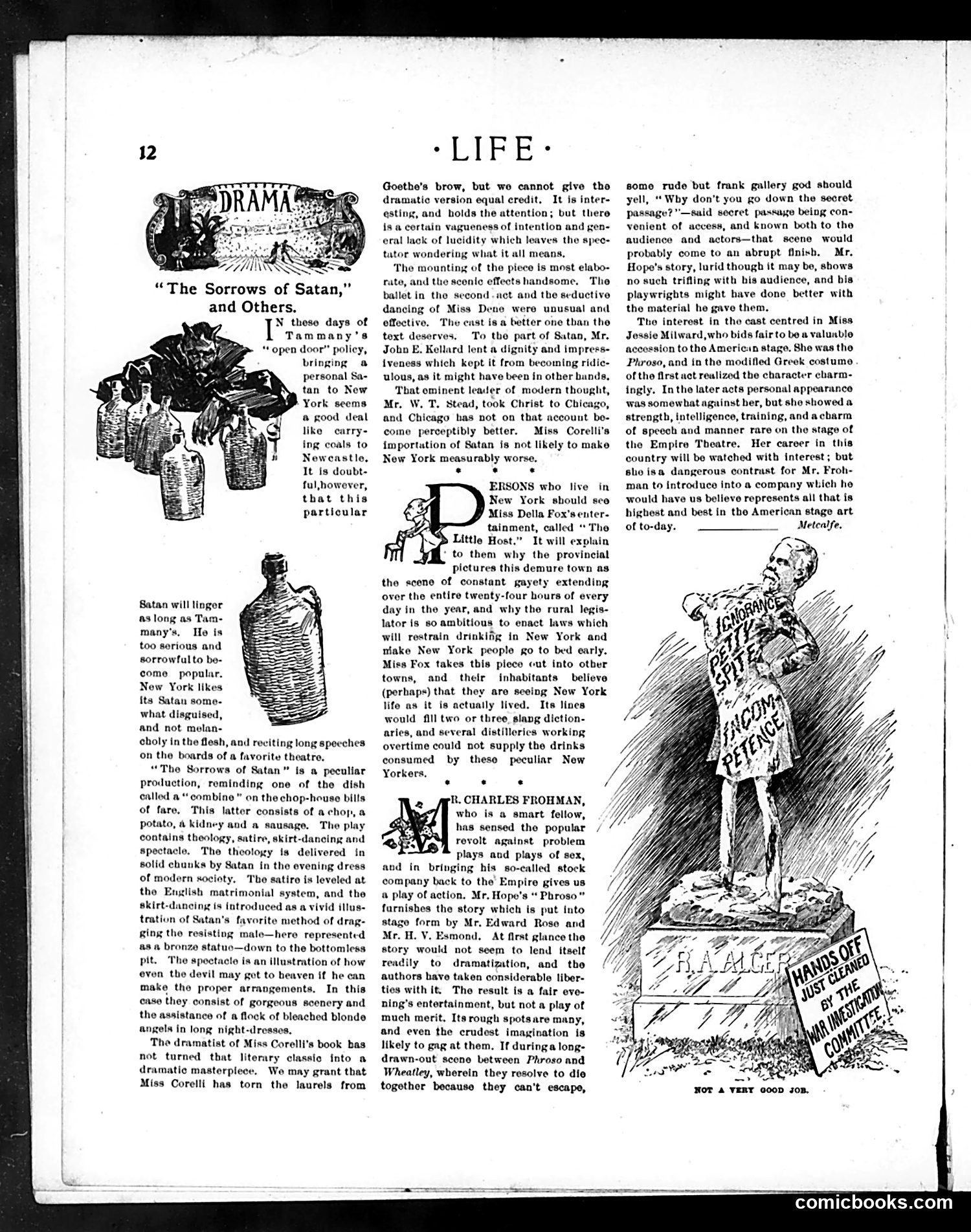
This page reviews theatrical productions, primarily critiquing "The Sorrows of Satan" and related plays. The left illustration shows a bottle labeled "Satan" with text explaining the play's themes about temptation and moral decline in modern society. The right cartoon depicts a figure labeled "Flammels Hands Off" being ejected or pushed away, likely satirizing either a playwright, producer, or actor's unwanted interference in theatrical affairs. The caption "Not a very good job" suggests criticism of someone's work or management. The text discusses Miss Corelli's dramatic adaptation and debates whether literary classics should be dramatized. References to Miss Della Fox's entertainment and New York drinking laws indicate the reviews address both artistic merit and contemporary social regulations affecting theatrical venues.
📄 Transcribed text from this page (OCR, searchable)
Machine-transcribed from the original scan — historical spelling and the odd misread are preserved.
“The Sorrows of Satan,” and Others. N these days of Tammany's “open door" policy, bringing a personal Sa- tan to New York seems a good deal like carry- ing coals to Newcastle, It is doubt- ful,howover, that this particular Satan will lingor as long as Tam- many’s, He is too serious and sorrowful to be- come popular. Now York likes its Satan some- what disguised, and not molan- choly in the flesh, and reciting long speeches on the boards of a favorite theatre, “The Sorrows of Satan” is a peculiar production, reminding one of the dish called a“ combine” on the chop-house bills of fare, This latter consists of achop, a potato, a kidney and a sausage. The play contains theology, satire, skirt-dancing and spectacle, The theology is delivered in solid chunks by Satan in the evening dress of modern socioty. ‘The satiro is leveled at tho English matrimonial system, and the skirt-dancing is introduced as a vivid illus- tration of Satan's favorite method of drag- ging tho resisting malo—here represented as a bronze statuo—down to the bottomless pit. The spectacte is an illustration of how even the devil may got to beaven if he can make the proper arrangements. In this case they consist of gorgeous scenery and the assistance of a flock of bleached blonde angels in long night-dresses, Tho dramatist of Miss Corelli's book bas not turned that literary classic into a dramatic masterpiece. Wo may grant that Miss Corelli has torn the laurels from LRE* Goethe's brow, but wo cannot give tho dramatic version equal credit, It is inter- esting, and holds the attention; but there is a cortain vagueness of intention and gen- eral lack of lucidity which leaves the spec- tutor wondering what it all means, ‘The mounting of the piece is most elabo- rute, and the scenic effects handsome. The ballet in the second. act and the seductive dancing of Miss Dene were unusual and effective, The cast is a better one than the text deserves, To the part of Satan, Mr. Jobn E. Kellard lent a dignity and impress- iveness which kept it from becoming ridic- ulous, as it might have been in other bunds, That ominent leader of modern thought, Mr, W. T. Stead, took Christ to Chicago, and Chicago has not on that account be- come perceptibly better. Miss Corelli's importation of Satan is not likely to make New York measurably worse, . . . ERSONS who live in New York should seo Miss Della Fox's enter- tainment, called “ Tho Little Host.” It will explain to them why the provincial Pictures this demure town as the scene of constant gayety extending over the entire twenty-four hours of every day in the year, and why the rural legis- lator is so ambitious to enact laws which will restrain drinkifg in New York and make New York people go to bed early. Miss Fox takes this piece cut into otber towns, and their inhabitants believe (perhaps) that they are seeing New York life as it is actually lived. Its lines would fill two or three, slang diction- aries, and several distillorics working overtime could not supply the drinks consumed by Yorkers. theso peculiar Now . . R. CHARLES FROHMAN, who is a smart fellow, has sensed the popular / revolt against problem plays and plays of sex, and in bringing his so-called stock company back to the’ Empire gives us a play of action. Mr, Hope's “ Phroso” farnishes the story which is put Into stage form by Mr. Edward Roso and Mr. H. V. Esmond, At first glance the story would not seem to lend itself readily to dramatization, and tho authors have taken considerable liber- ties with it, Tho result is a fair eve- ning’s entertainment, but not a play of much merit, Its rough spotsare many, and even the crudest imagination is likely to gag at them. If duringa long- drawn-out scone between Phroso and Wheatley, wherein they resolve to dio together because they can't escape, some rude but frank gallery god should yell, “ Why don’t you go down the secret passage? "—said secret passage being con- venient of access, and known both to tho audience and actors—that scene would probably come to an abrupt finish, Mr. Hope's story, lurid though it may be, shows no such trifling with bis audience, and bis playwrights might have done better with the material he gave them, ‘Tho interest in the cast centred in Miss Jessie Milward, who bids fairto be a valuable accession to the Americin stage. She was tho Phroso, and in the modifled Greek costumo of tho first act realized the character charm- ingly. In the later acts personal appearance was somewhat aguinst her, but she showed a strength, intelligence, training, and acbarm of speech and manner rare on the stage of the Empire Theatre. Her career in this country will be watched with interest; but sho isa dangerous contrast for Mr. Froh- man to introduce into a company which he would have us believe represents all that is highest and best in the American stage art of to-day. Metcalfe, NOT A VERY GOOD JOB. comicbooks.com