
Life, 1898-12-29 · page 6 of 21
Life — December 29, 1898 — page 6: what you’re looking at
What you’re looking at
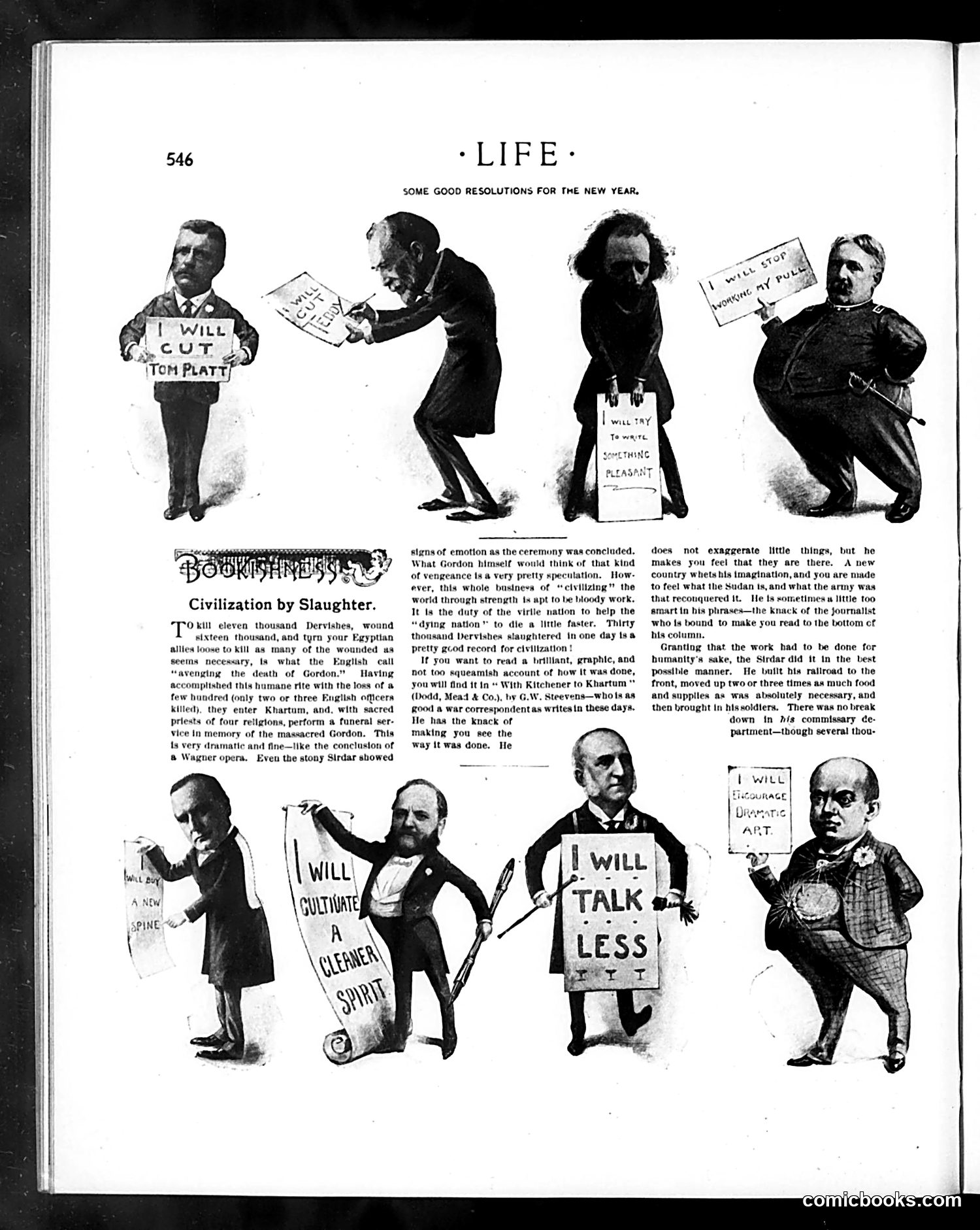
This Life magazine page satirizes prominent public figures through New Year's resolutions. The top row identifies Tom Platt with "I will cut," while others make various pledges. The article "Civilization by Slaughter" discusses war correspondence, referencing what appears to be the Boer War or similar contemporary conflict. The bottom row shows caricatured figures holding signs with resolutions like "I will cultivate a cleaner spirit," "I will talk less," and "I will encourage dissent's art." The exaggerated physical features and promises suggest these are wealthy or powerful men whose actual behavior contradicted such virtuous intentions—the satire being that these figures would never genuinely reform. The crude caricatures and mocking tone reflect early 1900s satirical conventions in American humor magazines.
📄 Transcribed text from this page (OCR, searchable)
Machine-transcribed from the original scan — historical spelling and the odd misread are preserved.
CUT ae (TOM PLATT, Civilization by Slaughter. ‘O Kill eleven thousand Dervishes, wound sixteen thousand, and tyrn your Egyptian fllles loose to Kill as many of the wounded as seems necessary, Is what the English call “avenging the death of Gordon.” Havin Accomplished this humane rite with the loss of a few hundred (only two or three English officers Killed), they enter Khartum, and, with sacred Priests of four retigtons, perform @ funeral ser- vice In memory of the massacred Gordon. This 1s very dramatic and fine—like the conclusion of @ Wagner opens. Even the stony Sirdar showed - LIFE : SOME GOOD RESOLUTIONS FOR THE NEW YEAR. | wus ta To waite. signs of emotion as the ceremony was concluded. What Gordon himself would think of that kind of vengeance {8 @ very pretty xpeculation, How- ever, this whole bustnesa of “clvilizing” the world through strength 1s apt to be bloody work. It Is the duty of the virlle nation to help the “dying nation” to die a little faster, Thirty thonsand Dervishes stanghtered tn one day ts & Pretty good record for civiltzation ! If you want to read a brilliant, graphic, and not too squeamish account of how It was done, you will find tt in * With Kitchener to Khartum " (Dodd, Mead & Co.), by G.W, Steevens—who ts as good a war correspondents writes in these days. He haa the knack of making you see the way {twas done. He does not exaggerate little things, but he makes you feel that they are there. A new country whets his imagination, and you are made to feel what the Sudan ts, and what the army was ‘that recouquered It. He ts sometimes u little too smart in his phrases—the knack of the journalist who Is bound to make you read to the bottom of bis column. Granting that the work had to be done for humanity's sake, the Sirdar did it in the best possible manner, He built his raliroad to the front, moved up two or three times ax much food and supplles as was absolutely necessary, and then brought In hissoldlers. ‘There was no break down in fis commissary de- partment—though several thou-