
Life, 1898-10-13 · page 6 of 20
Life — October 13, 1898 — page 6: what you’re looking at
What you’re looking at
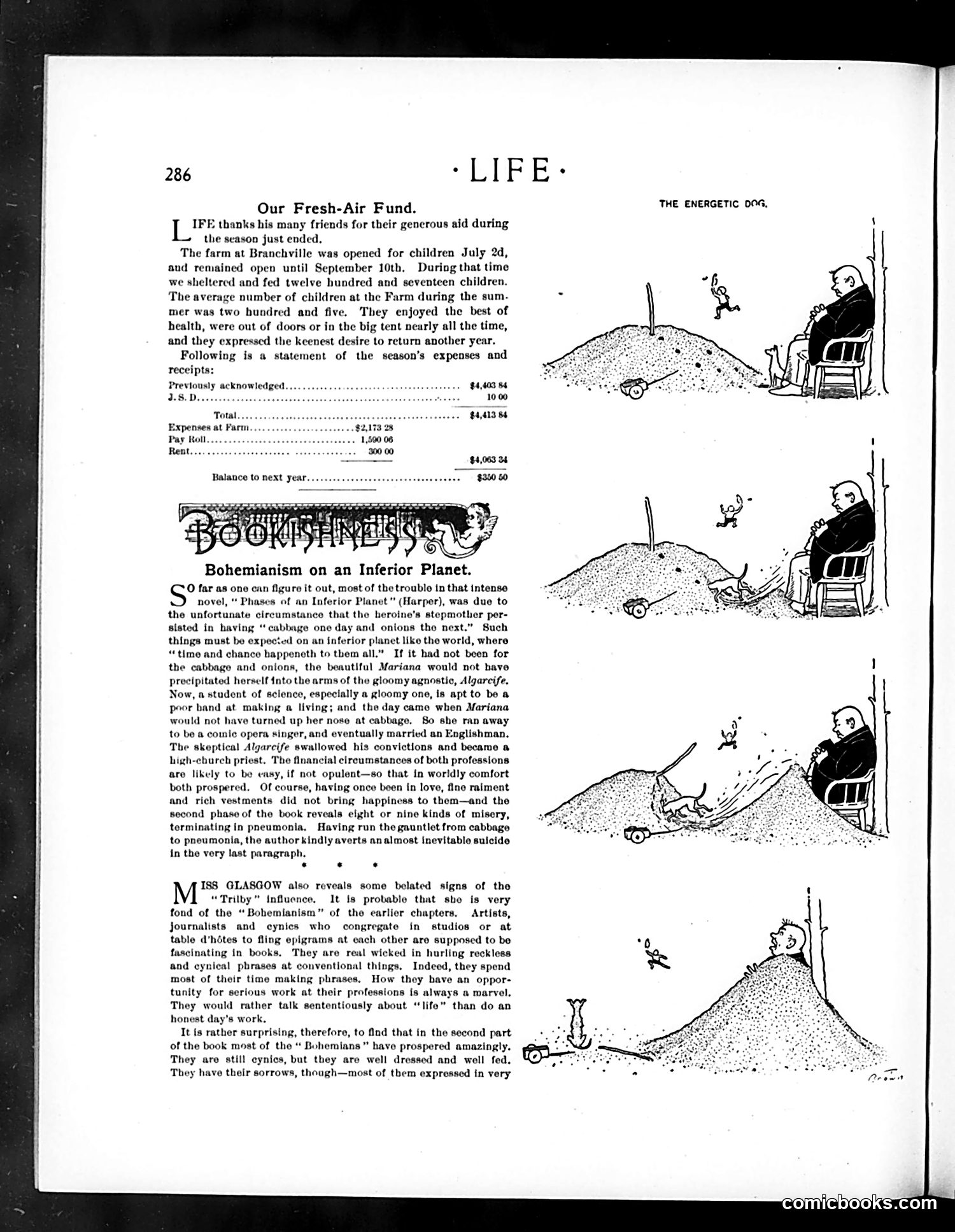
This comic strip (right side) depicts a man in a chair repeatedly throwing a stick for a small dog to fetch. The humor lies in the ironic reversal of effort: while the dog energetically bounds after each stick, the man grows progressively more exhausted sitting in his chair. Each panel shows the man more slumped and tired, while the dog remains equally vigorous. The satire likely comments on wasted human energy or futility—the man exerts himself through indirect means (throwing) while delegating the actual work to the dog, yet paradoxically becomes more exhausted than his supposedly laboring pet. It's a visual joke about the absurdity of certain human endeavors or perhaps commentary on inefficient effort.
📄 Transcribed text from this page (OCR, searchable)
Machine-transcribed from the original scan — historical spelling and the odd misread are preserved.
286 *LIFE- Our Fresh-Air Fund. THE ENERGETIC 004, IFE thanks his many friends for their generous aid during the season just ended. The farm at Branchville was opened for children July 2d, and remained open until September 10th, During that time we sheltercd and fed twelve hundred and seventeen children. The average number of children at the Farm during the sum. mer was two hundred and five. They enjoyed the best of health, were out of doors or in the big tent nearly all the time, and they expressed the keenest desire to return another year. Following is a statement of the season’s expenses and receipts: Previously acknowledged : : : $4,408 84 2.8.D... eine 10.00 Total spsssssse $4,413 84 Expenses at Farm Pay Koll, Rent Bohemianism on an Inferior Planet. 0 far as one can figure it out, most of the troublo in that intense S novel, Phases of an Inferior Planet” (Harper), was due to the unfortunate circumstance that the heroine's stepmother por- sisted in having “cabbage one day and onions tho next.” Such things must be expected on an inferior planet like the world, where “time and chance happenoth to them all.” If it had not been for the cabbage and onions, the beautiful Mariana would not have precipitated herself into the arms of the gloomy agnostic, Algarcife, Now, a student of science, especially a gloomy one, is apt to be a poor band at making a living; and the day came when Mariana would not have turned up her nose at cabbage, 80 she ran away to be a comle opera singer, and eventually married an Englishman, The skeptical Algarcife swallowed his convictions and became a high-chureh priest. The financial cireumstances of both professions are likely to be easy, if not opulent—so that in worldly comfort both prospered. Of course, having once been in love, fine raiment and rich vestments did not bring happiness to them—and the second phaso of the book reveals eight or nine kinds of misery, terminating in pneumonia, Having run the gauntlet from cabbago to pneumonia, the author kindly averts an almost inevitablo suicide in the vory last paragraph. * * * 188 GLASGOW also reveals some belated signs of tho “Trilby” influence. It is probable that sbo is very fond of the “Bohemianism” of the earlier chapters. Artists, Journalists and cynics who congregate in studios or at table d’hétes to fling epigrams at cach other aro supposed to be fascinating in books, They are real wicked in hurling reckless and cynical phrases at conventional things, Indeed, they spend most of their time making phrases, How thoy bave an oppor- tunity for serious work at their professions is always a marvel, They would rather talk sententiously about “life” than do an honest day's work. It is rather surprising, therefore, to find that in the second part of the book most of the “ Bohemians” have prospered amazingly. They aro still cynics, but they are well dressed and well fed, They have their sorrows, thoagh—most of them expressed in very