
Life, 1898-06-30 · page 8 of 21
Life — June 30, 1898 — page 8: what you’re looking at
What you’re looking at
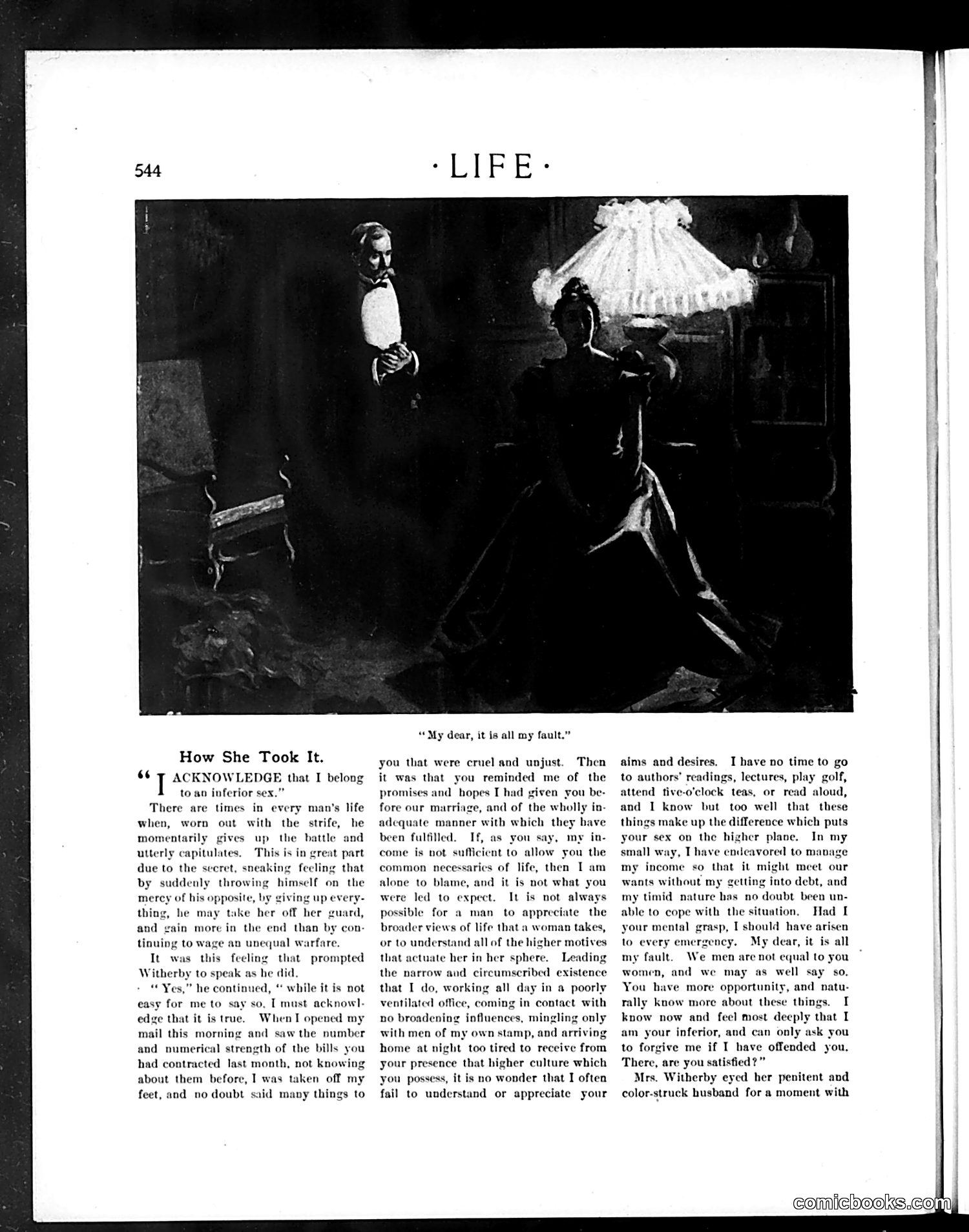
This appears to be a dramatic domestic scene from an early 20th-century satirical story in Life magazine. The image shows a tense confrontation between a man and woman in a darkly lit interior, with the caption "My dear, it is all my fault." The accompanying text depicts a husband confessing financial mismanagement to his wife—specifically, unpaid bills that have accumulated over a month. The story satirizes gender roles and marital dynamics of the era: the husband expects blame but finds his wife surprisingly philosophical and forgiving, citing her own limited understanding of "higher" financial matters due to her constrained sphere of activity. The satire seems to mock both the husband's assumption of guilt and the wife's resigned acceptance of her dependent status, illustrating period attitudes toward women's economic knowledge and marital authority.
📄 Transcribed text from this page (OCR, searchable)
Machine-transcribed from the original scan — historical spelling and the odd misread are preserved.
How She Took It. ACKNOWLEDGE that I belong to ao inferior s times in every man’s life out with the strife, he Ty I There are when, momentarily gives up the battle and worn utterly capitulates. This is in great part due to the secret, sneaking feeling that by suddenly throwing himself on the mercy of his opposite, by giving up every- he may take her off her guard, ‘ain more in the end than by con- tinuing to wage an unequal warfare. It was this feeling that prompted Witherby to speak as he did. “Yes,” he continued, “ while it is not easy for me to say so, T must acknowl- edge that it is true. When opened my mail this morning and saw the number and numerical strength of the bills you had contracted last month, not knowing about them before, I was taken off my feet, and no doubt said many things to “My dear, it is all my fault.” you that were cruel and unjust. Then it was that you reminded me of the promises and hopes T had given you be- fore our marriage, and of the wholly in- adequate manner with which they have been fulfilled. If, as you say, my in- come is not sufficient to allow you the common necessaries of life, then I am alone to blame, and it is not what you were led to expect. It is not always possible for a man to appreciate the broader views of life that a woman takes, or to understand all of the higher motives th tuate her in her sphere. Leading the narrow aud circumscribed existence that I do, working all day in a poorly e, coming in contact with no broadening influences, mingling onl with men of my own stamp, and arriving home at night too tired to receive from your presence that higher culture which you possess, it is no wonder that I often fail to understand or appreciate your aims and desires. I have no time to go to authors’ readings, lectures, play golf, attend tive-o’clock teas, or aloud, and I know but too well that these things make up the difference which puts your sex on the higher plane. In my small way, T have endeavored to mani my income so that it might meet our wants without my getting into debt, and my timid nature has no doubt been un- able to cope with the situation, Had I your mental grasp, I should have arisen to every emergency. My dear, it is all my fault. We men are not equal to you women, and we may as well say so. You have more opportunity, and natu- rally know more about these things. I know now and feel most deeply that I am your inferior, and can only ask you ve me if I have offended you, There, are you satisfied?” Mrs. Witherby eyed her penitent and color-struck husband for a moment with comichooks.coyn