
Life, 1898-03-10 · page 15 of 20
Life — March 10, 1898 — page 15: what you’re looking at
What you’re looking at
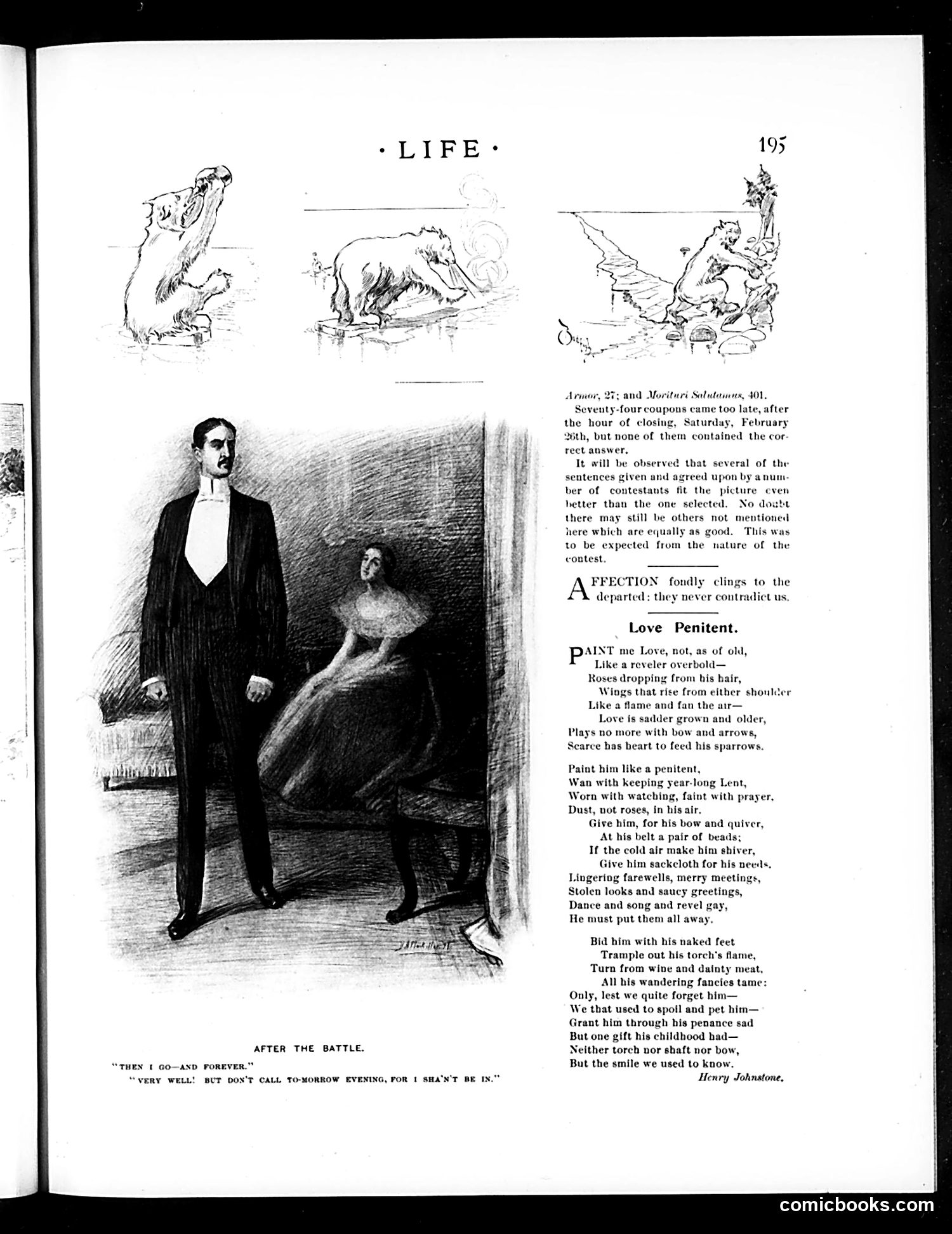
**The Main Cartoon ("After the Battle"):** Shows a well-dressed man telling a woman he's leaving her forever—but adds the cruel stipulation "don't call tomorrow evening, for I shan't be in." The satire mocks the absurdity of dramatic romantic breakups where the departing party adds petty conditions, undermining the supposed finality of their gesture. It's commentary on insincere or self-serving romantic gestures. **"Love Penitent" Poem:** This lengthy poem reimagines Cupid (classical Love) as a sorrowful, penitent figure rather than the traditional joyful, arrow-shooting cherub. Instead of roses and revelry, the poem depicts Love as worn, fasting, praying—stripped of worldly pleasures. The final stanza suggests even reformed Love deserves one comfort: the innocent smile from childhood. **Context:** The page appears to be from an early 20th-century Life issue mixing humor with sentimental poetry—typical of the magazine's blend of satire and romantic/moralistic content. The tone reflects contemporary attitudes about love's declining vigor in modern times.
📄 Transcribed text from this page (OCR, searchable)
Machine-transcribed from the original scan — historical spelling and the odd misread are preserved.
AFTER THE BATTLE. FOREVER. BUT DON'T CALL TO-MORROW EVENING, FOR 1 SHA'N'T BE IN.” and Morituri Salutamns, 401. four coupons came too late, after the hour of closing, February 26th, but none of them contained the cor: rect auswer, It will be observed that several of the sentences given and agreed upon by a num ber of contestants fit the picture eve better than the one selected. No do there may still be others not mentione here which are equally as good. This was to be expected from the nature of the contest, FFECTION fondly clings to the departed; they never contradict us, Love Penitent. PAINT me Love, not, as of old Like a reveler overbold— Roses dropping from bis bair, Wings that rise from either shoulder Like a flame and fan the ar— Love is sadder grown and older, Plays no more with bow and arrows, Scarce has heart to feed his sparrows. Paint him like a penitent, Wan with keeping year-long Lent, Worn with watching, faint with prayer, Dust, not roses, in his air, Give him, for his bow and quiver, At his belt a pair of beads; If the cold air make him shiver, Give him sackcloth for his needs. Lingering farewells, merry meetings, Stolen looks and saucy greetings, Dance and song and revel gay, He must put them all away. Bid him with his naked feet Trample out his torch’s flame, Turn from wine and dainty meat, All his wandering fancies tame: Only, lest we quite forget him— We that used to spoil and pet him— Grant him through his penance sad But one gift his childhood had— Neither torch nor shaft nor bow, But the smile we used to know. Henry Johnstone, comicbooks.com