
Life, 1897-11-25 · page 12 of 20
Life — November 25, 1897 — page 12: what you’re looking at
What you’re looking at
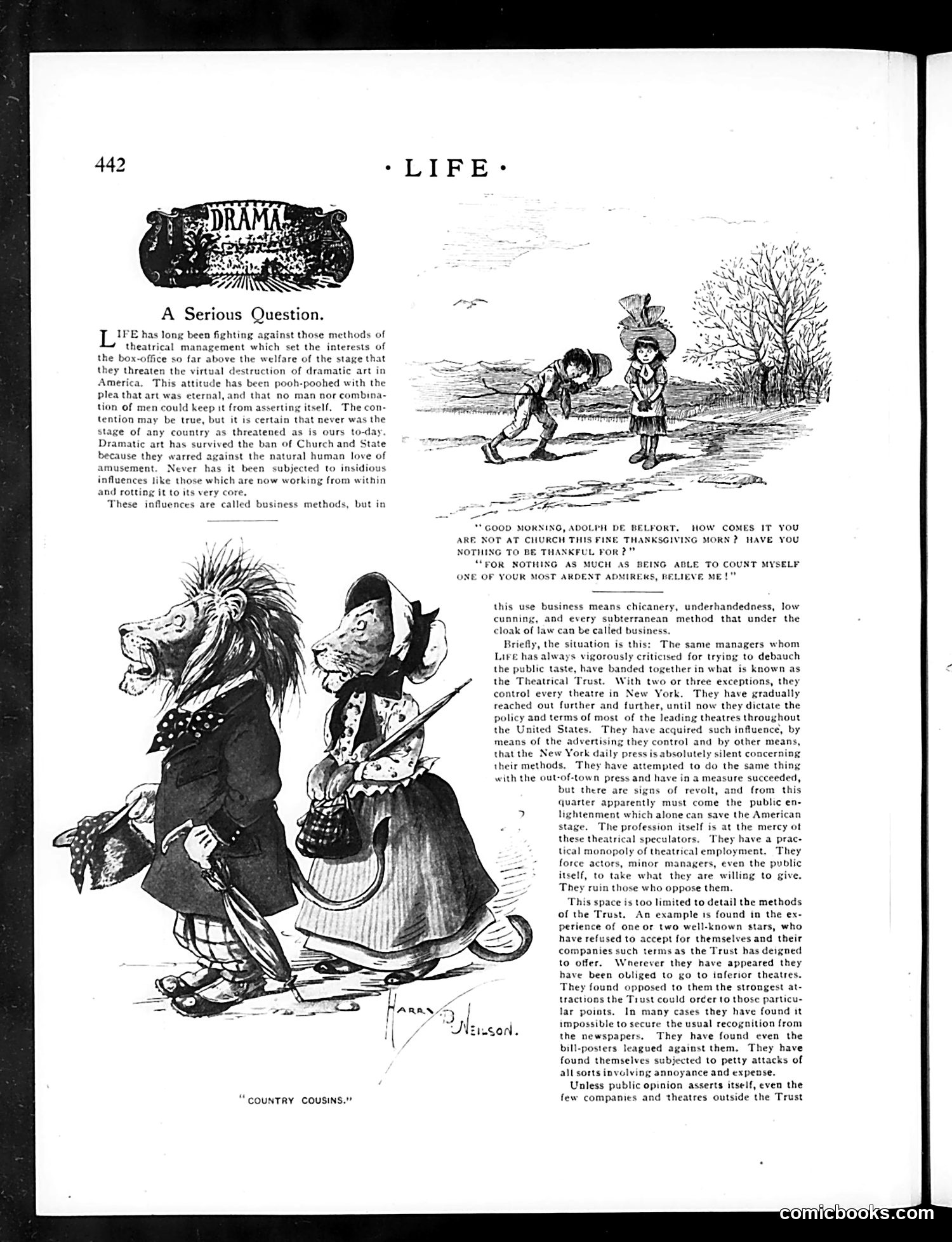
This page critiques the **Theatrical Trust**, a monopolistic cartel controlling American theaters and dramatic productions. The article denounces their "business methods" — described as "chicanery, underhandedness, low cunning" — that stifle theatrical competition and artistic freedom. The cartoon "Country Cousins" (by Harry Neilson) depicts two grotesque figures representing the Trust's control. The dialogue between the rural characters above satirizes their hypocrisy: attending church on Thanksgiving while exploiting others. The piece argues the Trust forces actors and theaters into submission, controls advertising, and crushes opposition through intimidation and legal pressure. The satire targets how this monopoly has strangled independent theater throughout America, leaving few alternatives outside their control.
📄 Transcribed text from this page (OCR, searchable)
Machine-transcribed from the original scan — historical spelling and the odd misread are preserved.
A Serious Question. IFE has long been fighting against those methods of theatrical management which set the interests of the box-office so far above the welfare of the stage that they threaten the virtual destruction of dramatic art in America. This attitude has been pooh-poohed with the plea that art was eternal, and that no man nor combina- tion of men could keep it from asserting itself, The con- tention may be true, but it is certain that never was the stage of any country as threatened as is ours to-day Dramatic art has survived the ban of Church and State because they warred against the natural human love of amusement. Never has it been subjected to insidious influences like those which are now working from within and rotting it to its very con These influences are called business methods, but in ** GOOD MORNING, ADOLPH DE BELFORT, NOW COMES IT YOU ARE NOT AT CHURCH THIS FINE THANKSGIVING MORN? HAVE YOU NOTHING TO BE THANKFUL FoR?" “FOR NOTHING AS MUCH AS BEING ADLE TO COUNT MYSELF ONE OF YOUR MOST ARDENT ADMIREKS, RELIEVE ME!" this use business means chicanery, underhandedness, low cunning, and every subterranean method that under the cloak of law can be called business. Briefly, the situation is this: The same managers whom Lire has always vigorously criticised for trying to debauch the public taste, have banded together in what is known as the Theatrical Trust. With two or three exceptions, they control every theatre in New York. They have gradually reached out further and further, until now they dictate the policy and terms of most of the leading theatres throughout the United States. They have acquired such influence, by means of the advertising they control and by other means, that the New York daily press is absolutely silent concerning their methods. They have attempted to do the same thing with the out-of-town press and have in a measure succeeded but there are signs of revolt, and from this quarter apparently must come the public en- lightenment which alone can save the American stage. The profession itself is at the mercy ot these theatrical speculators. They have a prac+ tical monopoly of theatrical employment. They force actors, minor managers, even the public itself, to take what they are willing to give. They ruin those who oppose them. This space is too limited to detail the methods of the Trust. An example 1s found in the ex- perience of one or two well-known stars, who have refused to accept for themselves and their companies such terms as the Trust has deigned to offer. Wherever they have appeared they have been obliged to go to inferior theatres. They found opposed to them the strongest at- tractions the Trust could oréer to those particu- lar points. In many cases they have found it impossible to secure the usual recognition from the newspapers, They have found even the bill-posters leagued against them. They have found themselves subjected to petty attacks of all sorts involving annoyance and expense. Unless public opinion asserts itself, even the “COUNTRY COUSINS.” few companies and theatres outside the Trust