
Life, 1897-05-06 · page 7 of 20
Life — May 6, 1897 — page 7: what you’re looking at
What you’re looking at
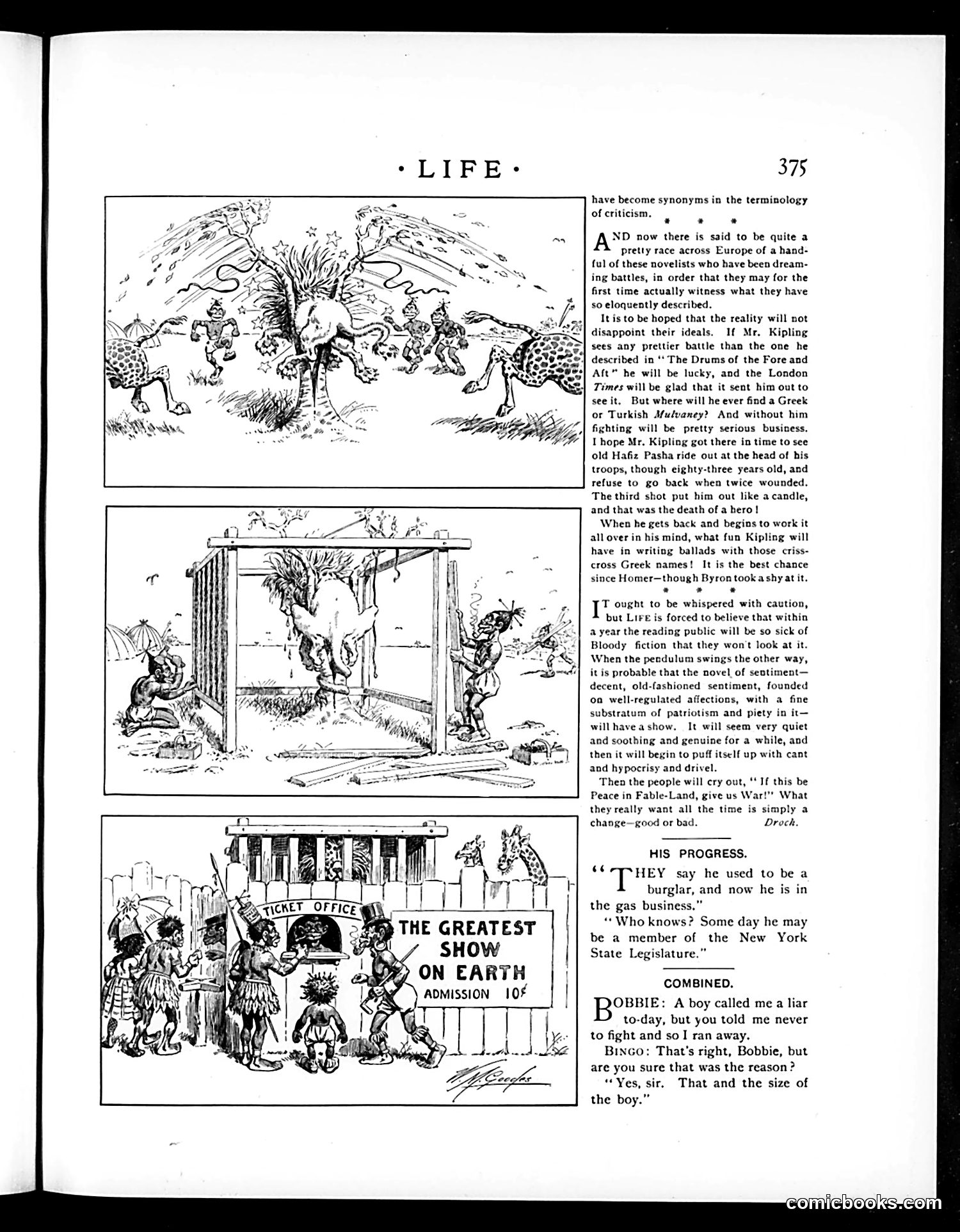
This page contains three satirical cartoon panels and accompanying commentary. The top panel depicts figures around a tree, likely referencing colonial or imperial conflicts. The middle panel shows a gallows structure, suggesting dark political humor about execution or justice. The bottom panel advertises "The Greatest Show on Earth" with a ticket office, parodying P.T. Barnum's famous circus while depicting crowds of caricatured figures—likely satirizing public spectacle and entertainment culture. The text discusses Rudyard Kipling's anticipated writings about military conflicts (possibly referencing Haji Pasha and Turkish forces), suggesting anticipation for sensationalist war narratives. The page's commentary expresses skepticism about forthcoming "bloody fiction" and sentiment-driven literature, indicating Life's satirical critique of both imperial military adventures and their popular literary dramatization.
📄 Transcribed text from this page (OCR, searchable)
Machine-transcribed from the original scan — historical spelling and the odd misread are preserved.
N EARTH 375 have become synonyms in the terminology of criticism, * 8 ND now there is said to be quite a pretty race across Europe of a hand- ful of these novelists who have been dream- ing battles, in order that they may for the first time actually witness what they have so eloquently described. It is to be hoped that the reality will not disappoint their ideals. If Mr. Kipling sees any prettier battle than the one he | described in ‘* The Drums of the Fore and Aft" he will be lucky, and the London Times will be glad that it sent him out to see it, But where will he ever find a Greek or Turkish AMfudvaney? And without him fighting will be pretty serious business. I hope Mr. Kipling got there in time to see old Hafiz Pasha ride out at the head of his troops, though eighty-three years old, and refuse to go back when twice wounded. The third shot put him out like a candle, and that was the death of a hero! When he gets back and begins to work it all over in his mind, what fun Kipling will have in writing ballads with those criss- cross Greek names! It is the best chance since Homer—though Byron took ashy at it. * * * T" ought to be whispered with caution, but Lire is forced to believe that within a year the reading public will be so sick of Bloody fiction that they won't look at it. When the pendulum swings the other way, it is probable that the novel of seotiment— decent, old-fashioned sentiment, founded on well-regulated affections, with a fine substratum of patriotism and piety in it— willhave a show. It will seem very quiet and soothing and genuine for a while, and then it will begin to puff itself up with cant and hypocrisy and drivel. ‘Then the people will cry out, ‘If this be Peace in Fable-Land, give us War!" What they really want all the time is simply a change—good or bad. Droch. HIS PROGRESS. “THEY say he used to be a burglar, and now he is in the gas business.” ““Who knows? Some day he may be a member of the New York State Legislature.” COMBINED. OBBIE: A boy called me a liar to-day, but you told me never to fight and soI ran away. Binco: That's right, Bobbie, but are you sure that was the reason? “Yes, sir. That and the size of the boy.”