
Life, 1897-01-14 · page 8 of 20
Life — January 14, 1897 — page 8: what you’re looking at
What you’re looking at
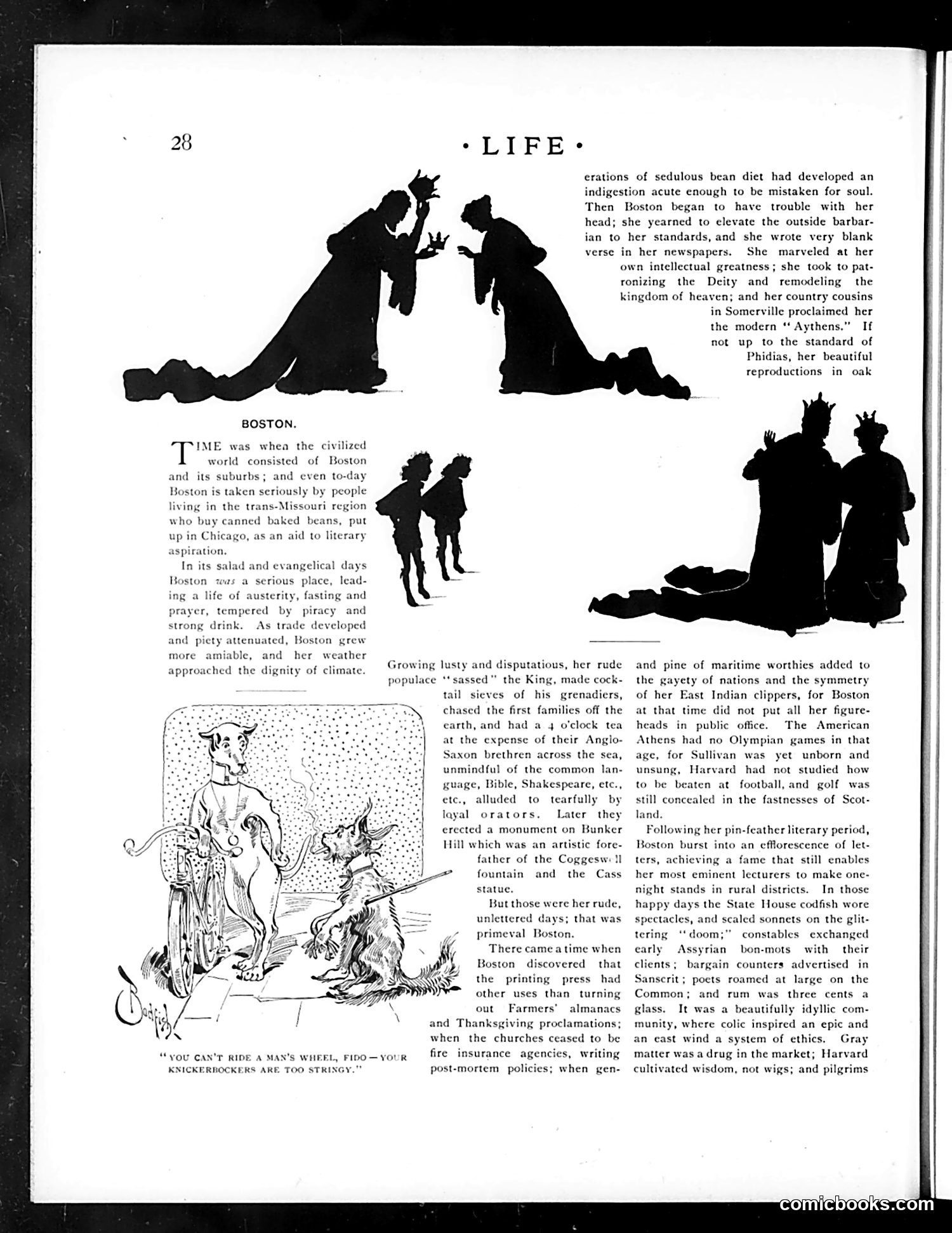
This page satirizes Boston's cultural pretensions and decline. The silhouette illustrations depict Boston's transformation from a serious, austere Puritan settlement into a city obsessed with intellectual and artistic affectation. The text mocks Boston's self-regard as an intellectual center while noting its actual influence has waned—it's now known mainly for canned beans produced elsewhere. The satirical point: Boston clings to outdated cultural authority ("modern Athens") despite being surpassed by other American cities. The bottom cartoon, captioned "YOU CAN'T RIDE A MAN'S WHEEL, FIDO—YOUR KNICKERBOCKER ARE TOO STRINGY," appears unrelated—a separate joke about dogs and clothing. Overall, the page ridicules Boston's provincial snobbery and obsolescence in the modern era.
📄 Transcribed text from this page (OCR, searchable)
Machine-transcribed from the original scan — historical spelling and the odd misread are preserved.
erations of sedulous bean diet had developed an indigestion acute enough to be mistaken for soul. Then Boston began to have trouble with her head; she yearned to elevate the outside barbar- ian to her standards, and she wrote very blank verse in her newspapers. She marveled at her own intellectual greatness; she took to pat- ronizing the Deity and remodeling the kingdom of heaven; and her country cousins in Somerville proclaimed her BOSTON. was whea the civilized IME world consisted of Boston and its suburbs; and even to-day Boston is taken seriously by people living in the trans-Missouri region who buy canned baked beans, put up in Chicago, as an aid to literary aspiration. In its salad and evangelical days Boston was a serious place, lead- ing a life of austerity, fasting and prayer, tempered by and As tra piracy strong drink. developed and piety attenuated, Boston grew and her weather more amiable, approached the dignity of climate. “YOU CAN'T RIDE KNICKERROCKERS ARE TOO STRINGY A MAN'S WHEEL, FIDO — YOUR Growing lusty and disputatious, her rude . made cock- populace *sassed" the Kin tail sieves of his grenadiers, chased the first families off the earth, and had a 4 o'clock tea at the expense of their Anglo- Saxon brethren across the sea, unmindful of the common lan- guage, Bible, Shakespeare, etc., alluded to tearfully by layal orators. Later they erected a monument on Bunker Hill which was an artistic fore- father of the Coggesw: !I and the C etc., fountain statuc. But those were her rude, unlettered days; that was primeval Boston. There came atime when that had other uses than turning out Farmers’ and Thanksgiving proclamations; when the churches ceased to be fire insurance agencies, writing post-mortem polici Boston discovered the printing press almanacs ; when gen- the modern * Aythens,” If not up to the standard of Phidias, her beautiful reproductions in oak and pine of maritime worthies added to the gayety of nations and the symmetry of her East Indian clippers, for Boston at that time did not put all her figure- heads in public office. The American Athens had no Olympian games in that for Sullivan was yet unborn and Harvard had not studied how football, and golf was age, unsung, to be beaten at still concealed in the fastnesses of Scot- land. Following her pin-feather literary period, Boston burst into an efflorescence of let- ters, achieving a fame that still enables her most eminent lecturers to make one- night stands in rural districts. In those happy days the State House codfish wore spectacles, and scaled sonnets on the glit- exchanged Assyrian with their bargain counters advertised in anscrit; poets roamed at large on the Common ; was three cents a glass. It was a beautifully idyllic com- munity, where colic inspired an epic and Gray tering ‘‘doom;" constables early clients bon-mots and rum an east wind a system of ethics. matter was a drug in the market; Harvard cultivated wisdom, not wigs; and pilgrims