
Life, 1896-12-24 · page 1 of 20
Life — December 24, 1896 — page 1: what you’re looking at
What you’re looking at
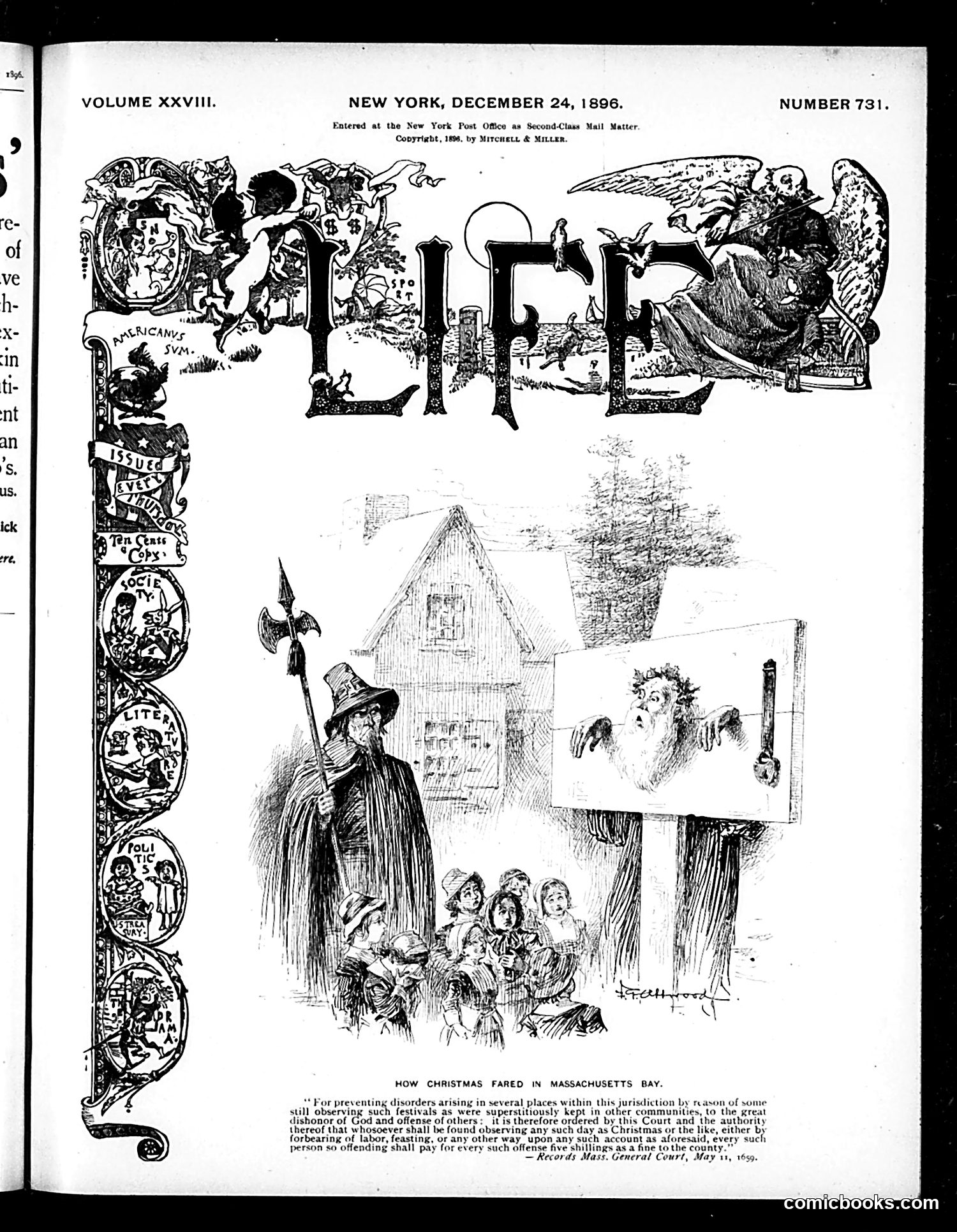
This 1896 *Life* magazine cartoon satirizes Massachusetts's strict Puritan-era laws against celebrating Christmas. The image depicts a stern, axe-wielding Puritan confronting children gathered near a decorated house during Christmas, referencing historical Massachusetts Bay Colony ordinances that prohibited Christmas observance. The quoted text below the cartoon cites an actual 1659 Massachusetts court record forbidding Christmas celebrations, labor stoppages, or festive gatherings. Violators faced five-shilling fines. The cartoon humorously contrasts the harsh Puritan past with the 1890s present, mocking the historical severity of these restrictions while noting their eventual disappearance from law. The joke invokes nostalgia for Puritan austerity while celebrating modern religious freedom.
📄 Transcribed text from this page (OCR, searchable)
Machine-transcribed from the original scan — historical spelling and the odd misread are preserved.
VOLUME XXVIII. NEW YORK, DECEMBER 24, 1896. NUMBER 731. Entered at the New York Post Office as Second-Class Mail Matter, Copyright, 1898, by Mircnett & Mitten. HOW CHRISTMAS FARED IN MASSACHUSETTS BAY. “* For preventing disorders arising in several places within this jurisdiction by reason of some Sul observing such festivals as were superstitiously kept in other communities, to the great dishonor of God and offense of others : it is therefore ordered by this Court and the authority thereof that whosoever shall be found observing any such day as Christmas or the like, either by forbearing of labor, feasting, or any other way upon any such account as aforesaid, every such person so offending shall pay for every such offense five shillings as a fine to the county.” — Records Mass. General Court, May 11, 1659.