
Life, 1896-08-13 · page 7 of 18
Life — August 13, 1896 — page 7: what you’re looking at
What you’re looking at
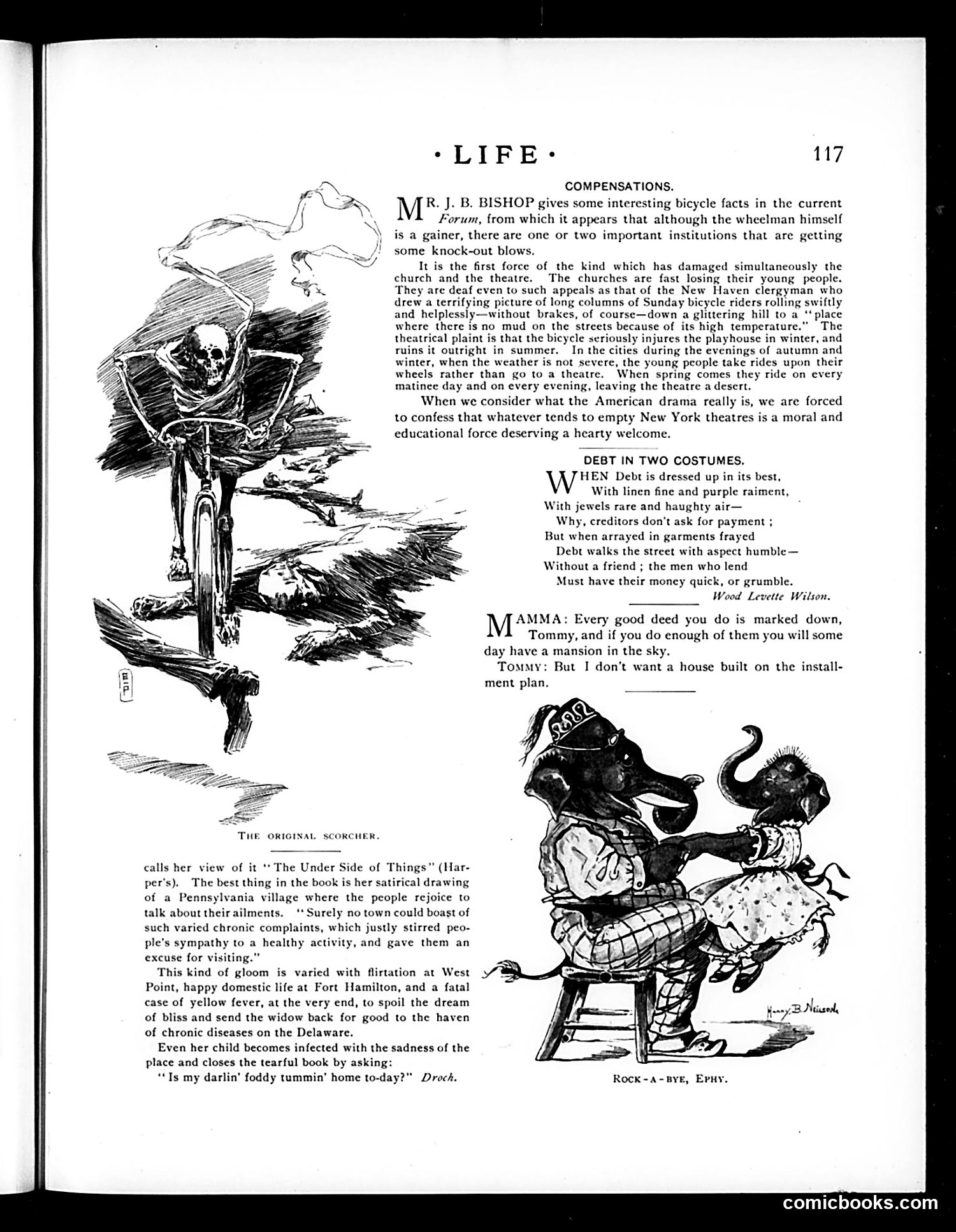
This page contains three distinct satirical pieces: 1. **"Compensations"** - Critiques how bicycles damage theaters and playhouses, especially in winter, as young people prefer riding bicycles to attending shows. The satire targets bicycles' negative cultural impact on theatrical attendance. 2. **"Debt in Two Costumes"** - A poem (attributed to Wood Lovette Wilson) contrasting wealthy debt (dressed in "linen fine and purple raiment") with impoverished debt (walking streets "without a friend"). The satire critiques class disparities in how financial hardship is experienced. 3. **"Rock-a-bye, Ephy"** - A cartoon showing a figure on a rocking chair appearing to rock a small creature. The exact satirical target is unclear from the visible text. The illustrations are period ink sketches typical of early 20th-century satirical magazines.
📄 Transcribed text from this page (OCR, searchable)
Machine-transcribed from the original scan — historical spelling and the odd misread are preserved.
*LIFE: 117 COMPENSATIONS. R. J. B. BISHOP gives some interesting bicycle facts in the current Forum, {rom which it appears that although the wheelman himself is a gainer, there are one or two important institutions that are getting some knock-out blows. It is the first force of the kind which has damaged simultaneously the church and the theatre. The churches are fast losing their young people. They are deaf even to such appeals as that of the New Haven clergyman who drew a terrifying picture of long columns of Sunday bicycle riders rolling swiftly and helplessiy—without brakes, of course—down a glittering hill to a ‘place where there is no mud on the streets because of its high temperature.” The theatrical plaint is that the bicycle seriously injures the playhouse in winter, and ruins it outright in summer. In the cities during the evenings of autumn and winter, when the weather is not severe, the young people take rides upon their wheels rather than go to a theatre. When spring comes they ride on every matince day and on every evening, leaving the theatre a desert. When we consider what the American drama really is, we are forced to confess that whatever tends to empty New York theatres is a moral and educational force deserving a hearty welcome. DEBT IN TWO COSTUMES. HEN Debt is dressed up in its best, With linen fine and purple raiment, With jewels rare and haughty air— Why, creditors don’t ask for payment ; But when arrayed in garments frayed Debt walks the street with aspect humble— Without a friend ; the men who lend Must have their money quick, or grumble. Wood Levette Wilson. AMMA: Every good deed you do is marked down, Tommy, and if you do enough of them you will some day have a mansion in the sky. Tommy: But I don’t want a house built on the install- ment plan. THE ORIGINAL Sc calls her view of it ‘* The Under Side of Things” (Har- per's). The best thing in the book is her satirical drawing of a Pennsylvania village where the people rejoice to talk about theirailments. ‘* Surely no town could boast of such varied chronic complaints, which justly stirred peo- ple’s sympathy to a healthy activity, and gave them an excuse for visiting.” This kind of gloom is varied with flirtation at West Point, happy domestic life at Fort Hamilton, and a fatal case of yellow fever, at the very end, to spoil the dream of bliss and send the widow back for good to the haven of chronic diseases on the Delaware, Even her child becomes infected with the sadness of the place and closes the tearful book by asking: ‘Is my darlin’ foddy tummin’ home to-day?" Droch. Rock-A-Bye, EpHy. comicbooks.com