
Life, 1895-04-11 · page 16 of 26
Life — April 11, 1895 — page 16: what you’re looking at
What you’re looking at
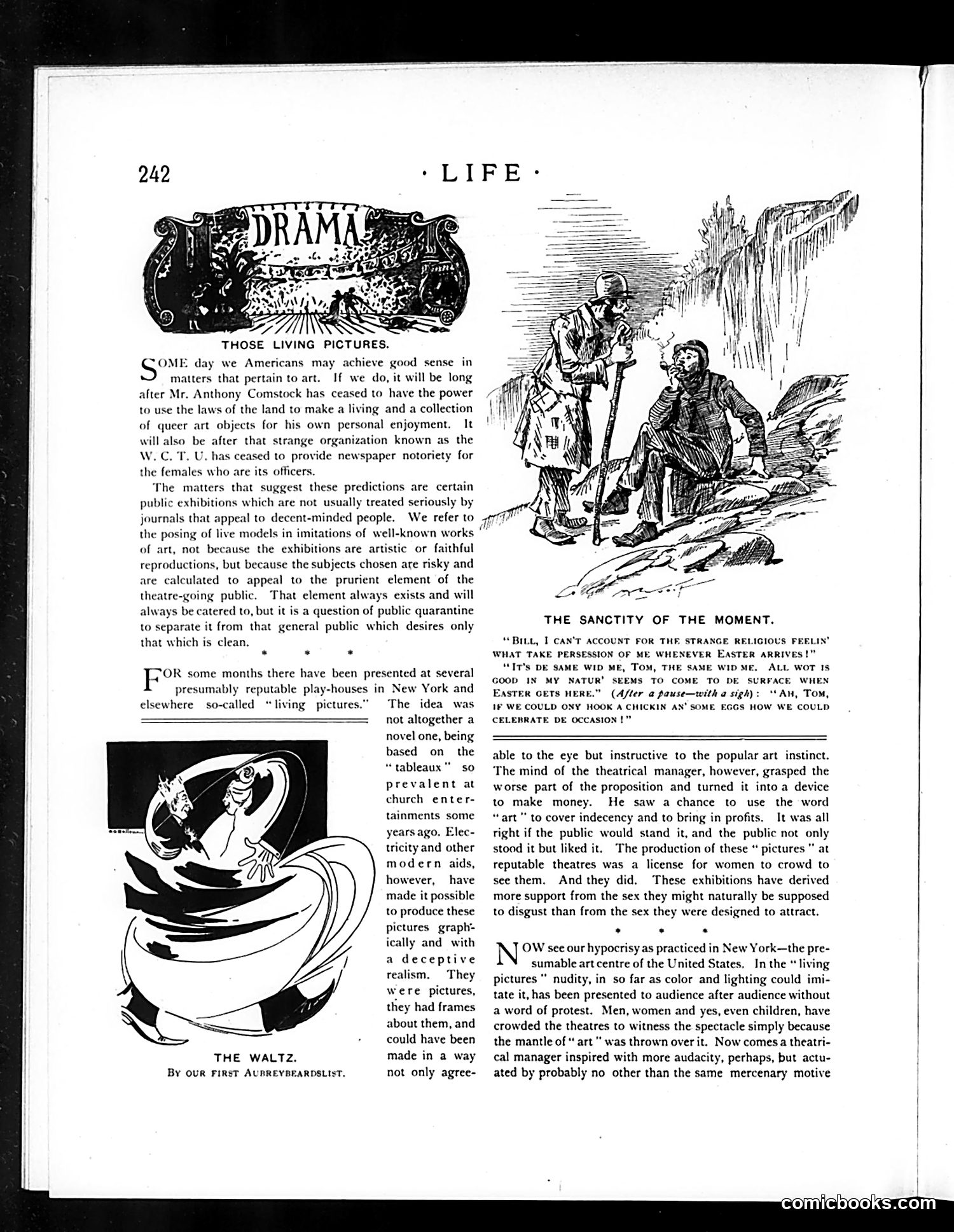
This article criticizes the hypocrisy surrounding "living pictures"—theatrical exhibitions featuring nude or scantily-clad models posed as artworks in New York theaters. **Key targets:** - **Anthony Comstock**: the real-life anti-obscenity crusader who policed morality through law - The **W.C.T.U.** (Women's Christian Temperance Union): criticized for using these shows for publicity while claiming moral authority - **Theater managers**: exploiting "art" as cover for profiteering from indecency **The satire's point:** New Yorkers gladly attended these exhibitions when labeled "art," yet would condemn actual indecency. The author argues this reveals American moral bankruptcy—we accept nudity if given artistic pretense, while sanctimonious figures like Comstock use obscenity laws selectively for personal gain and notoriety. **The cartoon "The Waltz"** (lower left) appears to be unrelated visual satire. The piece exposes performative moralism and class hypocrisy in Gilded Age America.
📄 Transcribed text from this page (OCR, searchable)
Machine-transcribed from the original scan — historical spelling and the odd misread are preserved.
THOSE LIVING PICTURES. >OME day we Americans may achieve good sense in matters that pertain to art. If we do, it will be long after Mr. Anthony Comstock has ceased to have the power to use the laws of the land to make a living and a collection of queer art objects for his own personal enjoyment. It will also be after that strange organization known the . T. U. has ceased to provide newspaper notoriety for the females who are its officers. The matters that suggest these predictions are certain public exhibitions which are not usually treated seriously by journals that appeal to decent-minded people. We refer to the posing of li of art, not because the exhibitions are artistic or faithful reproductions, but because the subjects chosen are risky and are calculated to appeal to the prurient element of the theatre-going public. That element always exists and will always be catered to, but it is a question of public quarantine to separate it from that general public which desires only that which is clean, [,OR some months there have been presented at several presumably reputable play-houses in New York and “living pictures.” The idea was not altogether a novel one, being based on the “tableaux” so prevalent at church enter- tainments some rsago. Elec- tricity and other modern aids, however, have made it possible to produce these pictures graph- ically and with a deceptive realism. They were pictures, they had frames about them, and could have been made in a way not only agree- elsewhere so-called THE WALTZ. By OUR FIRST AUBREYBEARDSLIST. models in imitations of well-known works ° THE SANCTITY OF THE MOMENT. “BILL, I CAN'T ACCOUNT FOR THE STRANGE RELIGIOUS FEELIN’ WHAT TAKE PERSESSION OF ME WHENEVER EASTER ARRIVES!” “IT'S DE SAME WID ME, TOM, THE SAME WID ME, ALL WoT 1s GOOD IN MY NATUR’ SEEMS TO COME TO DE SURFACE WHEN EASTER GETS HERE.” (After @ pause—with a sigh): “AN, Tom, IF WE COULD ONY HOOK A CHICKIN AN' SOME EGGS HOW WE COULD CELEBRATE DE OCCASION |” able to the eye but instructive to the popular art instinct. The mind of the theatrical manager, however, grasped the worse part of the proposition and turned it into a device to make money. He saw a chance to use the word “art to cover indecency and to bring in profits. It was all right if the public would stand it, and the public not only stood it but liked it. The production of these “ pictur t reputable theatres was a license for women to crowd to see them. And they did. These exhibitions have derived more support from the sex they might naturally be supposed to disgust than from the sex they were designed to attract. . . . } OW see our hypocrisy as practiced in New York—the pre- sumable art centre of the United States, In the “living pictures " nudity, in so far as color and lighting could imi- tate it, has been presented to audience after audience without a word of protest. Men, women and yes, even children, have crowded the theatres to witness the spectacle simply because the mantle of “ art" was thrown over it. Now comes a theatri- cal manager inspired with more audacity, perhaps, but actu- ated by probably no other than the same mercenary motive