
Life, 1894-10-11 · page 6 of 18
Life — October 11, 1894 — page 6: what you’re looking at
What you’re looking at
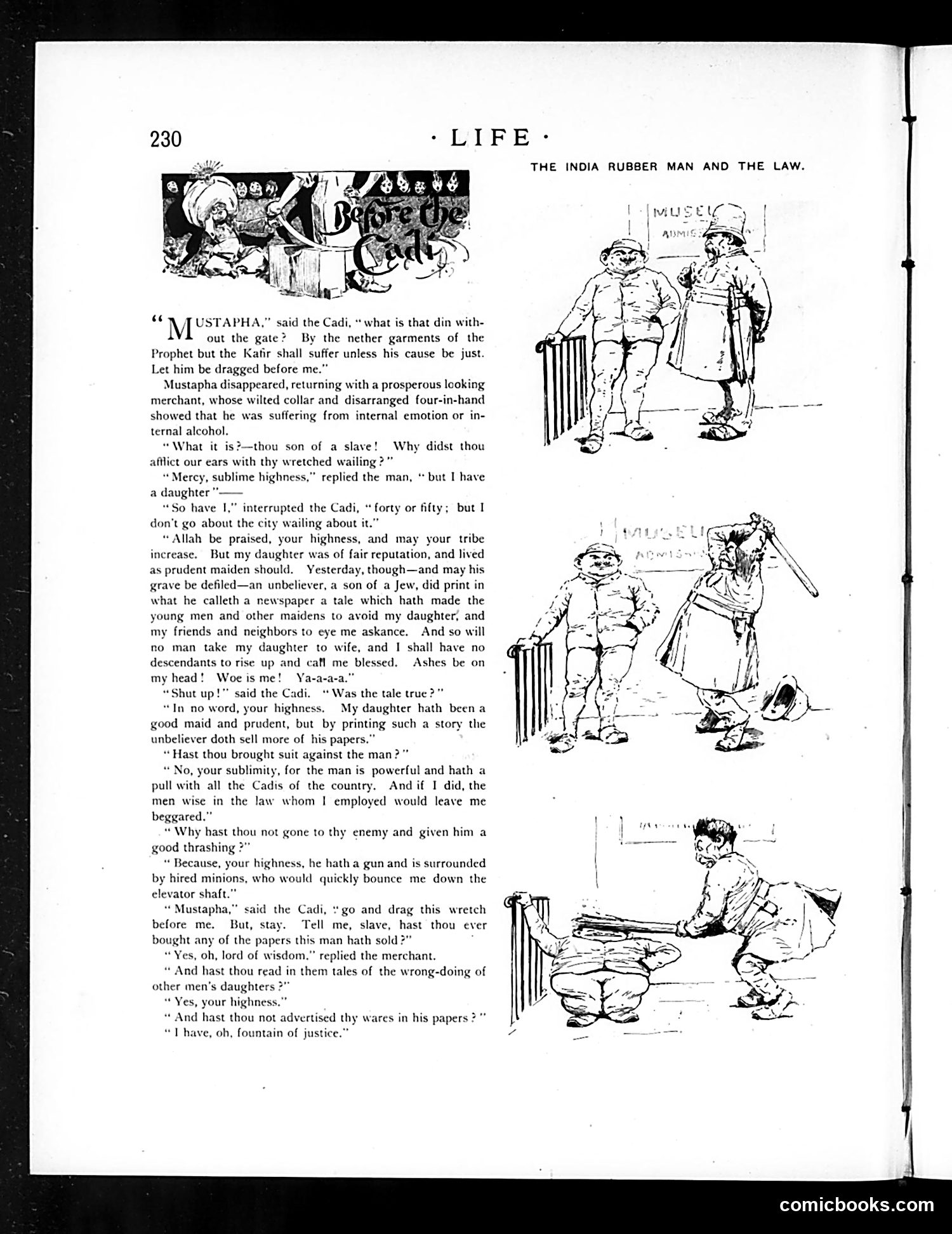
This satirical piece depicts a confrontation between a Cadi (Islamic judge) and a merchant described as an "India rubber man"—likely referring to someone whose morality is flexible or who bends rules. The narrative centers on the merchant's daughter being seduced and a subsequent lawsuit threat. The Cadi interrogates the merchant about his complicity, insinuating he lacks principles ("son of a slave," "wretched wailing"). The satire targets both characters: the merchant's hypocritical invocation of justice while admitting he advertises products deceptively, and the Cadi's performative outrage masking corruption (he admits the powerful defendant has connections preventing legal action). The joke exposes institutional and personal dishonesty across cultures regarding commerce and justice.
📄 Transcribed text from this page (OCR, searchable)
Machine-transcribed from the original scan — historical spelling and the odd misread are preserved.
ss NV USTAPHA,” said the Cadi, “ what is that din with- out the gate? By the nether garments of the Prophet but the Kafir shall suffer unless his cause be just. Let him be dragged before me.” Mustapha disappeared, returning with a prosperous looking merchant, whose wilted collar and disarranged four-in-hand showed that he was suffering from internal emotion or in- ternal alcohol. “What it is?—thou son of a slave! Why didst thou afflict our ears with thy wretched wailing ?” “Mercy, sublime highness,” replied the man, * but I have a daughter "—— > have I,” interrupted the Cadi, “forty or fifty; but I don’t go about the city wailing about it.” llah be praised, your highness, and may your tribe increase. But my daughter was of fair reputation, and lived as prudent maiden should. Yesterday, though—and may his grave be defiled—an unbeliever, a son of a Jew, did print in what he calleth a newspaper a tale which hath made the young men and other maidens to avoid my daughter; and my friends and neighbors to eye me askance. And so will no man take my daughter to wife, and I shall have no descendants to rise up and caf me blessed. Ashes be on my head! Woe is me! Ya-a-a-a.” “Shut up!" said the Cadi.“ Was the tale true?" “In no word, your highness. My daughter hath been a good maid and prudent, but by printing such a story the unbeliever doth sell more of his papers.” “Hast thou brought suit against the man?” “No, your sublimity, for the man is powerful and hath a pull with all the Cadis of the country, And if I did, the men wise in the law whom | employed would leave me beggared. “ Why bast thou not gone to thy enemy and given him a good thrashing ?" “ Because, your highness, he hath a gun and is surrounded by hired minions, who would quickly bounce me down the elevator shaft.” “ Mustapha,” said the Cadi, “'go and drag this wretch before me. But, stay. Tell me, slave, hast thou ever bought any of the papers this man hath sold?" “Yes, oh, lord of wisdom.” replied the merchant. “ And hast thou read in them tales of the wrong-doing of other men’s daughter: “Yes, your highness.” “And hast thou not advertised thy wares in his papers ?" “TL have, oh, fountain of justice.” INDIA RUBBER MAN AND THE LAW. comicbooks.com