
Life, 1894-06-07 · page 6 of 16
Life — June 7, 1894 — page 6: what you’re looking at
What you’re looking at
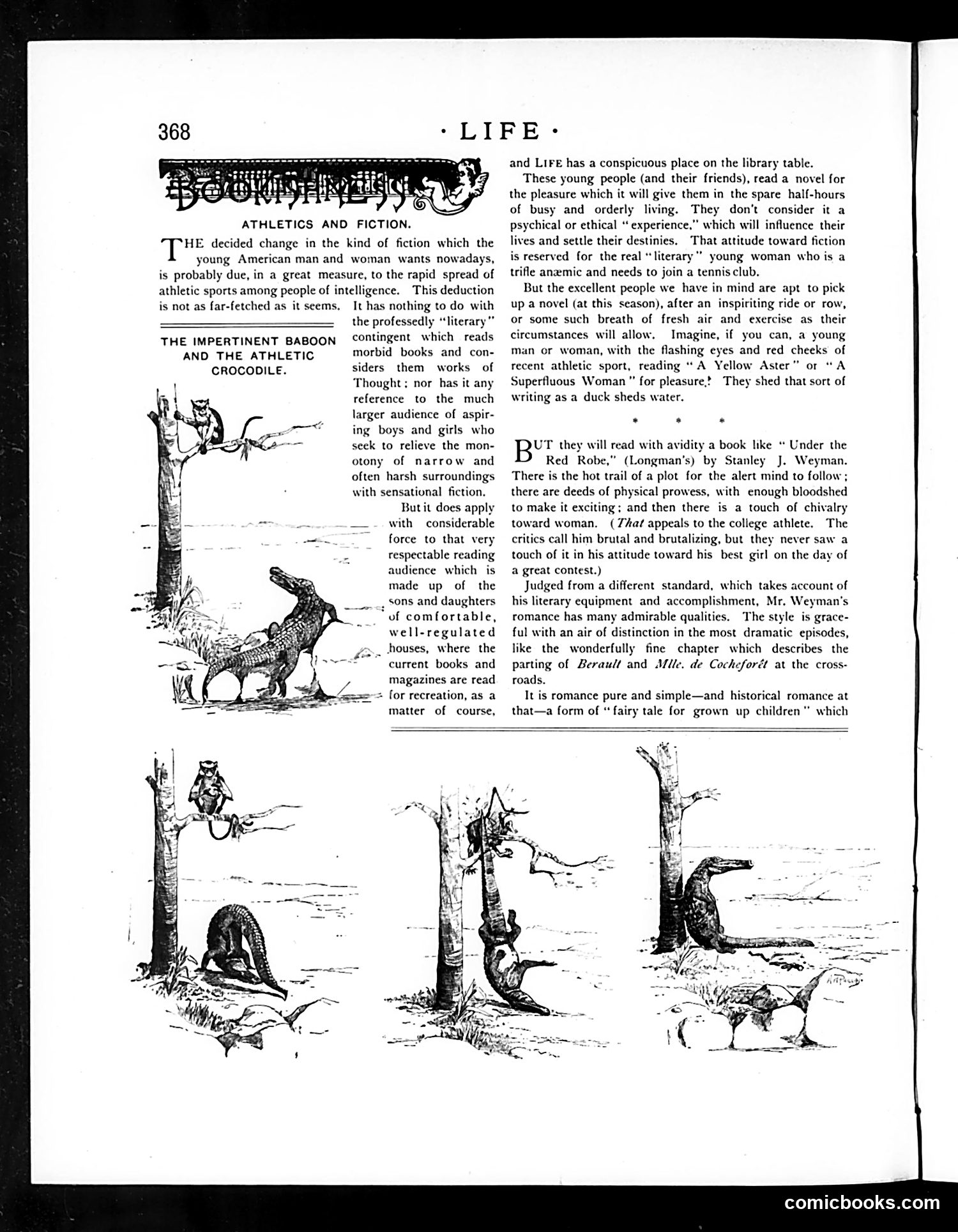
This page discusses how athletics and fiction appeal to young Americans, arguing the connection isn't contradictory. The text defends popular fiction against literary snobs, suggesting young people benefit from both athletic activity and entertaining novels. The illustrations appear to be a humorous sequence titled "The Impertinent Baboon and the Athletic Crocodile," depicting animals engaged in various activities around trees—likely anthropomorphic satire commenting on human behavior or physical pursuits. The broader point seems to be defending middlebrow entertainment and athletic pursuits against criticism from cultural elites who dismiss such interests as intellectually inferior. The magazine advocates for a balanced life combining physical activity and accessible popular reading.
📄 Transcribed text from this page (OCR, searchable)
Machine-transcribed from the original scan — historical spelling and the odd misread are preserved.
* LIFE: ATHLETICS AND FICTION. HE decided change in the kind of fiction which the young American man and woman wants nowadays, is probably due, in a great measure, to the rapid spread of athletic sports among people of intelligence. This deduction is not as far-fetched as it seems. It has nothing to do with the professedly “literary” contingent which reads morbid books and con- siders them works of Thought; nor has it any reference to the much larger audience of aspir- ing boys and girls who seek to relieve the mon- otony of narrow and often harsh surroundings with sensational fiction. Butit does apply with considerable force to that very respectable reading audience which is made up of the , Sons and daughters "of comfortable, well-regulated chouses, where the current books and magazines are read + for recreation, as a matter of course, THE IMPERTINENT BABOON AND THE ATHLETIC CROCODILE. and LIFE has a conspicuous place on the library table. These young people (and their friends), read a novel for the pleasure which it will give them in the spare half-hours of busy and orderly living. They don’t consider it a psychical or ethical “ experience,” which will influence their lives and settle their destinies. That attitude toward fiction is reserved for the real “literary” young woman who is a trifle anemic and needs to join a tennis club. But the excellent people we have in mind are apt to pick up a novel (at this season), after an inspiriting ride or row, or some such breath of fresh air and exercise as their circumstances will allow. Imagine, if you can, a young man or woman, with the flashing eyes and red cheeks of recent athletic sport, reading “A Yellow Aster” or “A Superfluous Woman” for pleasure,?’ They shed that sort of writing as a duck sheds water. . . . UT they will read with avidity a book like “ Under the Red Robe,” (Longman’s) by Stanley J. Weyman. There is the hot trail of a plot for the alert mind to follow ; there are deeds of physical prowess, with enough bloodshed to make it exciting; and then there is a touch of chivalry toward woman. (7/aé appeals to the college athlete. The critics call him brutal and brutalizing, but they never saw a touch of it in his attitude toward his best girl on the day of a great contest.) Judged from a different standard, which takes account of his literary equipment and accomplishment, Mr. Weyman’s romance has many admirable qualities. The style is grace- ful with an air of distinction in the most dramatic episodes, like the wonderfully fine chapter which describes the parting of Berault and Mile. de Cocheforét at the cross- roads. It is romance pure and simple—and historical romance at that—a form of “fairy tale for grown up children” which comicbooks.com