
Life, 1894-01-25 · page 10 of 16
Life — January 25, 1894 — page 10: what you’re looking at
What you’re looking at
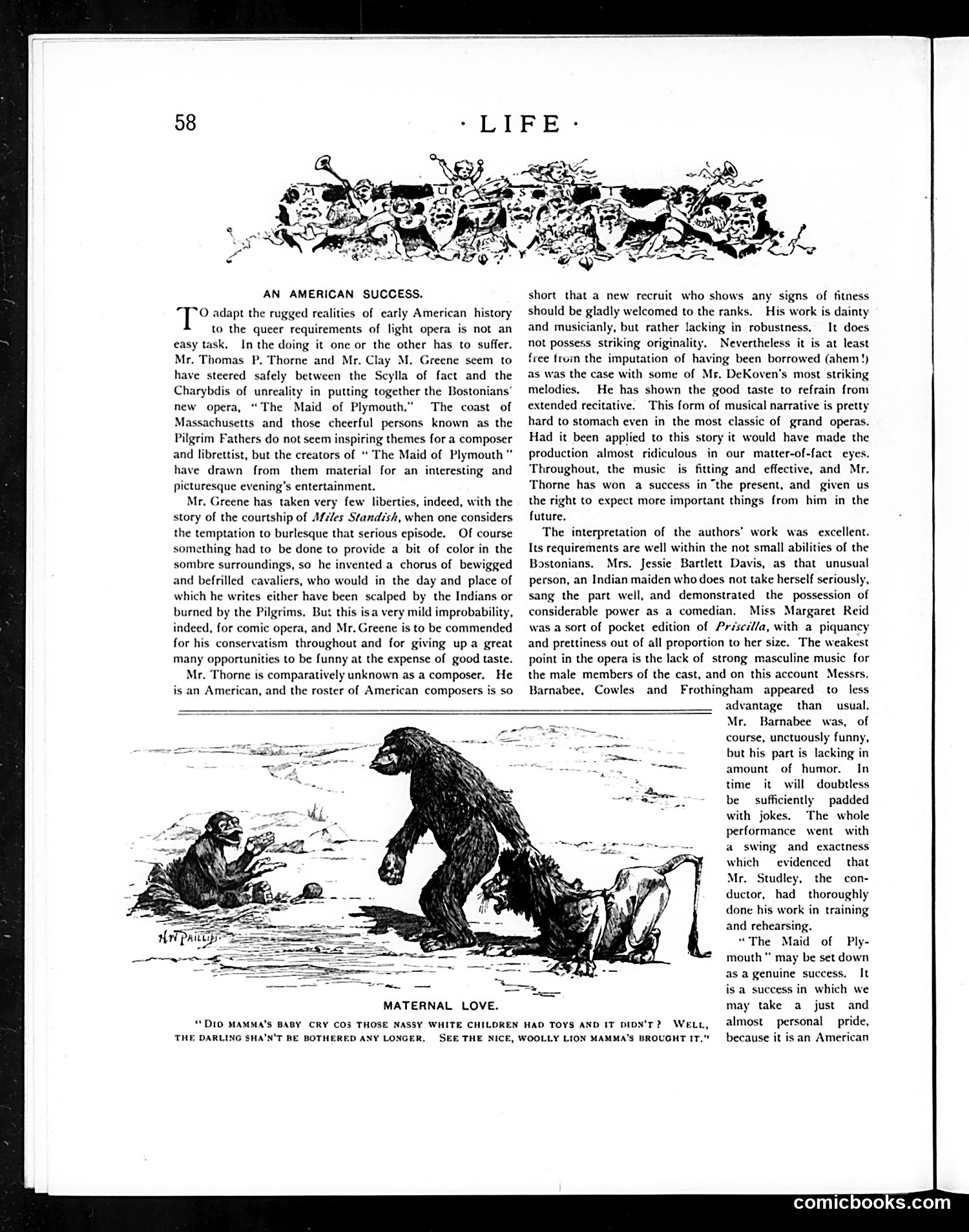
This cartoon illustrates a humorous scene of animal parenting, likely satirizing contemporary attitudes about child-rearing or maternal instinct. The image shows what appears to be a lioness presenting her cubs with a toy—specifically, a small human figure or doll. The caption's joke relies on the absurdity of the scenario: the lioness has given her children a "nice, woolly" toy so they won't bother her with their cries. This inverts normal expectations—a predator mother providing comfort items rather than teaching hunting. The satire likely critiques parents (particularly wealthy ones) who use material goods or toys to pacify children rather than engaging with them directly. The "woolly" toy suggests commercialized childhood entertainment of the era, common targets of Life magazine's social commentary.
📄 Transcribed text from this page (OCR, searchable)
Machine-transcribed from the original scan — historical spelling and the odd misread are preserved.
AN AMERICAN SUCCESS. i bine adapt the rugged realities of early American history to the queer requirements of light opera is not an easy task. In the doing it one or the other has to suffer. Mr. Thomas P. Thorne and Mr. Clay M. Greene seem to have steered safely between the Scylla of fact and the Charybdis of unreality in putting together the Bostonians’ new opera, “The Maid of Plymouth,” The coast of Massachusetts and those cheerful persons known as the Pilgrim Fathers do not seem inspiring themes for a composer and librettist, but the creators of “ The Maid of Plymouth” have drawn from them material for an interesting and picturesque evening's entertainment. Mr. Greene has taken very few liberties, indeed, with the story of the courtship of Afsdes Standish, when one considers the temptation to burlesque that serious episode. Of course something had to be done to provide a bit of color in the sombre surroundings, so he invented a chorus of bewigged and befrilled cavaliers, who would in the day and place of which he writes either have been scalped by the Indians or burned by the Pilgrims. But this isa very mild improbability, indeed, for comic opera, and Mr. Greene is to be commended for his conservatism throughout and for giving up a great many opportunities to be funny at the expense of good taste. Mr. Thorne is comparatively unknown as a composer. He is an American, and the roster of American composers is so short that a new recruit who shows any signs of fitness should be gladly welcomed to the ranks. His work is dainty and musicianly, but rather lacking in robustness. It does not possess striking originality. Nevertheless it is at least free trom the imputation of having been borrowed (ahem!) as was the case with some of Ms. DeKoven's most striking melodies. He has shown the good taste to refrain from extended recitative. This form of musical narrative is pretty hard to stomach even in the most classic of grand operas. Had it been applied to this story it would have made the production almost ridiculous in our matter-of-fact eyes. Throughout, the music is fitting and effective, and Mr. Thorne has won a success in “the present, and given us the right to expect more important things from him in the future, The interpretation of the authors’ work was excellent. Its requirements are well within the not small abilities of the Bostonians, Mrs. Jessie Bartlett Davis, as that unusual person, an Indian maiden who does not take herself seriously, sang the part well, and demonstrated the possession of considerable power as a comedian. Miss Margaret Reid was a sort of pocket edition of Préscé//a, with a piquancy and prettiness out of all proportion to her size. The weakest point in the opera is the lack of strong masculine music for the male members of the cast, and on this account Messrs. Barnabee, Cowles and Frothingham appeared to advantage than usual. less MATERNAL LOVE. “DID MAMMA'S BABY CRY CO3 THOSE NASSY WHITE CHILDREN HAD TOYS AND IT DIDN'T? THE DARLING SHA'N'T BE BOTHERED ANY LONGER. SEE THE NICE, WOOLLY LION MAMMA'S BROUGHT IT," Mr. Barnabee was, of course, unctuously funny, but his part is lacking in amount of humor. In time it will doubtless be sufficiently padded with jokes. The whole performance went with a swing and exactness which evidenced — that Mr. Studley, the con- ductor, had thoroughly done his work in training and rehearsing. “The Maid of Ply- mouth” may be set down as a genuine success. It is a success in which we may take a just and almost personal _ pride, because it isan American Wett, comicbooks.com