
Life, 1894-01-04 · page 7 of 16
Life — January 4, 1894 — page 7: what you’re looking at
What you’re looking at
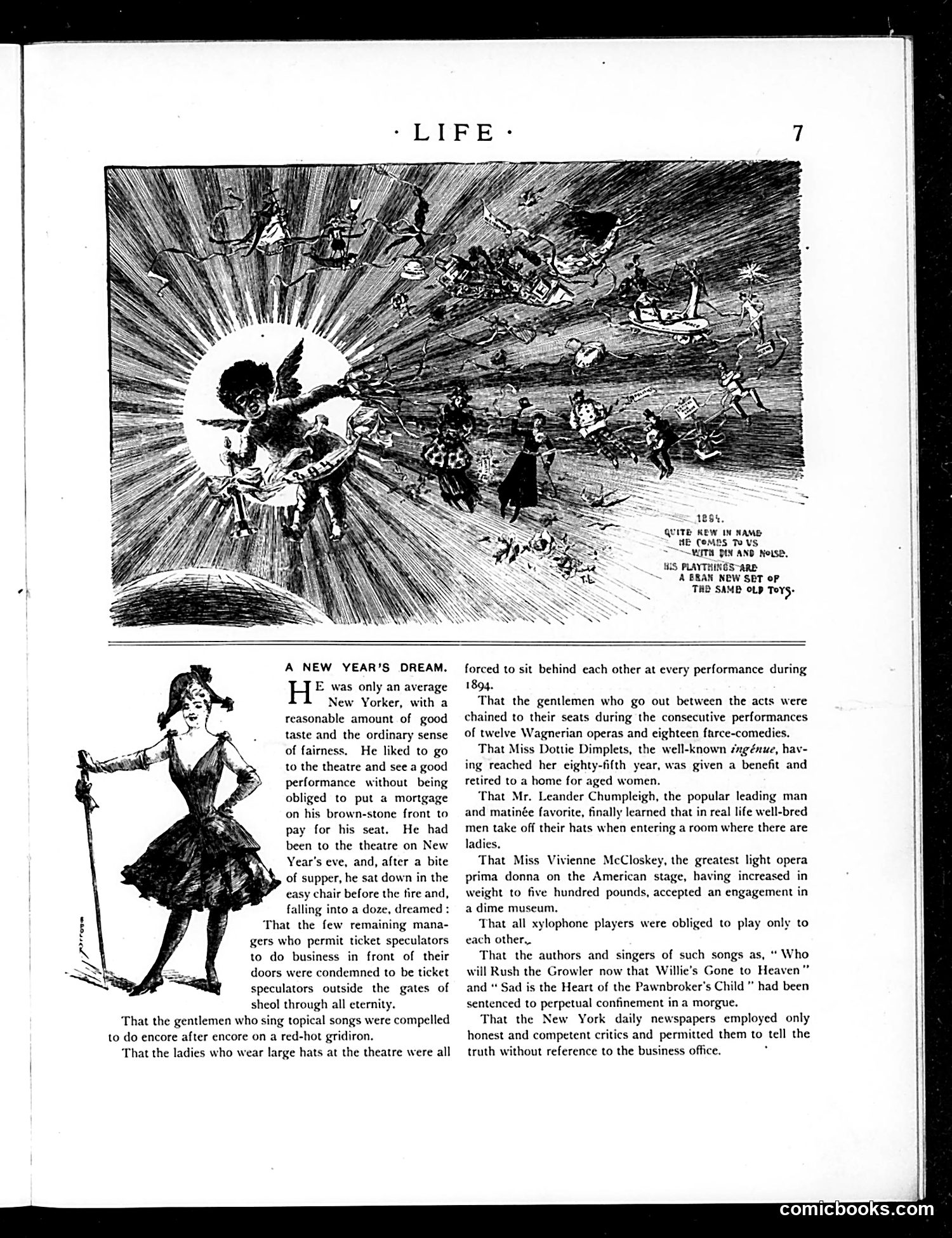
This 1894 satirical piece mocks New York theater culture. The main illustration depicts a chaotic dream scene with theatrical figures swirling around a central bright light, representing an average New Yorker's theater fantasy. The accompanying text humorously critiques theatrical conventions: gentlemen forced to remove hats during performances, ladies wearing oversized hats blocking views, and singers compelled to perform encores. It also lampoons specific opera practices—notably that xylophone players had to perform only to each other, and references to operatic works like "Who Will Rush the Growler" and "Sad is the Heart of the Pawnbroker's Child." The satire targets both theatrical absurdities and New York's newspaper critics' relationship with the theater business.
📄 Transcribed text from this page (OCR, searchable)
Machine-transcribed from the original scan — historical spelling and the odd misread are preserved.
1884. QUITE KEW IN NAME HE COMBS Tv US WT DIN AND NOISE, WIS PLAYTHINGS “ARE A BRAN NEW SBT oP SS THE SAMB OLD ToY$: A NEW YEAR’S DREAM. E was only an average New Yorker, with a reasonable amount of good taste and the ordinary sense of fairness. He liked to go to the theatre and see a good performance without being obliged to put a mortgage on his brown-stone front to pay for his seat. He had been to the theatre on New Year's eve, and, after a bite of supper, he sat down in the easy chair before the tire and, falling into a doze, dreamed : That the few remaining mana- gers who permit ticket speculators to do business in front of their doors were condemned to be ticket speculators outside the gates of sheol through all eternity. That the gentlemen who sing topical songs were compelled to do encore after encore on a red-hot gridiron. That the ladies who wear large hats at the theatre were all forced to sit behind each other at every performance during 1894. That the gentlemen who go out between the acts were chained to their seats during the consecutive performances of twelve Wagnerian operas and eighteen farce-comedies. That Miss Dottie Dimplets, the well-known sxgénue, hav- ing reached her eighty-fifth year, was given a benefit and retired to a home for aged women. That Mr. Leander Chumpleigh, the popular leading man and matinée favorite, finally learned that in real life well-bred men take off their hats when entering a room where there are ladies. That Miss Vivienne McCloskey, the greatest light opera prima donna on the American stage, having increased in weight to five hundred pounds, accepted an engagement in a dime museum, That all xylophone players were obliged to play only to each other, That the authors and singers of such songs as, “ Who will Rush the Growler now that Willie's Gone to Heaven” and “ Sad is the Heart of the Pawnbroker's Child ” had been sentenced to perpetual confinement in a morgue. That the New York daily newspapers employed only honest and competent critics and permitted them to tell the truth without reference to the business office. comicbooks.com