
Life, 1893-02-02 · page 6 of 16
Life — February 2, 1893 — page 6: what you’re looking at
What you’re looking at
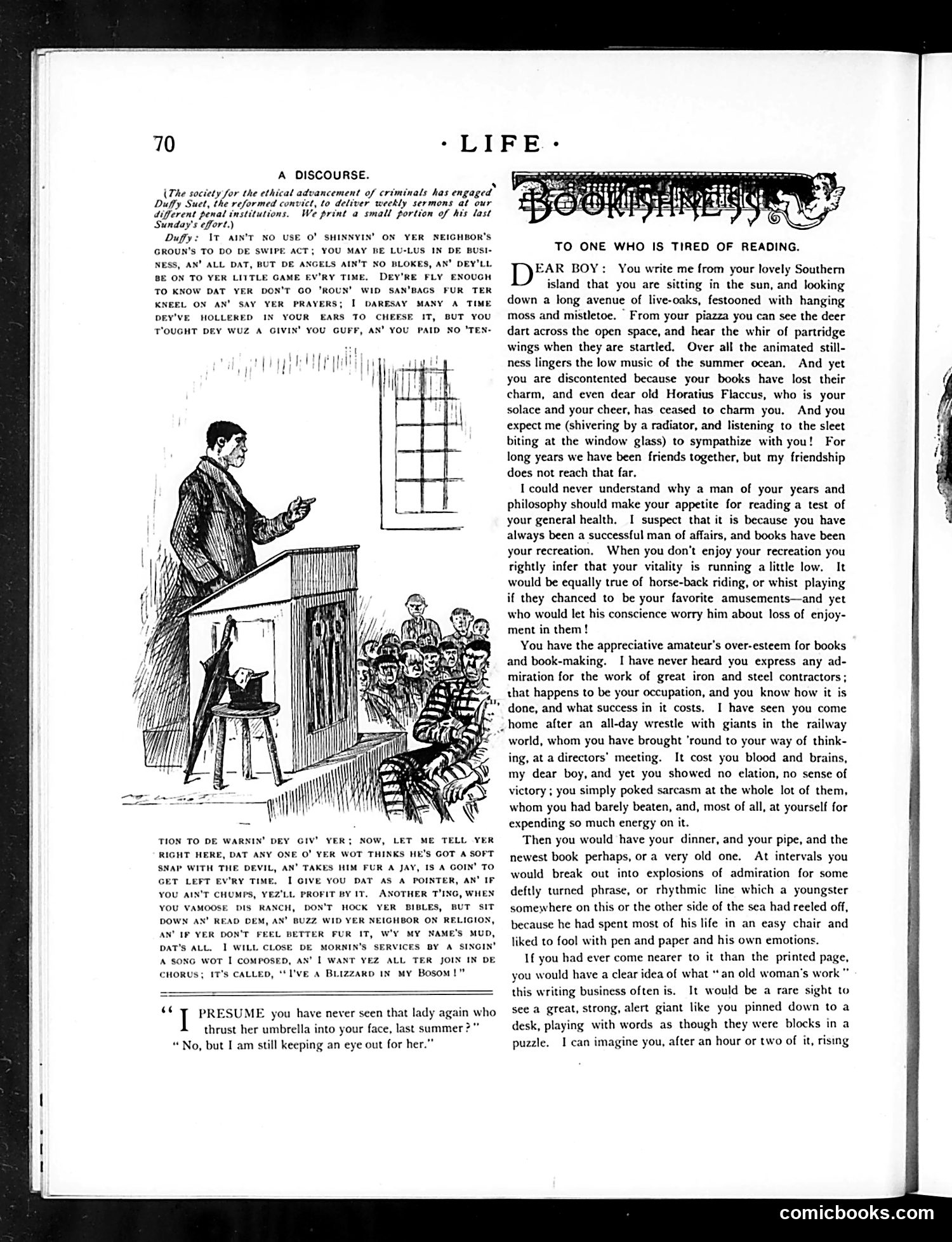
This page contains "A Discourse: To One Who Is Tired of Reading," a satirical letter addressing a reader complaining that books have lost their charm. The left side features two illustrations: the upper shows a man gesturing while speaking to an audience in what appears to be a lecture hall; the lower contains dialogue between two figures. The satire targets a specific type of person—someone successful in business who dismisses reading as recreation. The author mocks this attitude, suggesting the reader's tiredness reflects depleted vitality rather than any fault of books. The piece appears to be social commentary on early 20th-century American materialism and the tension between intellectual pursuits and commercial success. The humor derives from the author's pointed, knowing criticism of this character type.
📄 Transcribed text from this page (OCR, searchable)
Machine-transcribed from the original scan — historical spelling and the odd misread are preserved.
70 A DISCOURSE. . (The society for the ethical advancement of criminals has engaged Duffy Suet, the reformed convict, to deliver weekly sermons at our different penal institutions. We print a small portion of his last Sunday's effort.) Duffy: \T AIN'T NO USE O' SHINNYIN' ON YER NEIGHBOR'S GROUN’S TO DO DE SWIPE ACT; YOU MAY BE LU-LUS IN DE BUSI- NESS, AN’ ALL DAT, BUT DE ANGELS AIN'T NO BLOKES, AN’ DEY'LL BE ON TO YER LITTLE GAME EV'RY TIME, DEY'RE FLY ENOUGH TO KNOW DAT YER DON'T GO 'ROUN’ WID SAN'BAGS FUR TER KNEEL ON AN’ SAY YER PRAYERS; I DARESAY MANY A TIME DEY'VE HOLLERED IN YOUR EARS TO CHEESE IT, BUT YoU T'OUGHT DEY WUZ A GIVIN' YOU GuUFI ID NO “TEN- N’ DEY GIV’ YER; NOW, LET ME TELL YER RIGHT HERE, DAT ANY ONE 0’ YER WOT THINKS HE'S GOT A SOFT SNAP WITH THE DEVIL, AN’ TAKES HIM FUR A JAY, IS A GOIN’ TO GET LEFT EV’RY TIME, I GIVE YOU DAT AS A POINTER, AN’ IF YOU AIN'T CHUMPS, YEZ’LL. PROFIT BY IT, ANOTHER T'ING, WHEN YOU VAMOOSE DIS RANCH, DON'T HOCK YER BIBLES, BUT SIT DOWN AN’ READ DEM, AN’ BUZZ WID YER NEIGHBOR ON RELIGION, AN' IF YER DON'T L BETTER FUR IT, W'Y MY NAME’S MUD, DAT’S ALL. 1 WILL CLOSE DE MORNIN’S SERVICES BY A SINGIN’ A SONG WOT I COMPOSED, AN’ | WANT ALL TER JOIN IN DE CHORUS; IT's CALLED, ‘I've A Bitzzarp in MY Bosom!" $4 I PRESUME you have never seen that lady again who thrust her umbrella into your face, last summer?” “No, but I am still keeping an eye out for her.” ONE WHO IS TIRED OF READING. R BOY: You write me from your lovely Southern island that you are sitting in the sun, and looking down a long avenue of live-oaks, festooned with hanging moss and mistletoe. From your piazza you can see the deer dart across the open space, and hear the whir of partridge wings when they are startled. Over all the animated still- ness lingers the low music of the summer ocean. And yet you are discontented because your books have lost their charm, and even dear old Horatius Flaccus, who is your solace and your cheer, has ceased to charm you. And you expect me (shivering by a radiator, and listening to the sleet biting at the window glass) to sympathize with you! For long years we have been friends together, but my friendship does not reach that far. I could never understand why a man of your years and philosophy should make your appetite for reading a test of your general health. I suspect that it is because you have always been a successful man of affairs, and books have been your recreation, When you don’t enjoy your recreation you rightly infer that your vitality is running a little low. It would be equally true of horse-back riding, or whist playing if they chanced to be your favorite amusements—and yet who would let his conscience worry him about loss of enjoy- ment in them! You have the appreciative amateur's over-esteem for books and book-making. I have never heard you express any ad- miration for the work of great iron and steel contractors; that happens to be your occupation, and you know how it is done, and what success in it costs. I have seen you come * _home after an all-day wrestle with giants in the railway world, whom you have brought ‘round to your way of think- ing, at a directors’ meeting. It cost you blood and brains, my dear boy, and yet you showed no elation, no sense of victory ; you simply poked sarcasm at the whole lot of them, whom you had barely beaten, and, most of all, at yourself for expending so much energy on it. Then you would have your dinner, and your pipe, and the newest book perhaps, or a very old one. At intervals you would break out into explosions of admiration for some deftly turned phrase, or rhythmic line which a youngster somewhere on this or the other side of the sea had reeled off, because he had spent most of his life in an easy chair and liked to fool with pen and paper and his own emotions. If you had ever come nearer to it than the printed pag you would have a clear idea of what “an old woman’s work " this writing business often is. It would be a rare sight to see a great, strong, alert giant like you pinned down to a desk, playing with words as though they were blocks in a puzzle. I can imagine you, after an hour or two of it, rising comicbooks.com