
Life, 1892-01-28 · page 4 of 16
Life — January 28, 1892 — page 4: what you’re looking at
What you’re looking at
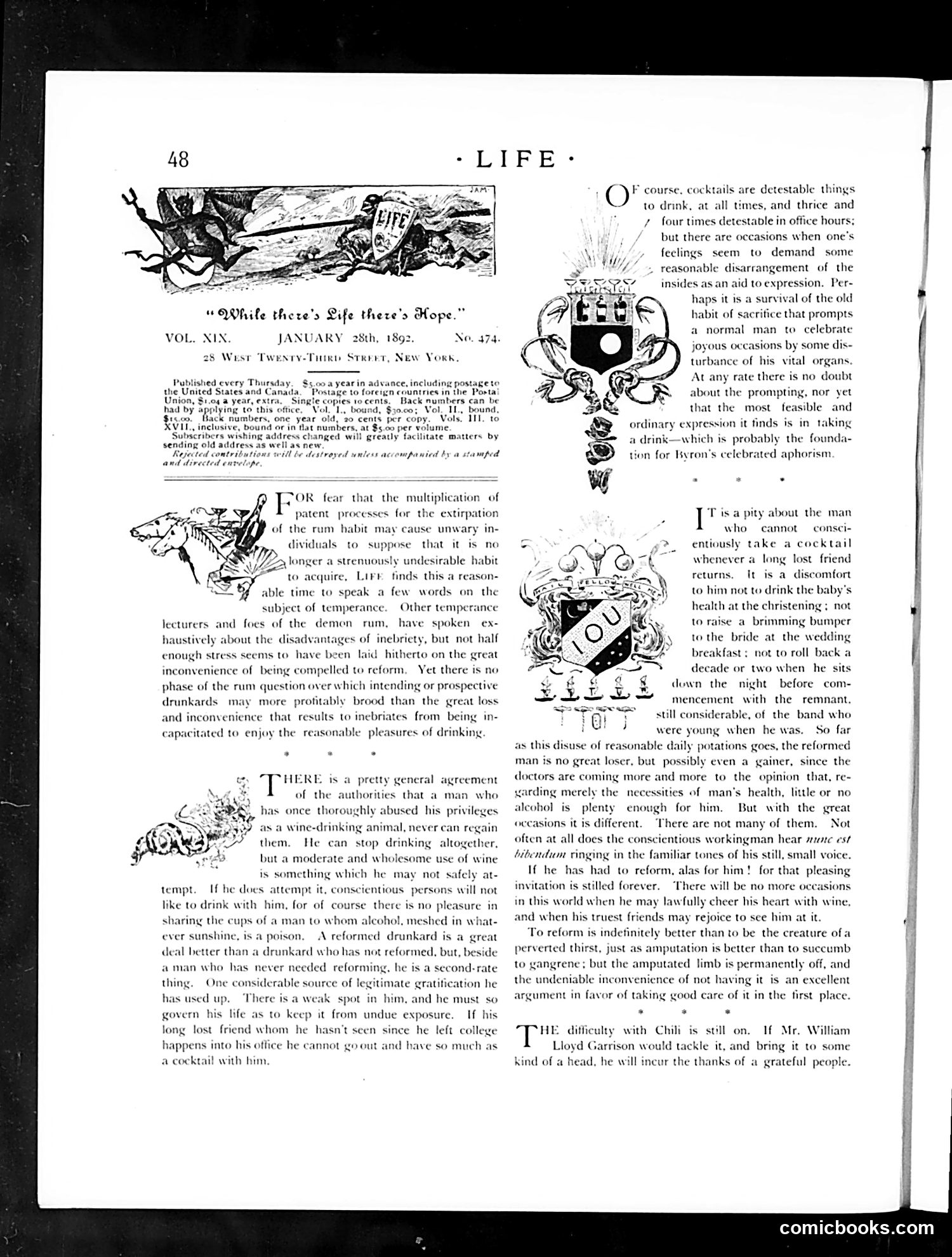
This page discusses alcohol reform and temperance through satirical commentary. The text debates whether heavy drinkers can genuinely reform or should abstain entirely. The author argues that moderate drinking is acceptable for most people, but those with demonstrated alcohol abuse problems face an impossible choice: either quit completely or remain addicts. The decorative emblems/crests with "LIFE" branding serve as page ornaments rather than depicting specific political figures. The satire targets temperance advocates' absolutism while acknowledging alcohol's genuine dangers. The final reference to "Chill" and "Mr. William Lloyd Garrison" appears to reference historical temperance reformers, though the specific context is unclear from this excerpt alone. The piece essentially mocks rigid prohibition sentiment while admitting alcohol abuse is real.
📄 Transcribed text from this page (OCR, searchable)
Machine-transcribed from the original scan — historical spelling and the odd misread are preserved.
“While there's Life there's Hope.” VOL. XIX. JANUARY 28 West Twenty- No. 474: 28th, 1892. Piiki Street, New York. Published every Thurs. the United States and Canada. Postage to foreyzn countries in the Posta: Union, $1.04 a year, extra, Single copies to cents, Back numbers can be had by ing to this office, Vol. 1, bound, $30.00; Vol. II, bound, $is.00. Hack numbers, one year old, 20 cents per copy. Vols. III. to XVIL, inclusive, bound or in tlat numbers, at $5.00 per volume Subscribers wishing address changed will greatly facilitate matters by sending old address as well as new. Rejected contributions will be destreyed unless acion and directed envelipe nied by a stamped POR fear that the multiplication of patent processes for the extirpation of the rum habit may cause unwary in- dividuals to suppose that it is no D> longer a strenuously undesirable habit VE y to acquire, Lire finds this a reason- able time to speak a few words on the subject of temperance. Other temperance rum, have spoken ex- haustivel pout the disadvantages of inebriety, but not half enough stress seems to have been laid. hitherto on the great Yet there is no lecturers and foes of the demon inconvenience of being compelled to reform phase of the rum question over which intending or prospective drunkards may more profitably brood than the great loss and inconvenience that results to inebriates from being in- capacitated to enjoy the reasonable pleasures of drinking. HERE is a pretty general agreement of the authorities that a man who has once t roughly abused his privileges 39 as a wine-drinking animal, never can regain He can stop drinking altogether, & them but a moderate and wholesome use of wine is something which he may not safely at- will not If he does attempt it, conscientious perse tempt. like to drink w him, for of course there is no pleasure in sharing the cups of a man to whom alcohol, meshed in what- ever sunshine, is a poison, A reformed drunkard is a great deal better than a drunkard who has not reformed, but, beside aman who has never needed reforming, he is a second-rate onsiderable source of legitimate gratitication he thing, One has used up. govern his life as to keep it from undue exposure. ‘There is a weak spot in him, and he must so If his Jong lost friend whom he hasn't scen since he left college happens into his office he cannot go out and have so much as a cocktail with him, F course, cocktails are detestable things to drink, at all times, and thrice and 7 four times detestable in office hours; ! but there are occasions when one’s \ feclings seem to demand some . reasonable disarrangement of the an aid to expression. Per- insides a haps it is a survival of the old habit of sacrifice that prompts normal man to celebrate joyous occasions by some dis- turbance of his vital organs. At any rate there is no doubt about the prompting, nor yet that the most feasible and ordinary expression it finds is in taking a drink—which is probably the founda- tion for Byron's celebrated aphorism I T isa pity about the man who cannot — consci- entiously take a cocktail whenever a long lost friend returns. It is a discomfort to him not to drink the s health at the christening ; not to raise a brimming bumper to the bride at the wedding breakfast; not to roll back a decade or two when he sits down the night before com- mencement with the remnant. sull considerable, of the band who So far s, the reformed were young when he was. as this disuse of reasonable daily potations goe: man i no great loser, but possibly even a gainer, since the doctors are coming more and more to the opinion that, re- yarding merely the necessities of man’s health, litle or no plenty enough for him. But with the great occasions it is different. “There are not many of them. Not st alcohol is often at all does the conscientious workingman hear more dibendum ringing in the familiar tones of his still, small voic If he has had to reform, alas for him! for that pleasing invitation is stilled forever. There will be no more occasions in this world when he may lawfully cheer his heart with wine, and when his truest friends may rejoice to see him at it. To reform is indefinitely better than to be the creature of a perverted thirst, just as amputation is better than to succumb to gangrene ; but the amputated limb is permanently off, and the undeniable inconvenience of not having it is an excellent argument in favor of taking good care of it in the first: place. . * . HE difficulty with Chili is still on. If Mr. William Lloyd Garrison would tackle it, and bring it to some kind of a head, he will incur the thanks of a. grateful people. L | 1 comicbooks.com