
Life, 1891-12-03 · page 4 of 16
Life — December 3, 1891 — page 4: what you’re looking at
What you’re looking at
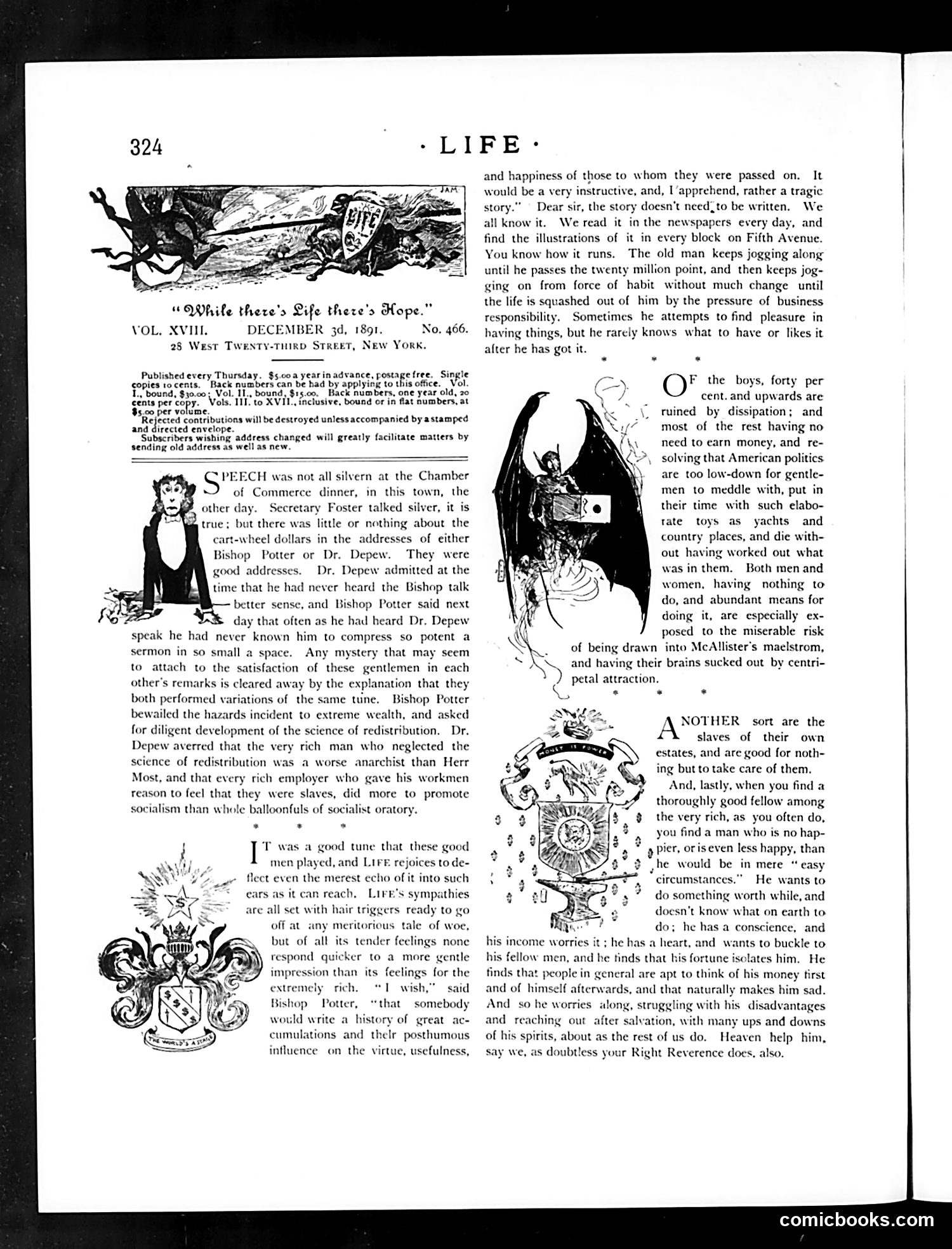
This page contains satirical editorial commentary rather than political cartoons. The text discusses social criticism of wealthy Americans, particularly targeting their lack of meaningful purpose and contribution to society. The main argument critiques how wealthy men and women squander their advantages on frivolous pursuits—yachts, country estates, and toys—while neglecting serious civic engagement. The author suggests that even the wealthy who recognize their moral obligations struggle to find genuine satisfaction or make real difference. The decorative illustrations (heraldic emblems, a demon-like figure) are typical period ornaments rather than specific political caricatures. The piece reflects Gilded Age anxieties about wealth inequality and the responsibility of the rich, concerns that remained central to American social debate in the 1890s.
📄 Transcribed text from this page (OCR, searchable)
Machine-transcribed from the original scan — historical spelling and the odd misread are preserved.
LIFE “OMhile there's Life there's Hope.” VOL, XVIII. DECE) R 3d, 1891. No, 466. 28 West TWeNTy-THIRD StReeT, New York. Published every Thursday. $5.oa yearin advance, postage tree. Single copies rocents. Back numbers can be had by applying to this office. Vor T., bound, $30.00; Vol. IL., bound, $15.00, Back numbers, one year old, 20 gents per copy. Vols. IIT to XVII, inclusive, bound or in flat aumbers, at $5.00 per volume. Rejected contributions will be destroyed unless accompanied by astamped and directed envelope. Subscribers wishing address changed will greatly facilitate matters by sending old address as well as new. S° (CH was not all silvern at the Chamber of Commerce dinner, in this town, the other day. Secretary Foster talked silver, it is but there was little or nothing about the addresses of either Depew. They were Dr. Depew admitted at the true; cart-wheel dollars in the Bishop Potter or Dr. good addresses. time that he had never heard the Bishop talk better sense, and Bishop Potter said next WS day that often as he had heard Dr. Depew speak he had never known him to compress so potent a rmon in so small a space. Any mystery that may seem ch to the satisfaction of these gentlemen in each other's remarks is cleared away by the explanation that they both performed variations of the same tune. Bishop Potter bewailed the hazards incident to extreme wealth, and asked for diligent development of the science of redistribution. Dr. Depew averred that the very rich man who neglected the cience of redi anarchist than Herr Most, and that every rich employer who gave his workmen reason to feel that they were slaves, did more to promote socialism than whole balloonfuls of jalist oratory. J T was a good tune that these good men played, and LIFE rejoices to de- t even the merest echo of it into such ears as it can reach, LI1Fk’s sympathies are all set with hair triggers ready to go off at any meritorious tale of woe, but of all its tender feelings none respond quicker to a more gentle impression than its feelings for the extremely rich, "1 Bishop Potter, “that would write a history of great ac- cumulations and thelr posthumous influence said somebody wish,” on the virtue, usefulness, and happiness of those to whom they were passed on. It would be a very instructive, and, Iapprehend, rather a tragic story.” Dear sir, the story doesn’t need. to be written. We all know it. We read it in the newspapers every day, and find the illustrations of it in every block on Fifth Avenue. You know how it runs. The old man keeps jogging along until he passes the twenty million point, and then keeps jog- ging on from force of habit without much change until the life is squashed out of him by the pressure of business $ Sometimes he attempts to find pleasure in having things, but he rarely knows what to have or likes it after he has got it. . the boys, forty per cent. and upwards are tuined by dissipation; and most of the rest having no need to earn money, and re- solving that American politics are too low-down for gentle- men to meddle with, put in their time with such elabo- tate toys as yachts and country places, and die with- out having worked out what was in them. Both men and women, having nothing to do, and abundant means for doing it, are especially ex- posed to the miserable risk of being drawn into McAllister’s maelstrom, and having their brains sucked out by centri- sort are the of their own estates, and are good for noth- ing but to take care of them. And, lastly, when you find a thoroughly good fellow among % the very rich, as you often do, you find a man who is no hap- ? pier, oriseven less happy, than 4 he would be in mere “ easy circumstance He wants to do something worth while, and doesn't know what on earth to do; he has a conscience, and his income worries it ; he has a heart, and wants to buckle to his fellow men, and he tinds that bis fortune isolates him. He finds that people in general are apt to think of his money first and of himself afterwards, and that naturally makes him sad. And so he worries along, struggling with his disadvantages and reaching out after salvation, with many ups and downs of his spirits, about as the rest of us do. Heaven help him, say we, as doubt! ss your Right Reverence docs, also. comicbooks.com