
Life, 1891-08-06 · page 10 of 14
Life — August 6, 1891 — page 10: what you’re looking at
What you’re looking at
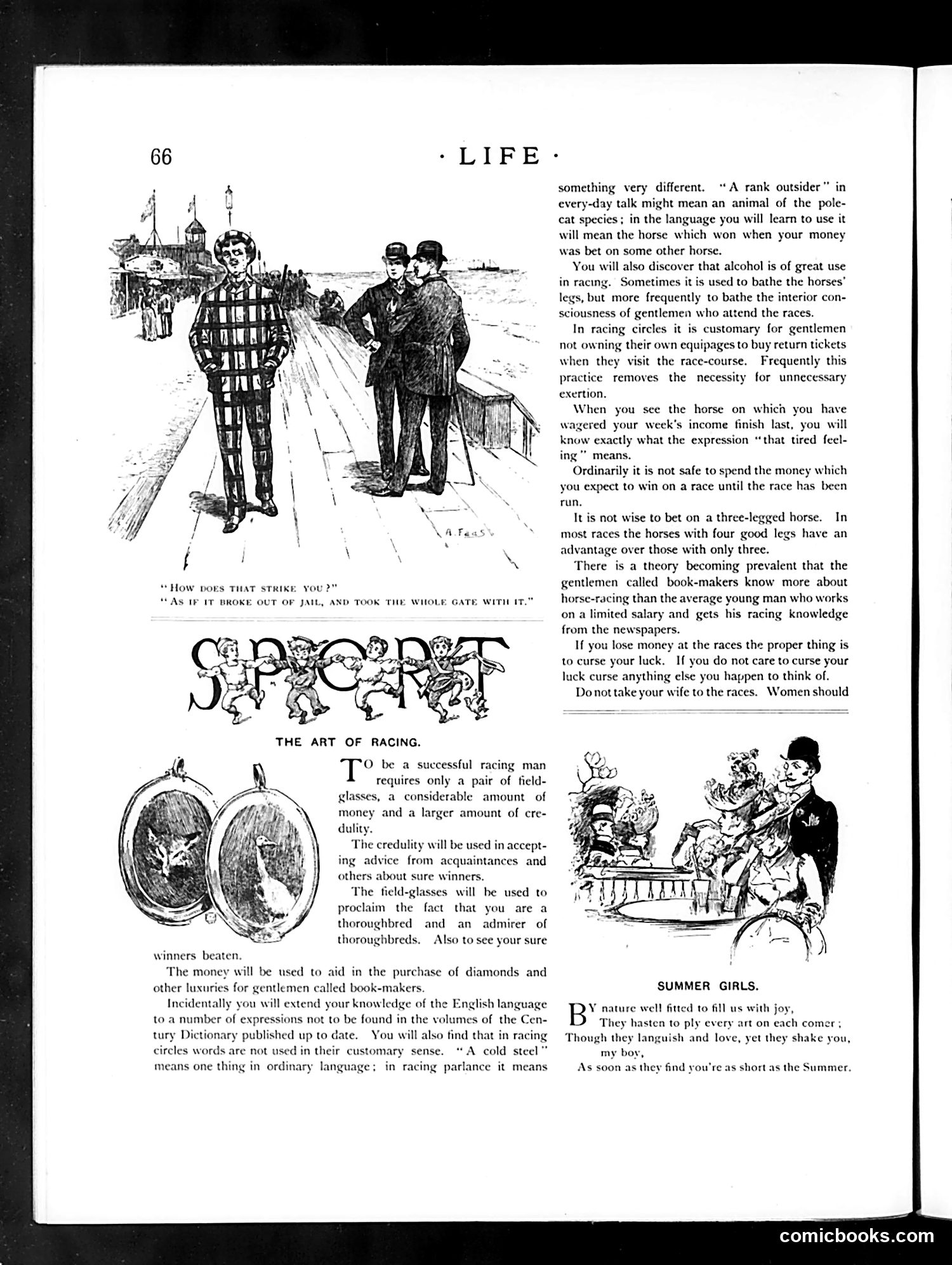
This page satirizes horse-racing culture among wealthy gentlemen. The top illustration shows three men at a racetrack, with the caption "How does that strike you?" implying one man just lost significant money betting on horses. **The satire targets:** - Wealthy men's obsession with horse racing and gambling - The financial recklessness of betting one's weekly income on races - The use of "field glasses" and affected vocabulary to appear sophisticated about racing - Credibility based on claimed insider knowledge rather than actual expertise - The foolishness of taking wives to races (implied disapproval) The text humorously describes racing jargon, warns against betting money you can't afford to lose, and mocks the pretension of amateur racing enthusiasts who lack genuine knowledge but affect expertise through fashion and vocabulary.
📄 Transcribed text from this page (OCR, searchable)
Machine-transcribed from the original scan — historical spelling and the odd misread are preserved.
“How pokes THAT STRIKE You?” ‘SAS IF IT BROKE OUT OF JAIL, AND TOOK THE WHOLE 6. THE ART OF RACING. O be a successful racing man requires only a pair of field- glasses, a considerable amount of money and a larger amount of cre- dulit The credulity will be used in accept- ing advice from acquaintances and others about sure winners. The field-glasses will be used to proclaim the fact that you are a thoroughbred and an admirer of thoroughbreds. Also to see your sure winners beaten. The mon other luxurie will be used to aid in the purchase of diamonds and for gentlemen called book-makers. Incidentally you will extend your knowledge of the English language to a number of expressions not to be found in the volumes of the Cen- tury Dictionary published up to date. You will also find that in racing circles words are not used in their customary “A cold steel” ing parlance it means ense. means one thing in ordinary lang in 2 something very different. “A rank outsider” in every-day talk might mean an animal of the pole- cat species; in the language you will learn to use it will mean the horse which won when your money was bet on some other horse. You will also discover that alcohol is of great use in racing. Sometimes it is used to bathe the horses’ legs, but more frequently to bathe the interior con- sciousness of gentlemen who attend the races. In racing circles it is customary for gentlemen not owning their own equipages to buy return tickets when they visit the race-course. Frequently this practice removes the necessity for unnecessary exertion, When you see the horse on wagered your wee! which you have 's income finish last, you will know exactly what the expression “that tired feel- ing” means. Ordinarily it is not safe to spend the money which you expect to win on a race until the race has been run, It is not wise to bet on a three-legged horse. In most races the horses with four good legs have an advantage over those with only three. There is a theory becoming prevalent that the gentlemen called book-makers know more about horse-racing than the average young man who works on a limited salary and gets his racing knowledge from the newspapers. If you lose money at the races the proper thing is to curse your luck. If you do not care to curse your luck curse anything else you happen to think of. Donottake your wife to the races. Women should SUMMER GIRLS. Y nature well fitted to fill us with joy, They hasten to ply every art on each comer; Though they languish and love, yet they shake you, my boy, As soon as they find you're as short as the Summer. comicbooks.com