
Life, 1890-07-10 · page 7 of 14
Life — July 10, 1890 — page 7: what you’re looking at
What you’re looking at
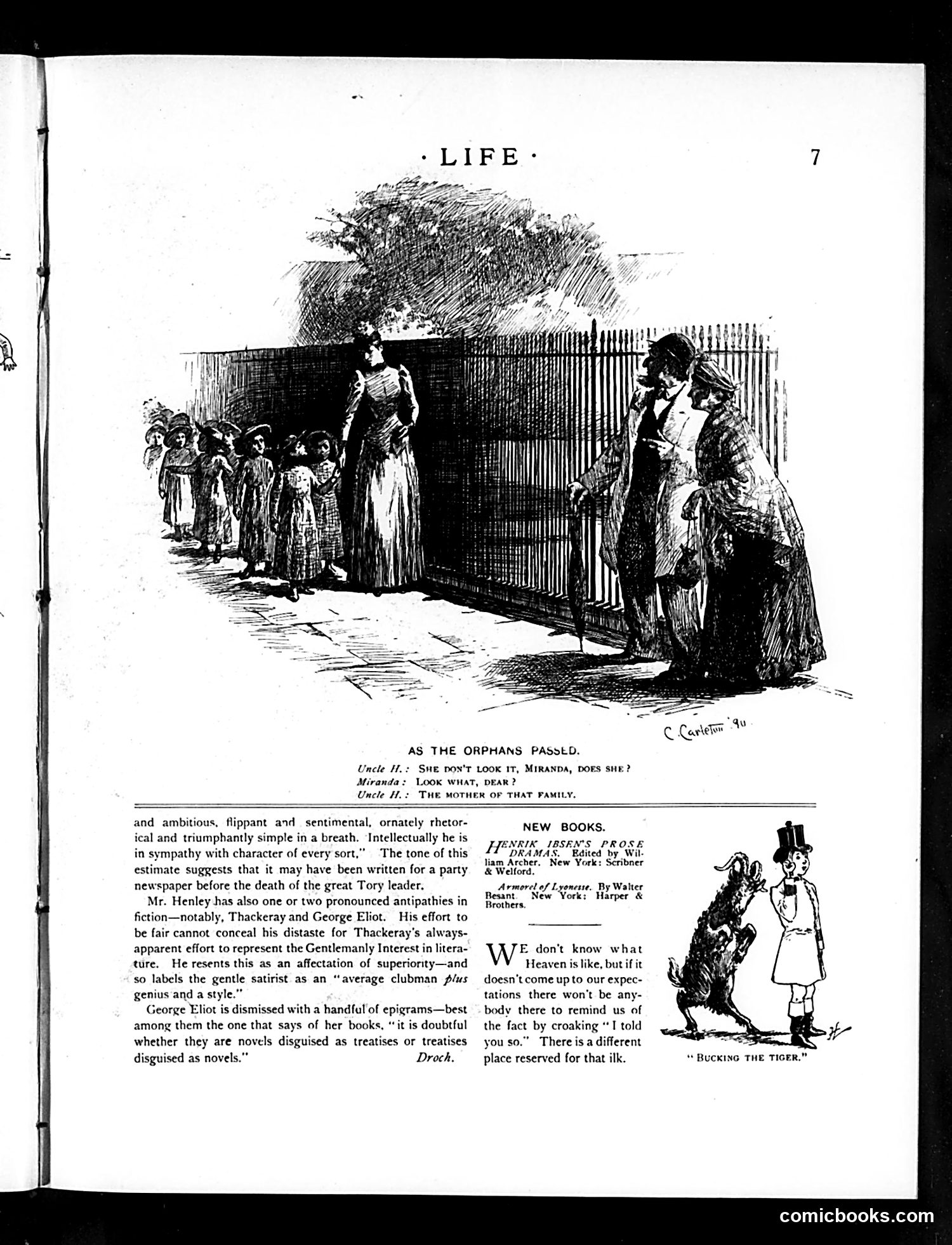
**Main Cartoon: "As the Orphans Passed"** This illustration depicts a wealthy woman and gentleman observing a line of poor children passing by a fence. The dialogue reveals the satirical point: Uncle H. asks if Miranda is looking at them, and she responds dismissively that she's looking at "what, dear?"—implying the orphans are beneath her notice. Uncle H. then identifies them as "the mother of that family," suggesting these are destitute children. The satire targets upper-class indifference to poverty and orphaned children during this era. The well-dressed figures' casual disregard for visible human suffering exemplifies Gilded Age social callousness that Life magazine frequently criticized. The cartoon mocks both the wealthy's obliviousness and their defensive rationalization of inequality.
📄 Transcribed text from this page (OCR, searchable)
Machine-transcribed from the original scan — historical spelling and the odd misread are preserved.
| wil = AS THE ORPHANS PASSED. Uncle He: Miranda: Uncle H.: SHE DON'T LOOK IT, MIRANDA, DOES SHE? LOOK WHAT, DEAR? THE MOTHER OF THAT FAMILY, © Carere 4 and ambitious, flippant and sentimental, ornately rhetor- ical and triumphantly simple in a breath. ‘Intellectually he is in sympathy with character of every sort,” The tone of this estimate suggests that it may have been written for a party newspaper before the death of the great Tory leader. Mr. Henley has also one or two pronounced antipathies in fiction—notably, Thackeray and George Eliot. His effort to be fair cannot conceal his distaste for Thackeray's always- apparent effort to represent the Gentlemanly Interest in litera- ture. He resents this as an affectation of superiortty—and so labels the gentle satirist as an “average clubman plus genius and a style.” George Eliot is dismissed with a handful of epigrams—best among them the one that says of her books, “it is doubtful whether they are novels disguised as treatises or treatises disguised as novels.” Droch. NEW BOOKS. H{ENRIK IBSEN'S PROSE DRAMAS. Edited by Wil- liam Archer, New York: Scribner & Welford. Armorel of Lygnesse, By Walter Besant. New York: Harper & Brothers. E don't know what Heaven is like, but if it doesn't come up to our expec- tations there won't be any- body there to remind us of the fact by croaking “I told you so.” There is a different place reserved for that ilk. comicbooks.com