
Life, 1889-12-26 · page 37 of 55
Life — December 26, 1889 — page 37: what you’re looking at
What you’re looking at
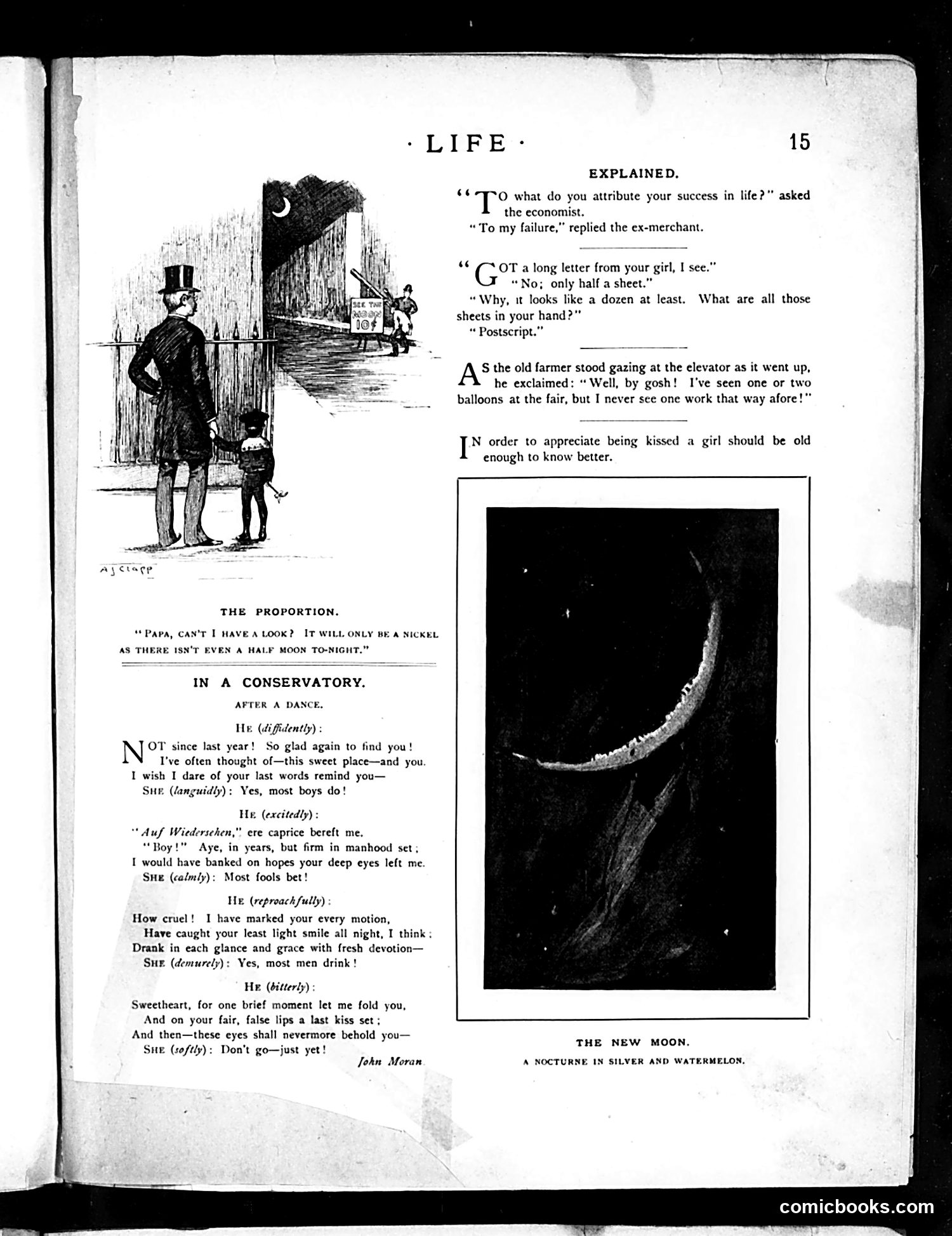
This page contains several brief humorous quips and one longer dramatic poem, typical of *Life* magazine's satirical format. **The jokes** mock social conventions: a failed merchant attributes success to failure (ironic reversal); a girl's postscript-heavy letters suggest excessive correspondence; a farmer mistakes an elevator for a hot-air balloon (rural ignorance of modern technology); and a child wants to see the moon for a nickel (childhood logic). **"In a Conservatory"** is a longer romantic dialogue where a man earnestly expresses devotion after a year's absence, but the woman (labeled "She") repeatedly undercuts his sentiment with dry rejoinders—"most boys do," "most fools bet," "most men drink." The satire targets sentimental male romanticism, suggesting women see through performative passion. The man's final plea ("Don't go—just yet!") ironically validates her cynicism. The accompanying illustration shows an elevator—a modern marvel—reinforcing the rural-vs.-urban divide of the era.
📄 Transcribed text from this page (OCR, searchable)
Machine-transcribed from the original scan — historical spelling and the odd misread are preserved.
EXPLAINED. O what do you attribute your success in life?” asked the economist. “To my failure,” replied the ex-merchant. OT a long letter from your girl, I see.” “No; only half a sheet.” “Why, it looks like a dozen at least. What are all those sheets in your hand?” “Postscript.” S the old farmer stood gazing at the elevator as it went up, he exclaimed: “Well, by gosh! I've seen one or two balloons at the fair, but I never see one work that way afore!" N order to appreciate being kissed a girl should be old enough to know better. Ay cacge THE PROPORTION. “Papa, CAN'T | HAVE A LOOK? IT WILL ONLY BE A NICKEL EVEN A HALF MOON TO-NIGHT.”” IN A CONSERVATORY. AFTER A DAY He (difidently) : OT since last year! So glad again to find you! I've often thought of—this sweet place—and you. I wish I dare of your last words remind you— Sur. (languidly): Yes, most boys do! He. (excitedly) : “Auf Wiedersehen,” ere caprice bereft me. “Boy! Aye, in years, but firm in manhood set ; I would have banked on hopes your deep eyes left me. SHE (calmly); Most fools bet! He (reproach/ully) How cruel! I have marked your every motion, Have caught your least light smile all night, I think Drank in each glance and grace with fresh devotion— Sue (demurely): Yes, most men drink! He (bitterly): Sweetheart, for one brief moment let me fold you, And on your fair, false lips a last kiss set ; And then—these eyes shall nevermore behold you— Sue (softly): Don't go—just yet! THE NEW MOON. John Moran A NOCTURNE IN SILVER AND WATERMELON, comicbooks.com