
Life, 1889-09-05 · page 11 of 16
Life — September 5, 1889 — page 11: what you’re looking at
What you’re looking at
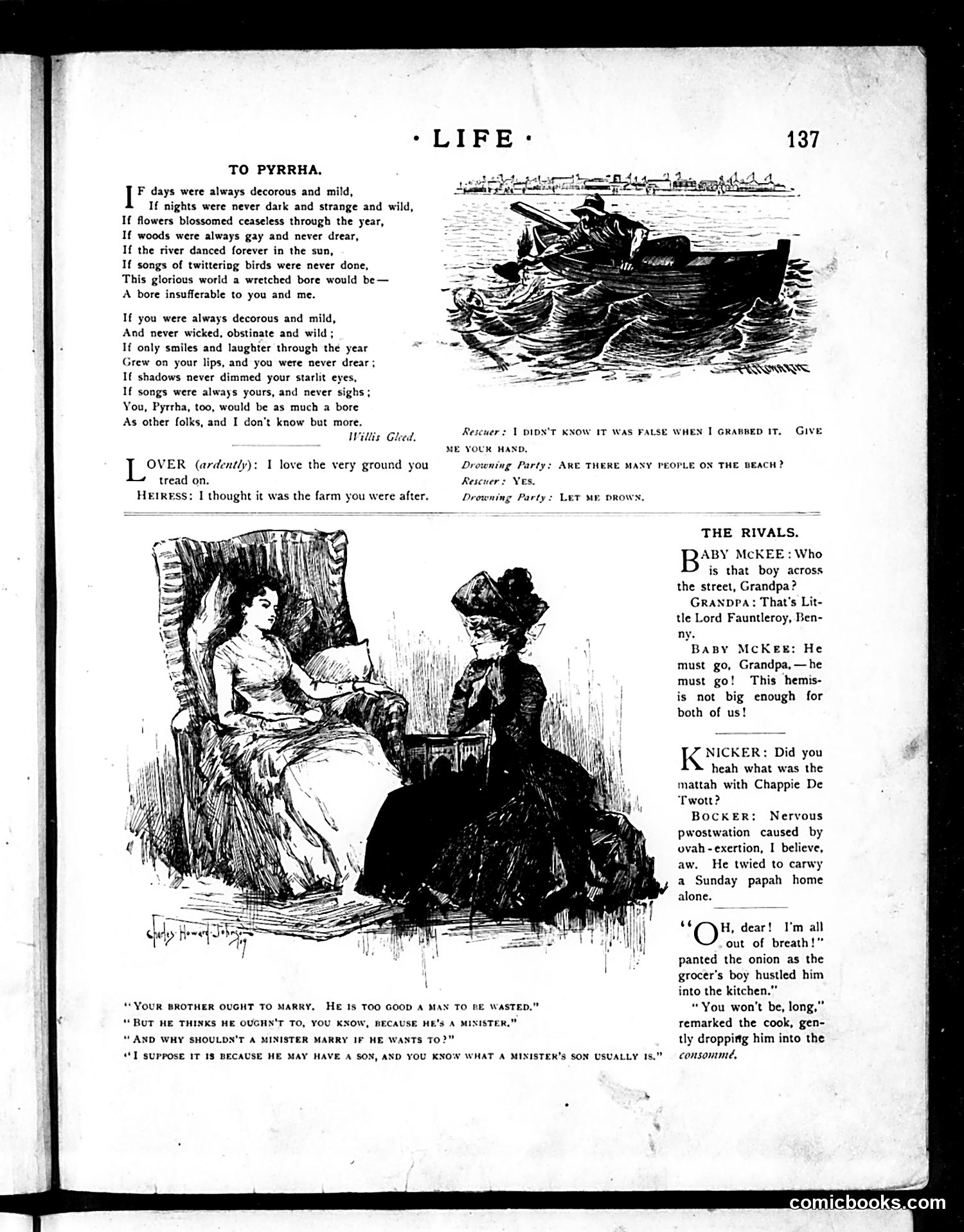
This page contains two distinct sections: **"To Pyrrha"** (top left): A poem celebrating idealized rural life—eternal spring, singing birds, dancing rivers, perpetual smiles. The satire mocks romantic pastoralism by suggesting such monotonous perfection would actually be tedious ("a bore"). **"The Rivals"** (right side): A comedic sketch depicting a conversation between a Grandpa and Baby McKee about "Little Lord Fauntleroy" across the street. The humor revolves around class pretension—the child's ostentatious formal title contrasts with Baby McKee's casual, American informality. Additional gossip about a minister's son's nervous condition adds social commentary on Victorian propriety and reputation management. The illustration shows two women in period dress conversing, likely about local social matters. Both pieces satirize late-19th-century American social conventions and affectations.
📄 Transcribed text from this page (OCR, searchable)
Machine-transcribed from the original scan — historical spelling and the odd misread are preserved.
TO PYRRHA. F days were always decorous and mild, If nights were never dark and strange and wild, If flowers blossomed ceaseless through the year, If woods were always gay and never drear, If the river danced forever in the sun, If songs of twittering birds were never done, This glorious world a wretched bore would be— A bore insufferable to you and me. If you were always decorous and mild, And never wicked, obstinate and wild ; If only smiles and laughter through the year Grew on your lips, and you were never drear; If shadows never dimmed your starlit eyes, If songs were always yours, and never sighs; You, Pyrrha, too, would be as much a bore As other folks, and I don’t know but more. Willis Gleed. OVER (ardently): 1 love the very ground you tread on. HEIRESS: I thought it was the farm you were after. ‘YOUR BROTHER OUGHT TO MARRY. Rescuer: 1 DIDN'T KNOW IT WAS FALSE WHEN I GRABBED IT, ME YOUR HAND, Drowning Party: Rescuer: Yes. Drowning Party: HE 18 TOO GOOD A MAN TO BE WASTED.” “BUT HE THINKS HE OUGHN'T TO, YOU KNOW, BECAUSE HE'S A MINISTER,” “ AND WHY SHOULDN'T A MINISTER MARRY IF HE WANTS TO?” «(1 SUPPOSE IT IS BECAUSE HE MAY HAVE A SON, AND YOU KNOW WHAT A MINISTER'S SON USUALLY 18.” Give ARE THERE MANY PEOPLE ON THE BEACH ? LeT ME DROWN, THE RIVALS. ABY MCKEE: Who is that boy across the street, Grandpa? GRranppa: That's Lit- tle Lord Fauntleroy, Ben- ny. Baspy MCKEE: He must go, Grandpa, —he must go! This hemis- is not big enough for both of us! I NICKER: Did you heah what was the mattah with Chappie De Twott? BOCKER: Nervous pwostwation caused by ovah - exertion, I believe, aw. He twied to carwy a Sunday papah home alone. ‘CH, dear! I'm all out of breath!" panted the onion as the grocer’s boy hustled him into the kitchen.” “You won't be, long,” remarked the cook, gen- tly dropping him into the consommeé,