
Life, 1886-12-23 · page 2 of 18
Life — December 23, 1886 — page 2: what you’re looking at
What you’re looking at
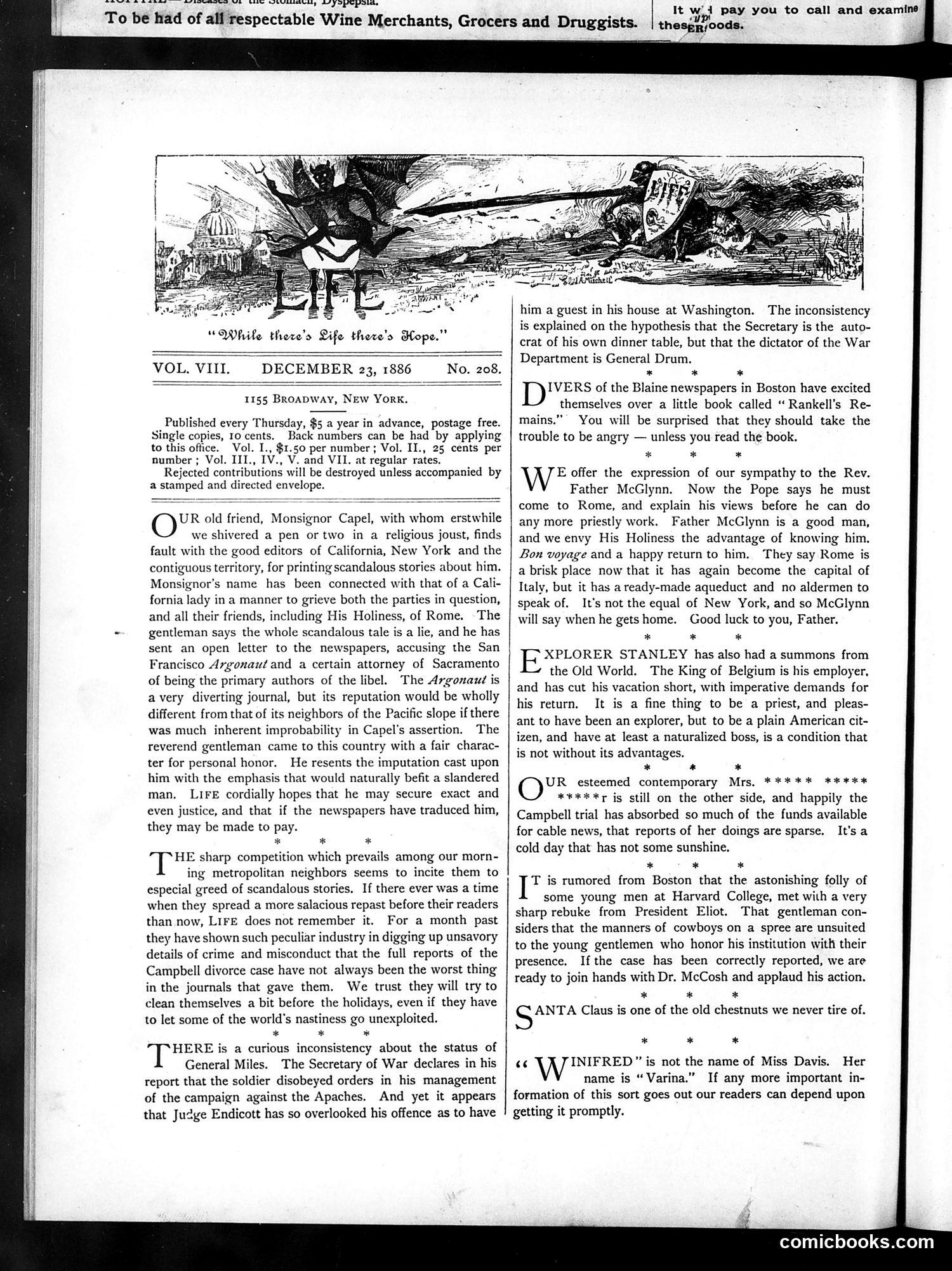
The main cartoon depicts a figure sitting beneath a large tree with the caption "While there's Life there's Hope." The tree appears gnarled and possibly diseased, suggesting decline or hardship. The image likely represents satirical commentary on American optimism during economic or political difficulties of the 1880s. The accompanying text discusses Monsignor Capel, a religious figure accused of spreading scandal about California society, and debates surrounding General Miles and Apache campaign management. There's also commentary on newspaper competition and sensationalism. The cartoon seems to critique the gap between hopeful rhetoric and difficult realities—a common satirical theme of the era. Without clearer visual details of specific figures or caricatures, the exact political targets remain somewhat unclear.
📄 Transcribed text from this page (OCR, searchable)
Machine-transcribed from the original scan — historical spelling and the odd misread are preserved.
2 Dyer Be ates acerca tb Ooo So acd To be had of all respectable Wine Merchants, Grocers and Druggists. thesgR/oods. “While there’s Life there's Hope.” No. 208. VOL. VIII. DECEMBER 23, 1886 1155 BRoapway, New York. Published every Thursday, $5 a year in advance, postage free. Single copies, 10 cents. Back numbers can be had by applying to this office.’ Vol. I., $1.50 per number ; Vol. II., 25 cents per number ; Vol. III., IV., V. and VIL. at regular rates. Rejected contributions will be destroyed unless accompanied by a stamped and directed envelope. we shivered a pen or two in a religious joust, finds fault with the good editors of California, New York and the contiguous territory, for printing scandalous stories about him. Monsignor’s name has been connected with that of a Cali- fornia lady in a manner to grieve both the parties in question, and all their friends, including His Holiness, of Rome. The gentleman says the whole scandalous tale is a lie, and he has sent an open letter to the newspapers, accusing the San Francisco Argonaut and a certain attorney of Sacramento of being the primary authors of the libel. The Argonaut is avery diverting journal, but its reputation would be wholly different from that of its neighbors of the Pacific slope if there was much inherent improbability in Capel's assertion. The reverend gentleman came to this country with a fair charac- ter for personal honor. He resents the imputation cast upon him with the emphasis that would naturally befit a slandered man. LIFE cordially hopes that he may secure exact and even justice, and that if the newspapers have traduced him, they may be made to pay. * * * HE sharp competition which prevails among our morn- ing metropolitan neighbors seems to incite them to especial greed of scandalous stories. If there ever was a time when they spread a more salacious repast before their readers than now, LIFE does not remember it. For a month past they have shown such peculiar industry in digging up unsavory details of crime and misconduct that the full reports of the Campbell divorce case have not always been the worst thing in the journals that gave them. We trust they will try to clean themselves a bit before the holidays, even if they have to let some of the world’s nastiness go unexploited. * * * HERE is a curious inconsistency about the status of General Miles. The Secretary of War declares in his report that the soldier disobeyed orders in his management of the campaign against the Apaches. And yet it appears that Judge Endicott has so overlooked his offence as to have him a guest in his house at Washington. The inconsistency is explained on the hypothesis that the Secretary is the auto- crat of his own dinner table, but that the dictator of the War Department is General Drum. * * * IVERS of the Blaine newspapers in Boston have excited themselves over a little book called “ Rankell’s Re- mains.” You will be surprised that they should take the trouble to be angry — unless you read the book. * * * E offer the expression of our sympathy to the Rev. Father McGlynn. Now the Pope says he must come to Rome, and explain his views before he can do any more priestly work. Father McGlynn is a good man, and we envy His Holiness the advantage of knowing him. Bon voyage and a happy return to him. They say Rome is a brisk place now that it has again become the capital of Italy, but it has a ready-made aqueduct and no aldermen to speak of. It’s not the equal of New York, and so McGlynn will say when he gets home. Good luck to you, Father. * * * ifs SeEeRE® STANLEY has also had a summons from the Old World. The King of Belgium is his employer, and has cut his vacation short, with imperative demands for his return. It is a fine thing to be a priest, and pleas- ant to have been an explorer, but to be a plain American cit- izen, and have at least a naturalized boss, is a condition that is not without its advantages. * * * UR esteemed contemporary Mrs. ***** ***** *****r js still on the other side, and happily the Campbell trial has absorbed so much of the funds available for cable news, that reports of her doings are sparse. It's a cold day that has not some sunshine, * * * T is rumored from Boston that the astonishing folly of some young men at Harvard College, met with a very sharp rebuke from President Eliot. That gentleman con- siders that the manners of cowboys on a spree are unsuited to the young gentlemen who honor his institution with their presence. Ifthe case has been correctly reported, we are ready to join hands with Dr. McCosh and applaud his action. * * * Sante Claus is one of the old chestnuts we never tire of. * * * “cc INIFRED” is not the name of Miss Davis. Her name is “Varina.” If any more important in- formation of this sort goes out our readers can depend upon getting it promptly. comicbooks.com pay you to call and examine