
Judge, 1929-07-13 · page 9 of 36
Judge — July 13, 1929 — page 9: what you’re looking at
What you’re looking at
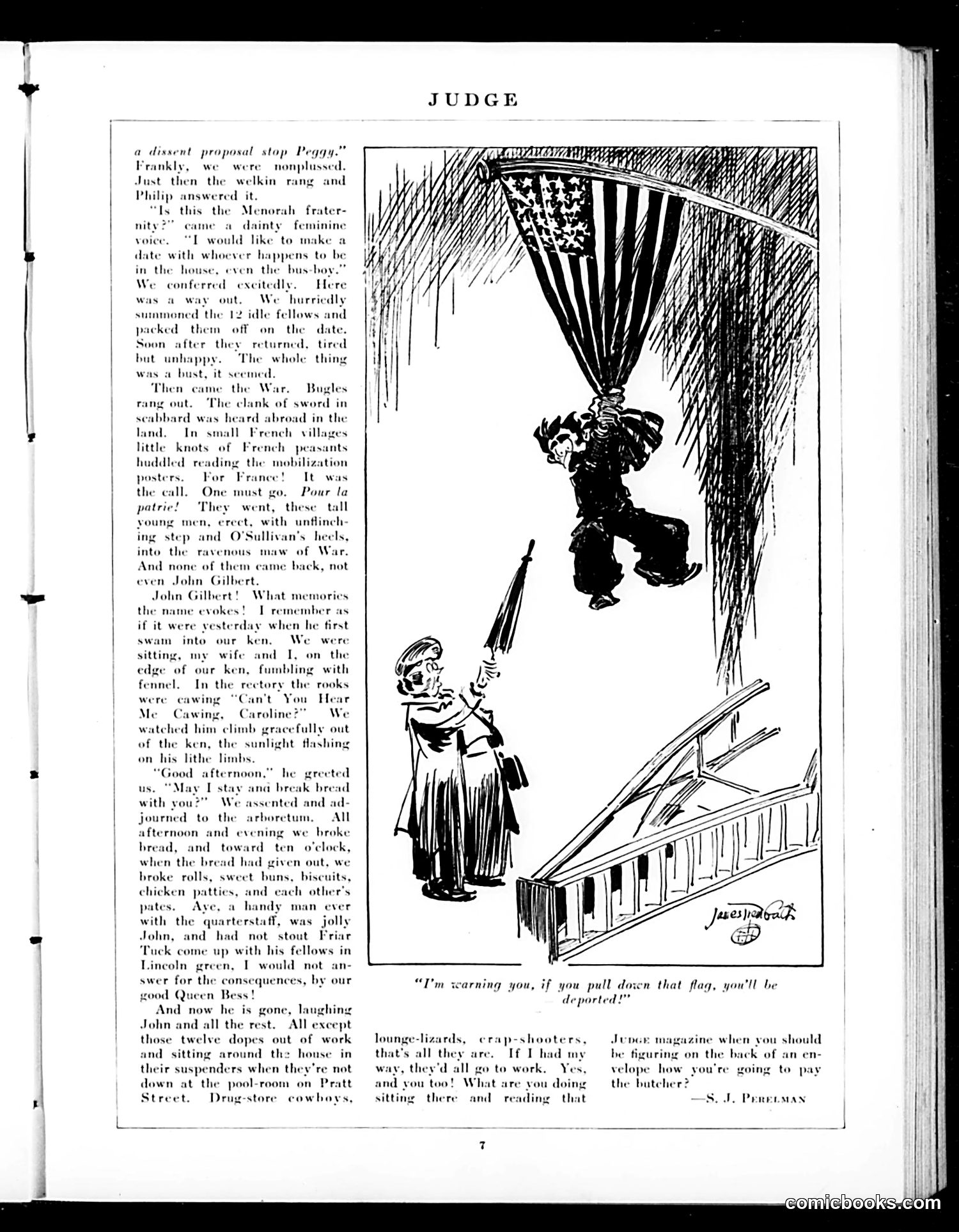
This page from *Judge* contains a cartoon satirizing American attitudes toward immigrant labor during World War I. The illustration shows a woman (likely representing America or patriotic authority) threatening a man pulling down an American flag, warning of deportation. The accompanying text is a rambling narrative about young men—apparently including immigrants or working-class fellows—enlisting for France during WWI while idle workers remain behind. The story contrasts noble sacrifice ("Pour la patrie!") with unemployed men lounging in pool halls and streets. The satire targets **anti-immigrant sentiment** and the perceived hypocrisy of America: foreign-born or working-class men fight and die for France, yet those remaining home face deportation threats for minor infractions while contributing nothing. The cartoon suggests anxiety about loyalty, patriotism, and the status of immigrants during wartime—a pointed commentary on nativist politics of the era. The sarcastic tone mocks both the threat of deportation and the idleness of non-contributing citizens.
📄 Transcribed text from this page (OCR, searchable)
Machine-transcribed from the original scan — historical spelling and the odd misread are preserved.
a dissent proposal stop Peggy.” Frankly, we were nonplussed. Just then the welkin rang and Philip answered it. “Is this the Menorah frater- >" came a dainty feminine : “LT would like to make a date with whoever happens to be in the house, even the bus-boy.” We conferred excitedly. — Here was a way out, We hurriedly summoned the 12 idle fellows and packed them off on the date. Soon after they returned, tired but unhappy. ‘The whole thing was a bust, it seemed. T came the War. Bugles t. The clank of sword in bard was heard abroad in the land. In small French villages little knots French peasants huddled reading the mobilization For France! Tt) was One must go. Pour la patrie! They went, these tall young men, ercet, with unflinch- ing step and O'Sullivan’s heels, into the ravenous maw of War, And none of them came back, not even John Gilbert. John Gilbert! What memories the name evokes! I remember as if it we sterday when he first swam into our ken, We were sitting, my wife and I, on the ec of our ken, fumbling with fennel. In the ree were 4 Me watched him climb of the ken, the sun on his lithe limbs. “Good afternoon,” he greeted us. “) na break bread with vou assented and ad- journed to the arboretum, All afternoon and evening we broke bread, and toward ten o'clock, when the bread had given out, we broke rolls, sweet buns, biscuits, chicken patties, and cach other's pates. Aye, a handy ever with the quarterstaff, was jolly John, and had not stout’ Friar ‘Tuck come up with his fellows in Lincoln green, [ would not an- swer for the consequences, by our good Queen Bess! And now he is gone, laughing John and all the rest. All except those ve dopes out of work and. sitti ound the house in their suspenders when they're not down at the pool-room on Pratt Street. Drug-store cowboys, ory the rooks You Hear 2” We sfully out sht Hashing JUDGE “I'm warning you, if you pull down that flag, you'll be deported!” lounge-1 that’ crap-shooters, s If T had my way, they'd all go to work to pay and you too! What sitting there and S.J. Peneeaan i. ae =) 7