
Judge, 1929-02-02 · page 12 of 36
Judge — February 2, 1929 — page 12: what you’re looking at
What you’re looking at
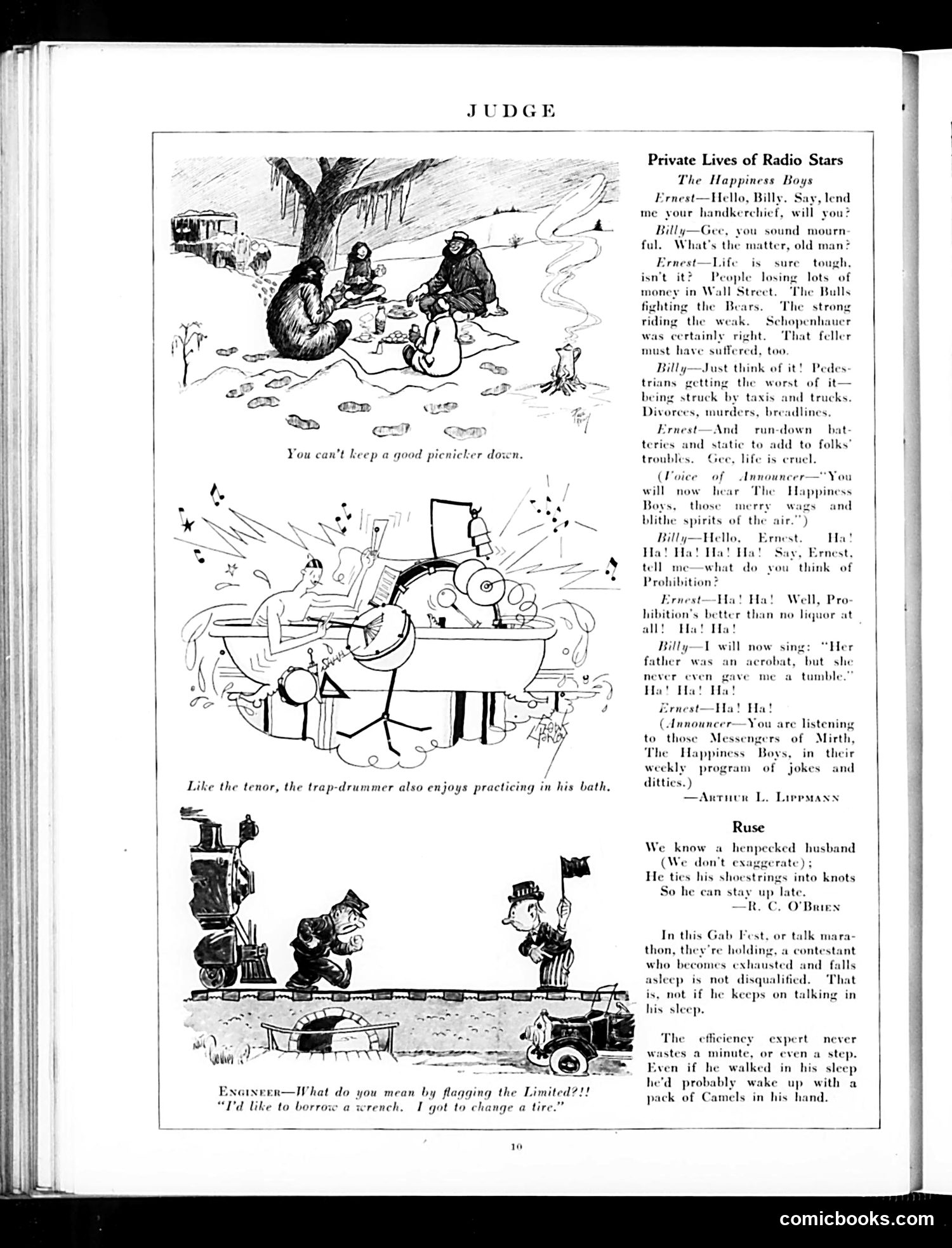
This page contains three satirical pieces about 1920s American life: **"Private Lives of Radio Stars: The Happiness Boys"** mocks a popular radio comedy duo by showing their supposedly cheerful banter contrasts sharply with their cynical, depressing monologues about life's troubles—divorces, accidents, poverty, and Prohibition. The satire exposes the gap between performers' public personas and private attitudes. **"Ruse"** is a brief joke about a henpecked husband deliberately tying his shoelaces in knots to stay awake—implying he wants to avoid going to bed with his domineering wife. **The cartoon at bottom** depicts an engineer flagged down by someone wanting to borrow a wrench to change a tire, humorously illustrating working-class ingenuity and the casual borrowing culture of the era. All pieces reflect Jazz Age concerns: commercialized entertainment, marital discord, and working-class life. The Happiness Boys piece particularly critiques radio's manufactured cheerfulness during economically uncertain times.
📄 Transcribed text from this page (OCR, searchable)
Machine-transcribed from the original scan — historical spelling and the odd misread are preserved.
JUDGE Exaixren—What do you mean by flagging the Limited?!! “I'd like to borrow a wrench. I got to change a tire.” Private Lives of Radio Stars The Happiness Boys Ernest—Hello, Billy. Say, lend me your handkerchief, will you? Billy—C ful. W Ernes isn't it? you sound mourn s the matter, old man? T k. Schopenhauer was certainly right. ‘That feller | must have suffered, too. Billy—Just think of it! Pedes trians getting the worst of it— being struck by taxis and trucks. Divorces, murders, breadlines, > strong Ernest—And run-down _ bat- teries und static to add to folks’ f troubles. Gee, life is cruel. | (Voice of —Announcer—"You will now hear The Happiness Boys, those merry wags and blithe spirits of the air.”") Billy—Hello, Ernest. Ha! Ha! Ha! Ha! Hat! y, Ernest, tell me—what do you think of Prohibition? | Ernest—Ha! Ha! Well, Pro hibition’s better than no liquor at all! Hla! Ha! Billy—1 will now si father was never even gs Ha! Ha! Ha Srnest—Ha! Ha! j (Announcer—Y ou are listening — | to those Messengers of Mirth, The Happiness Boys, in. their weekly program of jokes and ditties.) —Antnen L. Lirpaans g: “Her an acrobat, but) she e me a tumble.’ Ruse We know a henpecked husband (We don't exaggerate) ; He ties his shoestrings into knots So he can stay up late. | R. C, O'Brtes In this Gab Fest, or talk mara- thon, they're holding, a contestant who becomes exhausted and falls asleep is not disqualified. That is, not if he keeps on talking in | The efficiency expert never wastes a minute, or even a step. Even if he walked in his sleep he'd probably wake up with a pack of Camels in his hand. comicbooks.com