
Judge, 1928-10-06 · page 17 of 36
Judge — October 6, 1928 — page 17: what you’re looking at
What you’re looking at
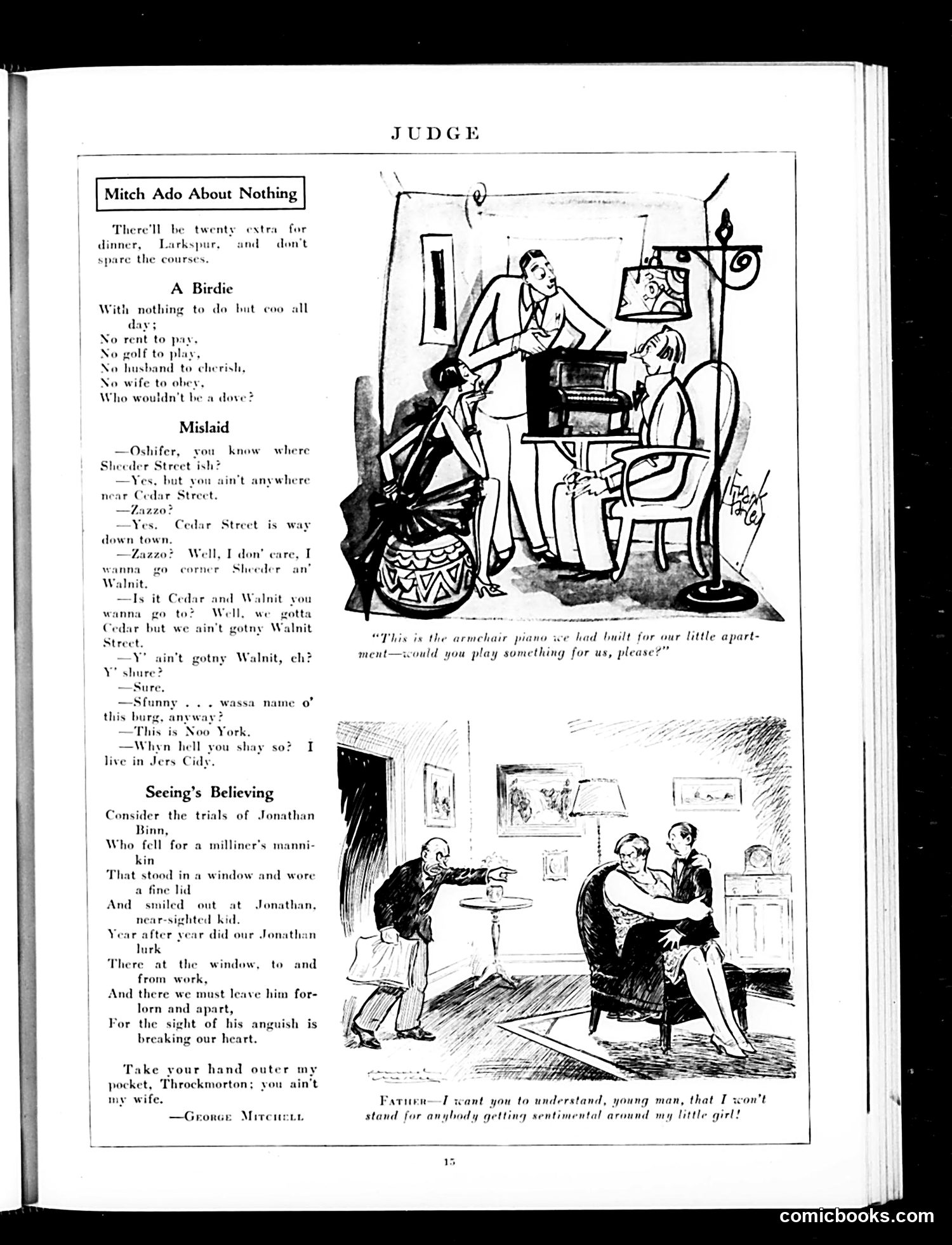
This page contains three satirical pieces typical of early 20th-century American humor: **"Mitch Ado About Nothing"** mocks the idle wealthy—a woman planning an elaborate dinner without practical concerns. **"Mislaid"** uses thick dialect humor (common in this era) to joke about an Irish policeman's confusion regarding street names in New York City, playing on ethnic stereotypes about Irish immigrants and their speech patterns. **"Seeing's Believing"** satirizes a near-sighted man's romantic obsession with a department store mannequin—absurdist humor about modern consumer culture and foolishness. The cartoon illustrations show domestic and urban scenes. The page emphasizes class-based humor (wealthy indulgence, working-class confusion) and ethnic stereotyping typical of Judge's satirical approach. The final caption about a father protecting his daughter reflects period anxieties about courtship and propriety.
📄 Transcribed text from this page (OCR, searchable)
Machine-transcribed from the original scan — historical spelling and the odd misread are preserved.
oan rma ilies ttl JUDGE Mitch Ado About Nothing There'll be twenty extra for dinner, Larkspur, and don’t spare the courses, A Birdie With nothing to do but. e¢ day; No rent to pay, No golf to play, No husband to cherish, No wife to obey Who wouldn’t be a de Mislaid —Oshifer, you know where Sheeder Street ish? Cedar Street is way Well, I don’ ¢ r Sheee s it Cedar and Walnit vou na go te Well, we Cedar but we Street. Y' ain't gotny Walnit, eh? Y" shure? wa n't gotny Walnit Sure. —Sfunn; + + Wassa name 0” this burg yway? This is Noo York. —Whyn hell you shay so? I live in Jers Cidy. Seeing’s Believing Consider the trials of Jonathan Binn, Who fell for a milliner’s manni- kin That stood in a window and wore a fine lid And smiled) out) at Jonathan, near-sighted kid. after year did our Jonathan lurk There at the window, to and from work, And there we must le: lorn and apart, For the sight of his anguish is breaking our heart. ¥ e him for- Take your hand outer my pocket, Throckmorton; you ain't my wife. —Gronce Mireurir “This is the armchair piano i had built for our little apart- ment—ould you play something for us, please?” Fatuen—T want you to understand, young man, that I won't stand for anybody getting sentimental around my little girl! comicbooks.com