
Judge, 1928-08-04 · page 5 of 36
Judge — August 4, 1928 — page 5: what you’re looking at
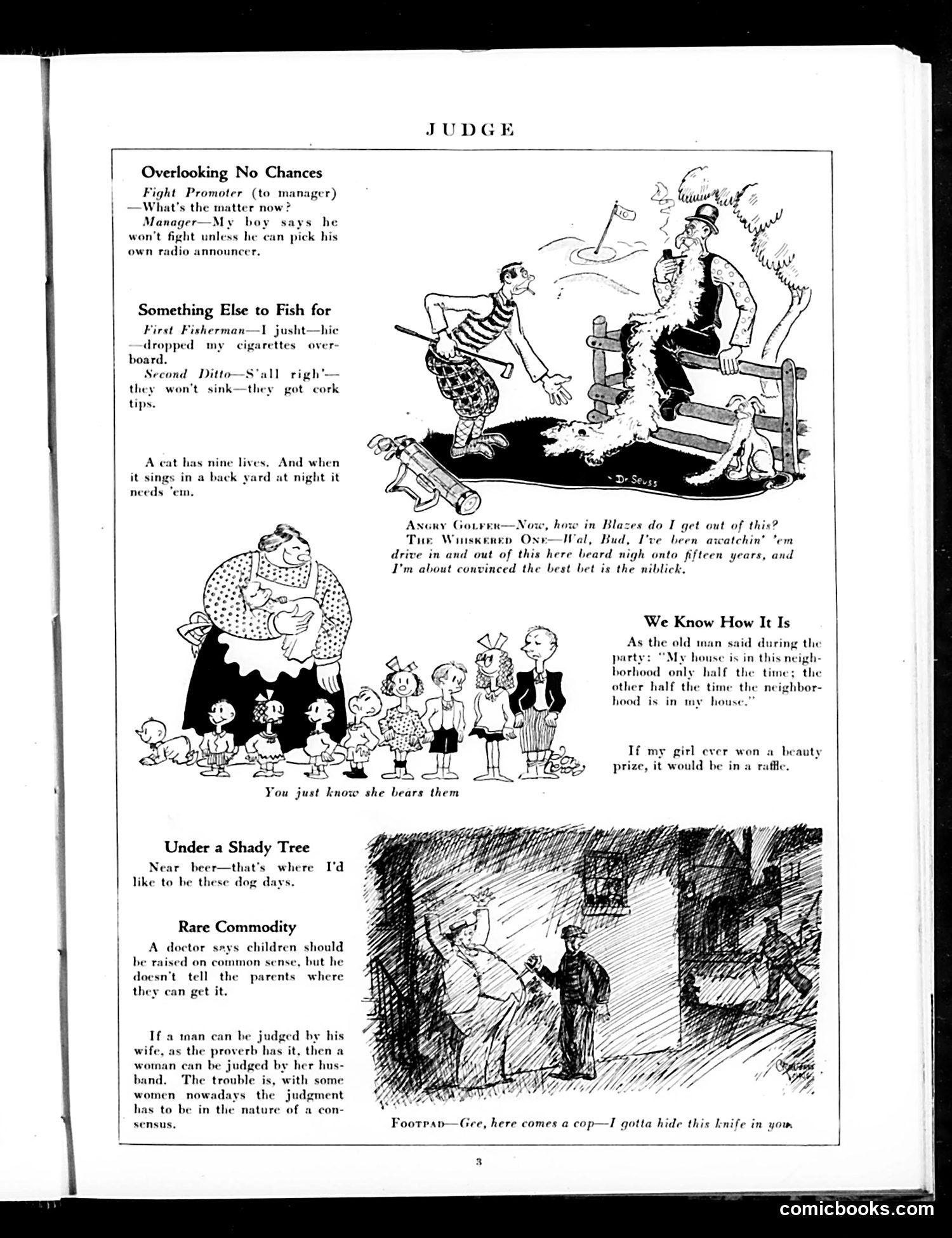
What you’re looking at
This page contains humorous social commentary rather than political cartoons. The jokes target everyday behavior and attitudes: **"Overlooking No Chances"** mocks a boy's demand to become a radio announcer before fighting—reflecting 1920s-30s radio's novelty appeal. **"Something Else to Fish For"** jokes about cigarette-dropping and cork-tipped cigarettes (then new technology). **"We Know How It Is"** satirizes neighbors' intrusiveness and domestic life being semi-public. **"Under a Shady Tree"** idealizes lazy leisure. **"Rare Commodity"** criticizes parents who can't teach common sense, and makes sexist observations about women's judgment. **"Footpad"** depicts a street robbery, with the victim hiding a knife—likely mocking criminal incompetence or victims' preparedness. The cartoons reflect working/middle-class anxieties about modern life, social propriety, and domestic relations of the early-to-mid 20th century.
📄 Transcribed text from this page (OCR, searchable)
Machine-transcribed from the original scan — historical spelling and the odd misread are preserved.
JUDGE Overlooking No Chances Fight Promoter (to manager) t's the matter now? Manager—My boy says he won't fight unless he can pick his own radio announcer. Something Else to Fish for First Fisherman—1 jusht—hie dropped my cigarettes over- board. Second Ditto they won't sink tips. 1 righ'— they got cork as nine lives. And when in a back yard at night it Tur Wiuskenen Oxe—Wal, Bud, I've drive in and out of this here beard nigh onto | I’m about convinced the best bet is the niblick. teen years, and We Know How It Is As the old man said during the party: “My house is in this neigh- horhood only half the time; the other half the time the neighbor- hood is in my house. If my girl ever won a beauty prize, it would be ina ri Under a Shady Tree Near beer—that’s where I'd like to he these dog Rare Commodity A doctor says children should be raised on common sense, but he doesn't tell the parents where they can get it. Ifa tnan can be judged by his wife, as the proverb has it, then a woman ean be judged by her hus- band. The trouble is, with some women nowadays the judgment has to be in the nature of a con- sensus.