
Judge, 1928-04-21 · page 23 of 36
Judge — April 21, 1928 — page 23: what you’re looking at
What you’re looking at
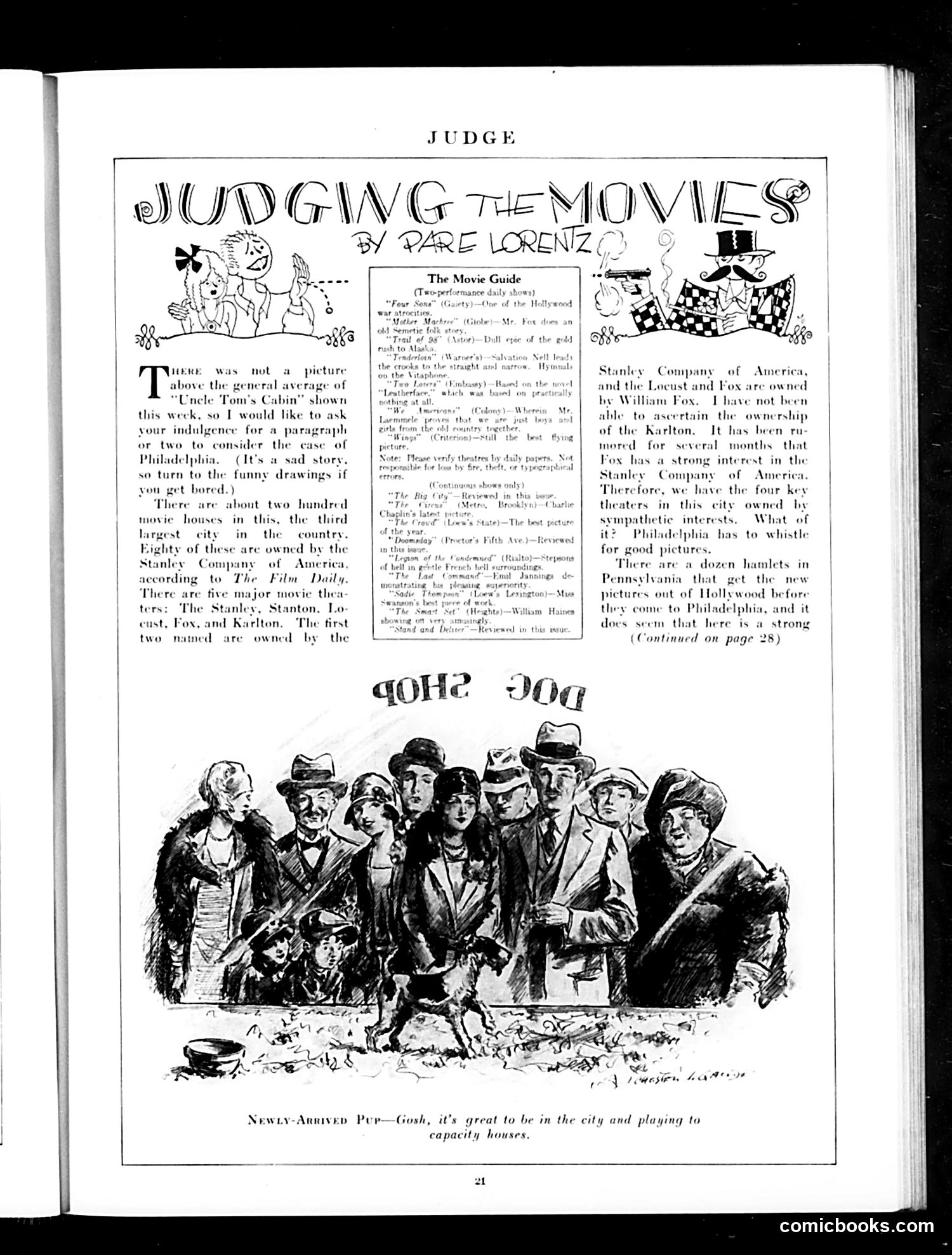
This 1920s Judge magazine page critiques **movie theater monopolies** in Philadelphia. The text argues that a handful of corporations—Stanley Company, Fox, and others—control most major theaters in the city, creating an anti-competitive situation that harms the public. The complaint: despite Philadelphia being the third-largest U.S. city, these "sympathetic interests" (allied companies) control film distribution, preventing quality pictures from reaching audiences promptly. Small Pennsylvania towns get new Hollywood releases before Philadelphia does. The cartoon below depicts a newly arrived pup surrounded by city people and establishments—a visual metaphor for the monopolistic control: the little dog (audience/consumers) is surrounded and confined by the larger forces dominating the entertainment landscape. This reflects Progressive Era concerns about corporate consolidation and consumer welfare, arguing that vertical integration of theaters with distributors reduces competition and disadvantages the public.
📄 Transcribed text from this page (OCR, searchable)
Machine-transcribed from the original scan — historical spelling and the odd misread are preserved.
JUDGE The Movie Guide HERE was not a picture Stanley Company of America, | vove the general >of and the Locust and Fox are owned Unele Tom's Cabin” shown by William Fox. I have not been this week, so I would like to your indulgence for a pa or two to consider the case Philadelphia. (It's a sad story. so turn to the funny drawings if you get bored.) Th are about two hundred houses in this, the third st city in’ the country. ty of these are owned by the Stanley Company of America according to The Film Daily. There are tive major movie thea ters: Stanley, Stanton, Lo cust, Fox, and Karlton. The first two named are owned by the able to ascertain. the ownership of the Karlton. It has been ru moered for several months that Fox has a strong interest in the Stanley Company of America, — | Therefore, we have the four key theaters in this city owned by sympathetic interests, What of it? Philadelphia has to whistle for good pictures. There are a dozen hamlets in Pennsylvania that get the new pictures out of Hollywood before | they come to Philadelphia, and it does seem that here is a strong (Continued on page 28) \7aee { femesinn F ado Newry-Arriveo Pup—Gosh, it’s great to be in the city and playing to capacity houses. comicbooks.com