
Judge, 1926-09-11 · page 2 of 35
Judge — September 11, 1926 — page 2: what you’re looking at
What you’re looking at
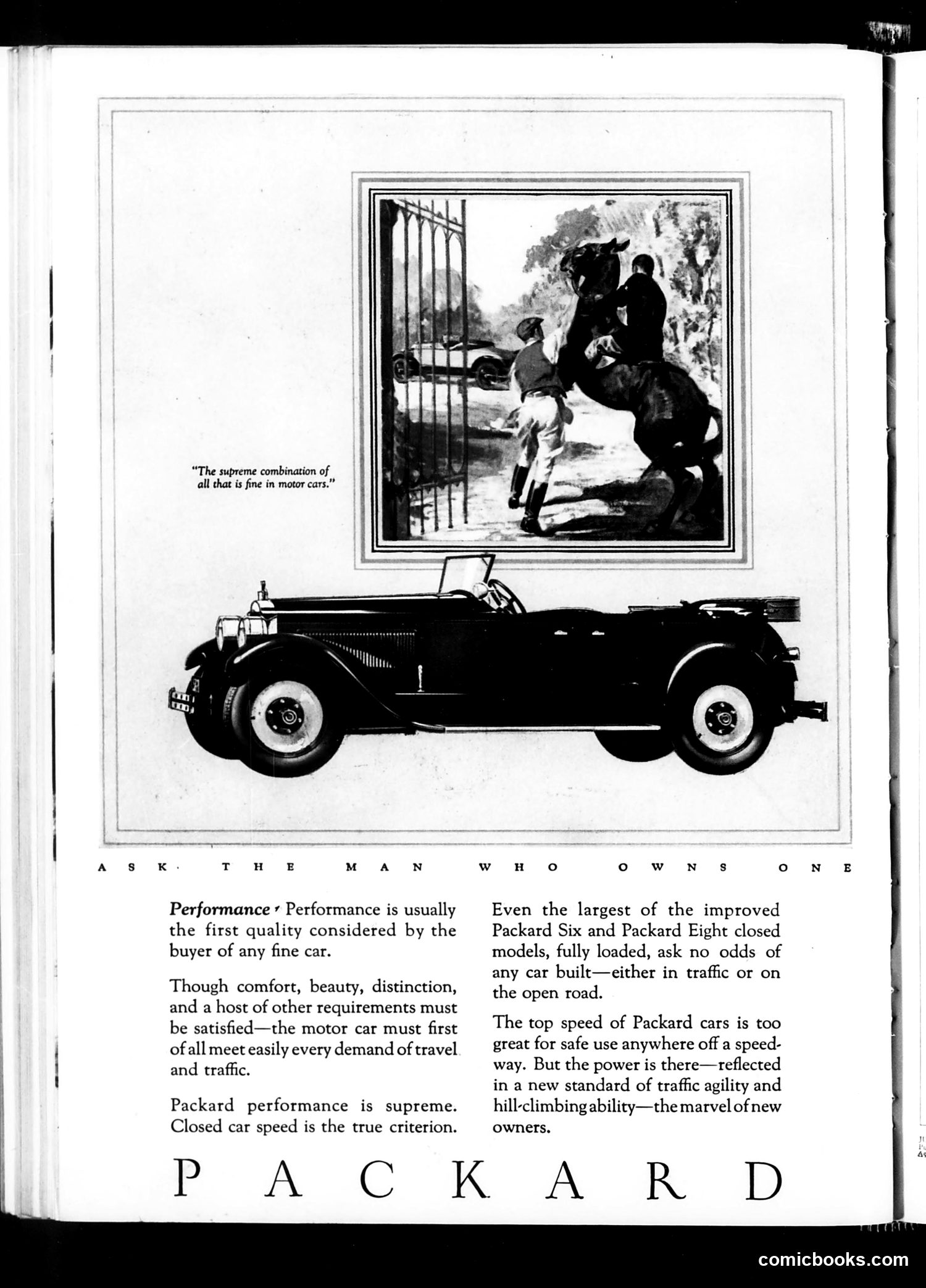
This page is primarily a **Packard automobile advertisement**, not political satire. The top image shows a scene of a man on horseback at a gate, with the caption "The supreme combination of all that is fine in motor cars." The advertisement emphasizes Packard performance, claiming their cars can handle any driving condition—traffic or open road—with superior speed and hill-climbing ability. The text positions Packard as the choice for discerning buyers who prioritize performance above other qualities. The equestrian imagery appears designed to evoke associations with luxury, tradition, and control—suggesting that owning a Packard conveys similar mastery and sophistication. This is purely commercial messaging, not political commentary or satire.
📄 Transcribed text from this page (OCR, searchable)
Machine-transcribed from the original scan — historical spelling and the odd misread are preserved.
| | { : i ‘ “The supreme combination of ; all chat is fine in motor cars.” j { | i Performance * Performance is usually the first quality considered by the buyer of any fine car. Though comfort, beauty, distinction, and a host of other requirements must be satisfied—the motor car must first of all meet easily every demand of travel and traffic. Packard performance is supreme. Closed car speed is the true criterion. P A CK A R D comicbooks.com H fe] ° w N s fe] Even the largest of the improved Packard Six and Packard Eight closed models, fully loaded, ask no odds of any car built—either in traffic or on the open road. The top speed of Packard cars is too great for safe use anywhere off a speed- way. But the power is there—reflected in a new standard of traffic agility and hill-climbing ability—the marvel of new owners.