
Judge, 1926-04-17 · page 11 of 36
Judge — April 17, 1926 — page 11: what you’re looking at
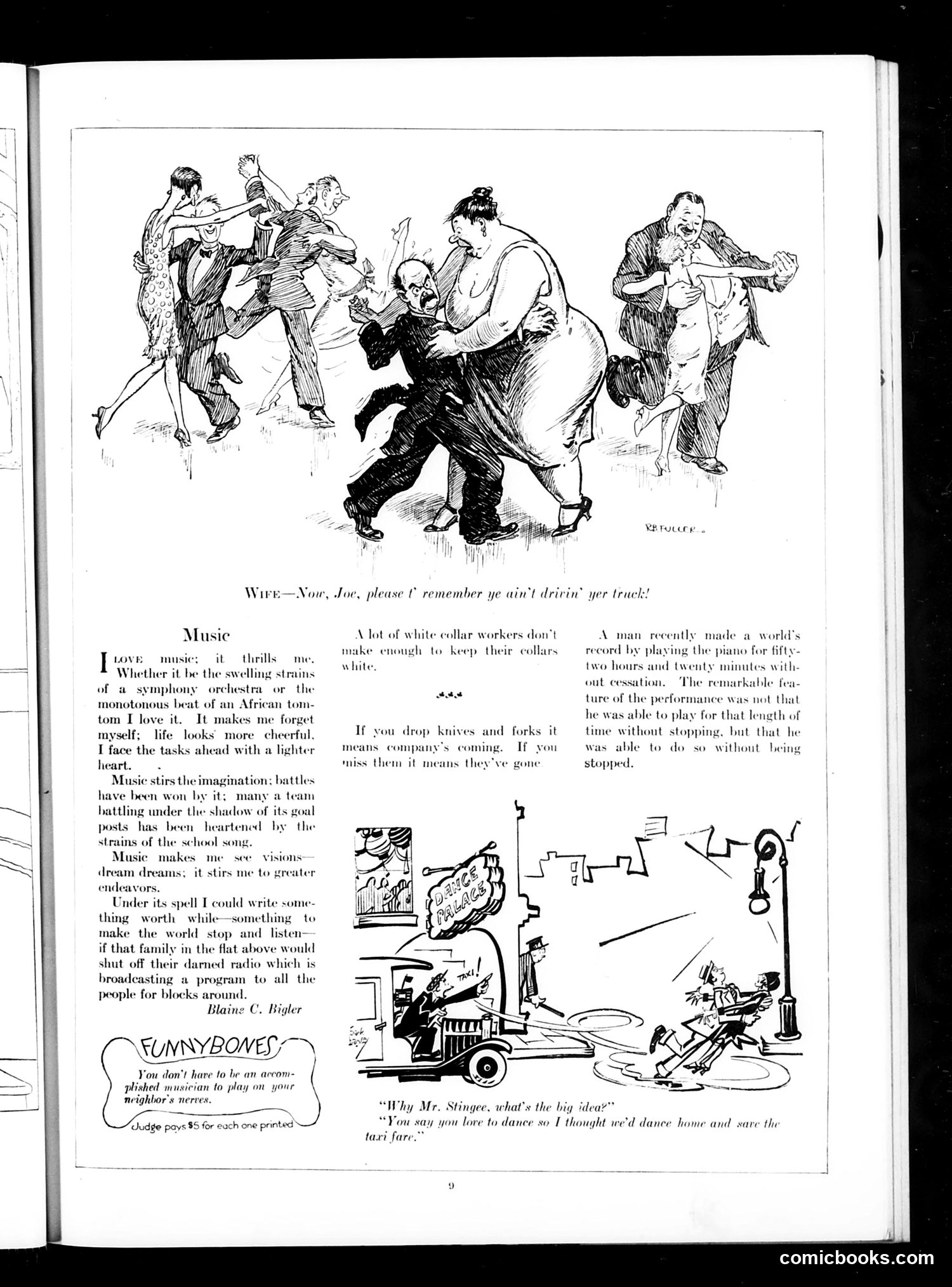
What you’re looking at
**Main Cartoon (Top):** Depicts a domestic dispute where a wife stops her husband from driving drunk ("remember ye ain't drivin' yer truck!"). The man appears intoxicated while other figures gesture wildly in the background—likely representing the chaos of Prohibition-era drinking culture. The satire targets both drunk driving and the absurdity of Prohibition enforcement. **"Music" Essay & Cartoons (Center/Bottom):** The author celebrates music's inspirational power, then undercuts themselves: they can't compose because neighbors won't stop playing their radio—satirizing how modern technology (radio broadcasting) disrupts traditional values. **Secondary Jokes:** Include observations about servant/working-class superstitions (dropped silverware means company coming) and miserliness (dancing home to avoid taxi fare). **Historical Context:** This appears to be 1920s-1930s era, reflecting Prohibition tensions, early radio's social impact, and economic struggles. The "white collar workers" reference and servant dynamics suggest Depression-era class anxieties.
📄 Transcribed text from this page (OCR, searchable)
Machine-transcribed from the original scan — historical spelling and the odd misread are preserved.
Wire—Vow, Music I Love music; it thrills | me. Whether it be the swelling strains of a symphony orchestra. or the monotonou t of an African tom- tom I love it. It makes me forget myself; life looks’ more cheerful, I face the tasks ahead with a lighter heart. Music stirs the imagination; battles have been won by it; many a tea battling under the shadow of its posts has been heartened by the strains of the school song. Music makes me = see visions ams; it stirs me to greater yors. Under its spell I could write some- thing worth while—something to make the world stop and _ listen if that family in the flat above would shut off their darned radio which is broadcasting a program to all the people for blocks around. Blaine FUNNYBONES >) } ', Bigler You don't have to be an accom- ( plished musician to play on your neighbor's nerves. ‘Jude pays $5 for euch one printed \ lot of white collar workers don't make enough to keep their collars white If you drop knives and forks it If you miss them it means they've gone means company’s coming. RE FuLere Joe, please U remember ye ain't drivin’ yer truck! Aman recently made a world’s record by playing the piano for fifty- two hours and twenty minutes with Kable fea- ture of the performance was not that out cessation, The rem: he was able to play for that length of time without stopping, but that he to do so without was able being stopped. “Why Mr. Stingee, what's the big idea?” “You say you love to dance so [thought we'd dance home and save the taxi fare.” comicbooks.com