
Judge, 1926-02-06 · page 8 of 36
Judge — February 6, 1926 — page 8: what you’re looking at
What you’re looking at
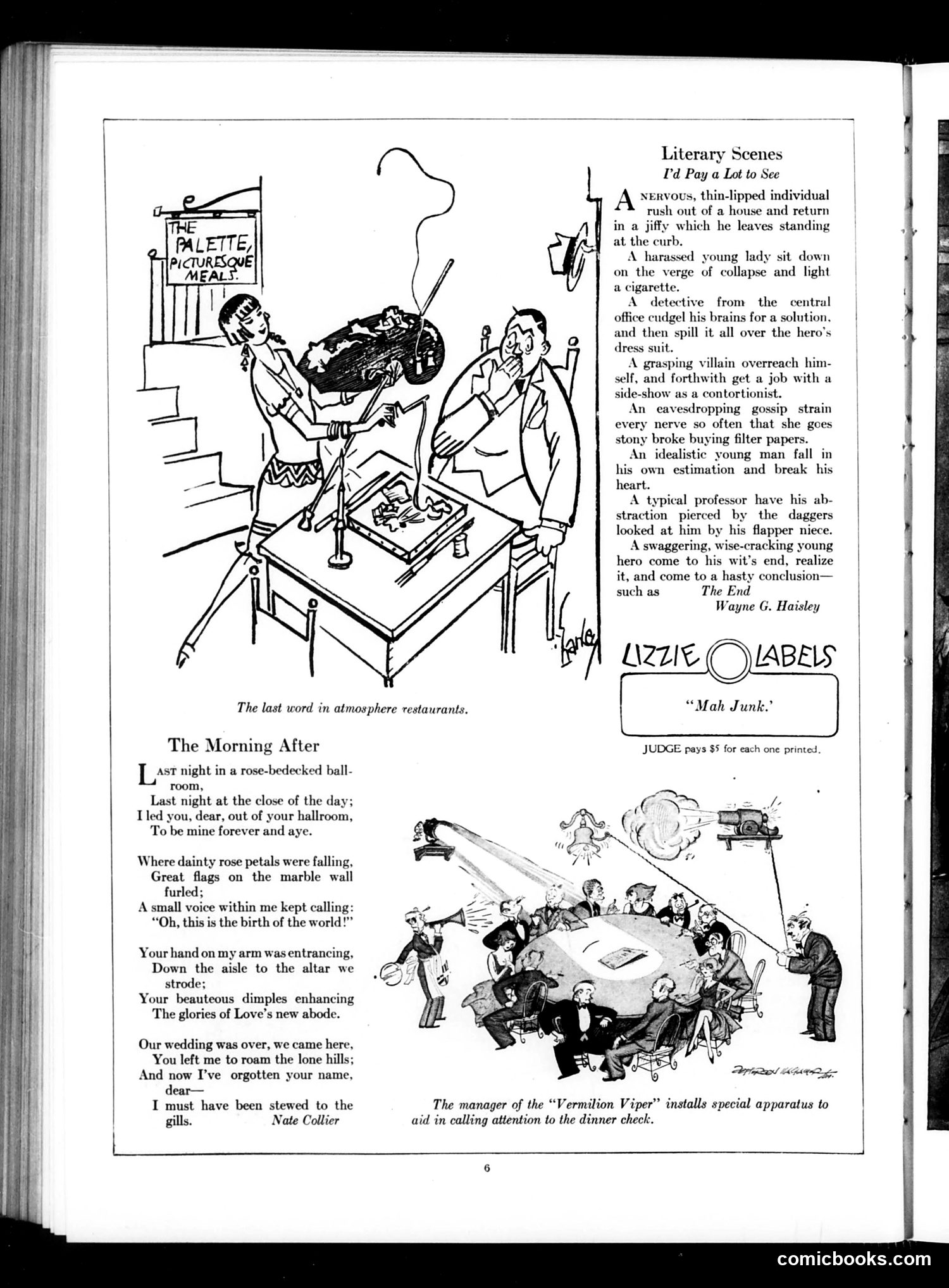
This page satirizes early 20th-century domestic and social conventions through humor and verse. **"I'd Pay a Lot to See"** mocks melodramatic plot devices common in period fiction and theater—nervous protagonists, fainting ladies, incompetent detectives, and overwrought emotional scenarios. It's gentle satire of hackneyed storytelling. **"The Morning After"** presents dark comedy: a romantic wedding night poem that pivots to the husband forgetting his bride's name because he was drunk ("stewed to the gills"). The humor lies in the contrast between flowery courtship language and crude reality. **The cartoons** depict restaurant scenes: one shows chaos at "The Palette, Picturesque Meal"; another illustrates a restaurant manager using exaggerated devices to get diners' attention about unpaid bills. Both mock pretentious dining establishments and their difficulties managing unruly patrons and payment collection. The overall theme targets the gap between romantic/refined aspirations and messy, embarrassing reality—typical Judge magazine fare satirizing middle-class social pretense.
📄 Transcribed text from this page (OCR, searchable)
Machine-transcribed from the original scan — historical spelling and the odd misread are preserved.
Literary Scenes I'd Pay a Lot to See A NERVOUS, thin-lipped individual rush out of a house and return in a jiffy which he leaves standing at the curb. A harassed young lady sit down on the verge of collapse and light a cigarette. A detective from the central office cudgel his brains for a solution. and then spill it all over the hero's dress suit. A grasping villain overreach him- self, and forthwith get a job with a side-show as a contortionist. An eavesdropping gossip strain every nerve so often that she goes stony broke buying filter papers. An idealistic young man fall in t his own estimation and break his j heart. A typical professor have his ab- straction pierced by the daggers looked at him by his flapper niece. A swaggering, wise-cracking young hero come to his wit’s end, realize it, and come to a hasty conclusion— such as The End Wayne G. Haisley The last word in atmosphere restaurants. The Morning After Ls" night in a rose-bedecked ball- room, Last night at the close of the day; I led you, dear, out of your hallroom, To be mine forever and aye. Where dainty rose petals were falling, Great flags on the marble wall furled; A small voice within me kept calling: “Oh, this is the birth of the world!” Your hand on my arm wasentrancing, Down the aisle to the altar we strode; Your beauteous dimples enhancing The glories of Love’s new abode. Our wedding was over, we came here, You left me to roam the lone hills; And now I’ve orgotten your name, dear— { I must have been stewed to the The manager of the “Vermilion Viper” installs special apparatus to gills. Nate Collier aid in calling attention to the dinner check. comicbooks.com