
Judge, 1926-01-30 · page 3 of 36
Judge — January 30, 1926 — page 3: what you’re looking at
What you’re looking at
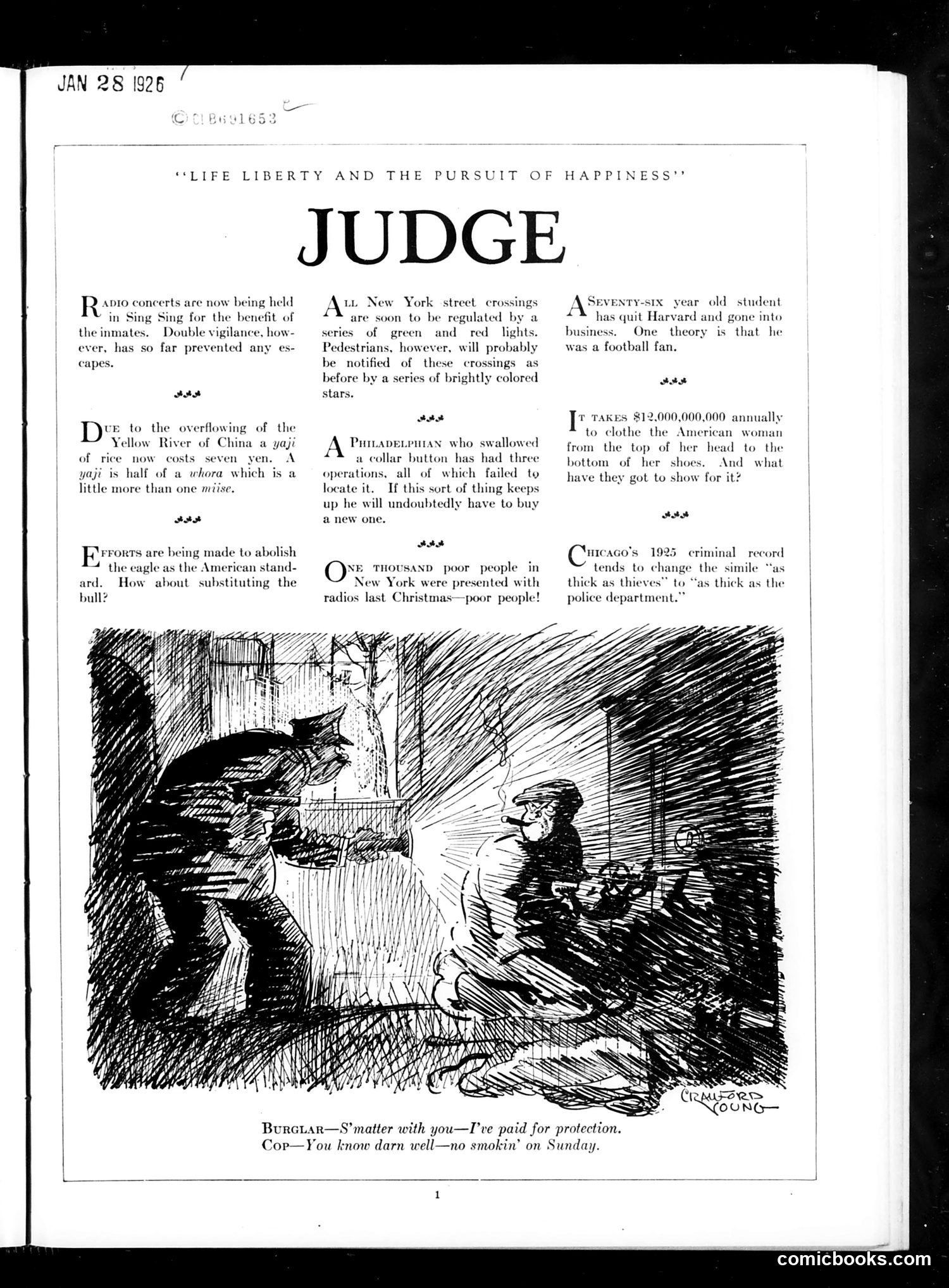
This page contains brief satirical news items rather than a coherent political cartoon. The main illustration depicts a burglar confronting a police officer, with dialogue about "protection"—likely referencing Prohibition-era corruption where criminals paid police for immunity from enforcement. The textual items mock contemporary concerns: radio concerts for museums, NYC traffic regulation, inflation in rice prices, efforts to replace the eagle as national symbol, and wealth inequality (women's clothing costs versus poor people receiving radios as charity). The final item references Chicago's 1925 criminal record and police terminology changes—possibly satirizing official attempts to minimize crime through language manipulation rather than actual reform. The overall tone criticizes hypocrisy, corruption, and the gap between official rhetoric and social reality during the Jazz Age.
📄 Transcribed text from this page (OCR, searchable)
Machine-transcribed from the original scan — historical spelling and the odd misread are preserved.
JAN 28 1926 ‘*‘LIFE LIBERTY AND THE PURSUIT OF JUDGE HAPPINESS"’ R220 concerts are now being held in Sing Sing for the benefit of the inmates. Double vigilance, how- ever, has so far prevented any es- capes. Iss D®= to the overflowing of the Yellow River of China a yaji of rice now costs seven yen. A yaji is half of a whora which is a little more than one miise. sae e being made to abolish eagle as the American stand- about substituting the A . New York street crossings < ¢ soon to be regulated by a series of green and red_ lights. Pedestrians, however, will probably be notified of these crossings as before by a series of brightly colored stars. se A PHILADELPHIAN who swallowed collar button has 1 three tions, all of which failed to t. If this sort of thing keeps vill undoubtedly have to buy a new one. Fae 5 THOUSAND poor people in ew York were presented with radios last Christmas—poor people! < year old student ard and gone into theory is that he was a football fan, business. One ad I" TAKES $12,000,000,000 annually to clothe the American woman from the top of her head to the bottom of her shoes. And what have they got to show for it? ste HICAGO'S 1925. criminal tends to change the simile “as thick as thieves” to “as thick as the police department.” record Burciar—S’ matter with you—T’ve paid for protection. Cop—You know darn well—no smokin’ on Sunday. comicbooks.com