
Judge, 1925-10-03 · page 18 of 36
Judge — October 3, 1925 — page 18: what you’re looking at
What you’re looking at
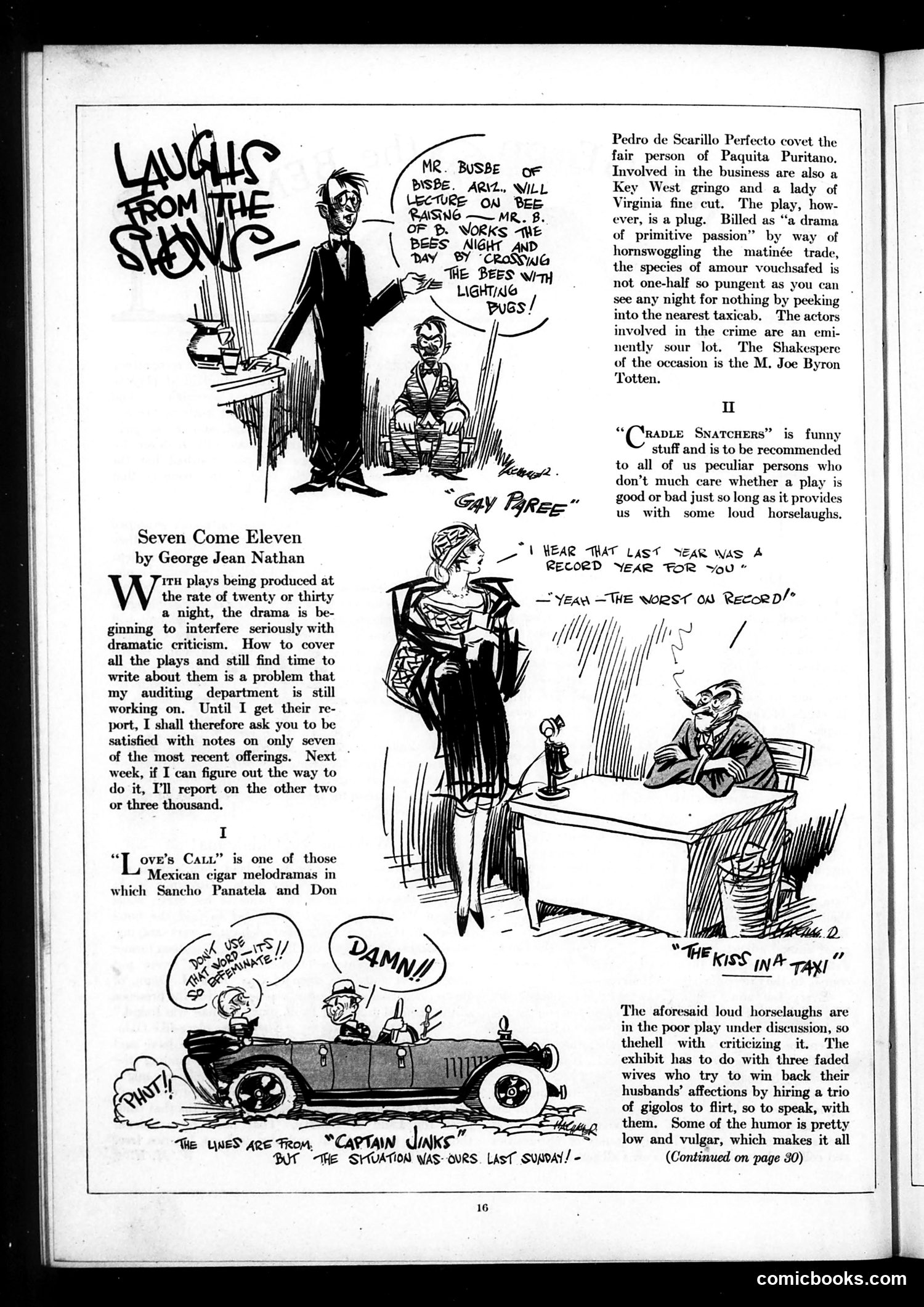
This is a theater review column by drama critic George Jean Nathan covering seven recent Broadway plays. The page mocks several productions as low-quality entertainments: **"Love's Call"** is criticized as a melodramatic Mexican cigar-opera featuring stock characters (Sancho Panatela, Don Pedro de Scarillo) in a predictable plot about a woman's romantic rivalry. Nathan dismisses it as cynical "matinée trade" material—shallow drama designed to exploit unsophisticated audiences. **"Cradle Snatchers"** earns mild praise not for quality but simply for providing "loud horselaughs"—it's entertaining trash for viewers unconcerned with artistic merit. **"Seven Come Eleven"** involves three wives hiring gigolos to recapture their husbands' affections, which Nathan finds crude and vulgar humor. The cartoons illustrate these reviews with exaggerated visual gags. Nathan's tone is caustic: he's drowning in theatrical output (20-30 plays nightly) and can barely keep up with criticism. The fundamental point is that Broadway is flooded with low-brow drivel competing for audience dollars, not serious dramatic art.
📄 Transcribed text from this page (OCR, searchable)
Machine-transcribed from the original scan — historical spelling and the odd misread are preserved.
Pedro de Scarillo Perfecto covet the fair person of Paquita Puritano, MR. BuSBE or Involved in the business are also a BISBE. ARIZ, WILL Key West gringo and a lady of Lecture Virginia fine cut. The play, how- ever, is a plug. Billed as “a drama of primitive passion” by way of hornswoggling the matinée trade, the species of amour vouchsafed is not one-half so pungent as you can | see any night for nothing by peeking into the nearest taxicab. The actors involved in the crime are an emi- nently sour lot. The Shakespere of the occasion is the M. Joe Byron Totten. 0 “(‘rapLe SnatcHers” is funny stuff and is to be recommended to all of us peculiar persons who don’t much care whether a play is good or bad just so long as it provides us with some loud horselaughs. Seven Come Eleven CH). & = 5 S \ WEAR “WAT Last YEAR Was A by George Jean Nathan Ts { —~ — RECORD Yexe FOR sou” 1TH plays being produced at the rate of twenty or thirty a night, the drama is be- ginning to interfere seriously with dramatic criticism. How to cover all the plays and still find time to write about them is a problem that my auditing department is still working on. Until I get their re- port, I shall therefore ask you to be satisfied with notes on only seven of the most recent offerings. Next © week, if I can figure out the way to do it, I'll report on the other two or three thousand. I “T ove’s Cau” is one of those Mexican cigar melodramas in which Sancho Panatela and Don — Yea “THE worst on Record!’ The aforesaid loud horselaughs are in the poor play under discussion, so thehell with criticizing it. The exhibit has to do with three faded wives who try to win back their y husbands’ affections by hiring a trio B - Bes of gigolos to flirt, so to speak, with Spe aaa them. Some of the humor is pretty Cartan inxs” = low and vulgar, which makes it all HE SHUATION WAS: OURS. LAsT SUADAY/ - (Continued on page 30) comicbooks.com