
Judge, 1925-07-18 · page 13 of 37
Judge — July 18, 1925 — page 13: what you’re looking at
What you’re looking at
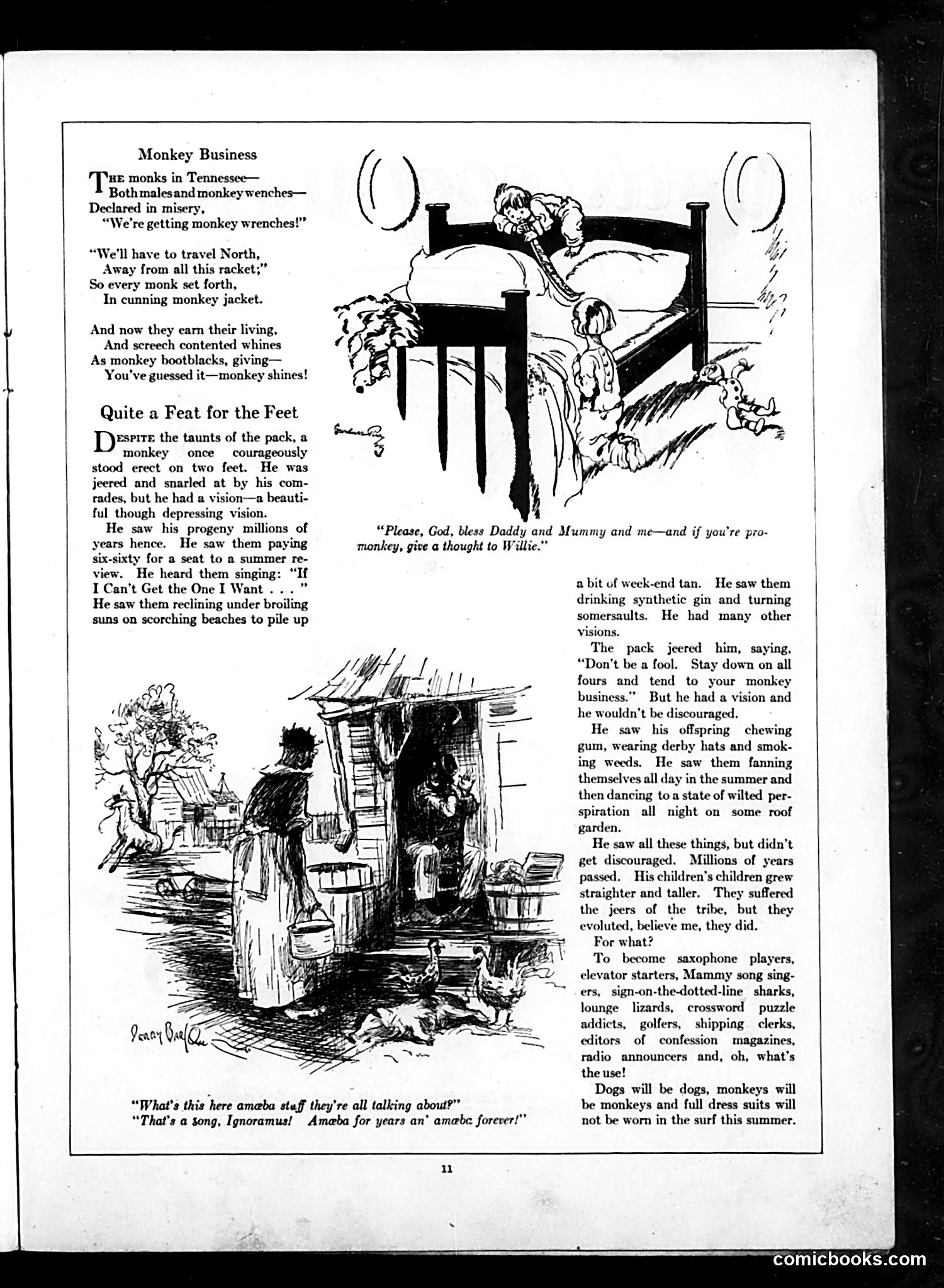
This page contains two interconnected satirical pieces mocking human "progress" and modern society through primate metaphors. **"Monkey Business"** jokes about monkeys migrating north from Tennessee to escape "monkey wrenches" (troubles), then earning livings as "bootblacks" performing "monkey shines"—a pun suggesting monkeys reduced to menial, stereotypical labor. **"Quite a Feat for the Feet"** presents darker social satire: a visionary monkey evolves upright over millennia, imagining his descendants achieving human civilization. But the payoff is cynical—they become saxophone players, elevator operators, con artists, and office workers. The final line ("Dogs will be dogs, monkeys will be monkeys") suggests human "progress" is meaningless; we merely trade animal instincts for modern vices like synthetic gin, beach vanity, and confession magazines. The satire attacks both blind faith in social evolution and 1920s consumer culture's hollowness. The cartoons suggest civilization hasn't elevated humanity—only given base nature more elaborate outlets.
📄 Transcribed text from this page (OCR, searchable)
Machine-transcribed from the original scan — historical spelling and the odd misread are preserved.
Monkey Business '#E monks in Tennessee— Bothmalesand monkey wenches— Declared in misery, “We're getting monkey wrenches!” | “We'll have to travel North, Away from all this racket;” So every monk set forth, In cunning monkey jacket. And now they earn their living, And screech contented whines As monkey bootblacks, giving— You've guessed it—monkey shines! Quite a Feat for the Feet | ESPITE the taunts of the pack, a monkey once courageously stood erect on two feet. He was jeered and snarled at by his com- rades, but he had a vision—a beauti- ful though depressing vision. He saw his progeny millions of years hence. He saw them paying six-sixty for a seat to a summer re- vier He heard them singing: “If I Can’t Get the One I Want...” He saw them reclining under broiling suns on scorching beaches to pile up monkey, give a thought to Willie.” “What's this here amaba stuff they're all talking about?” “That's a song, Ignoramus! Ameba for years an’ amabe forever!” not be worn in the surf this summer. l “Please, God, bless Daddy and Mummy and me—and if you're pro- a bit of week-end tan. He saw them drinking synthetic gin and turning somersaults. He had many other visions. The pack jeered him, saying, “Don't be a fool. Stay down on all fours and tend to your monkey business,” But he had a vision and he wouldn't be discouraged. He saw his offspring chewing gum, wearing derby hats and smok- ing weeds. He saw them fanning themselves all day in the summer and then dancing toa state of wilted per- spiration all night on some roof garden, He saw all these things, but didn’t get discouraged. Millions of years passed. His children’s children grew straighter and taller. They suffered the jeers of the tribe, but they evoluted, believe me, they did. For what? To become saxophone players, elevator starters, Mammy song sing- ers, sign-on-the-dotted-line sharks, lounge lizards, crossword puzzle addicts, golfers, shipping clerks, editors of confession magazines, radio announcers and, oh, what's the use! Dogs will be dogs, monkeys will be monkeys and full dress suits will “=“comicbooks.com