
Judge, 1924-12-13 · page 30 of 36
Judge — December 13, 1924 — page 30: what you’re looking at
What you’re looking at
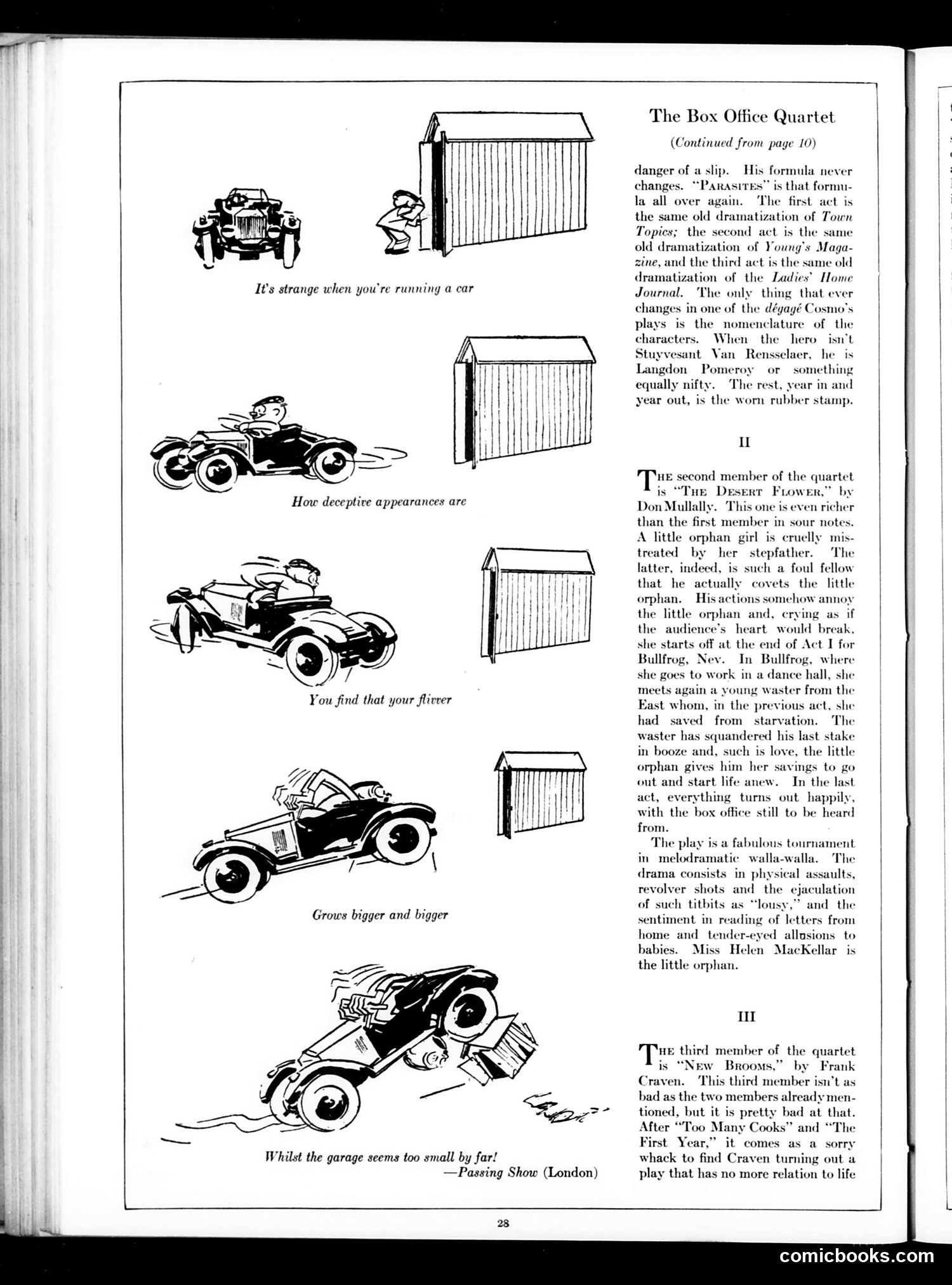
This page reviews four Broadway plays, sarcastically criticizing their formulaic nature and melodramatic plots. The left side shows comic illustrations of cars getting progressively larger and more absurd—a visual metaphor for theatrical exaggeration. The text describes three plays: "Parasites" (repeatedly recycling plots from *Town Topics*, *Young's Magazine*, and *Ladies' Home Journal* with only character name changes); "The Desert Flower" by Don Mullally (a sentimental melodrama about an orphan girl involving abandonment, starvation, and unlikely romantic redemption); and "New Brooms" by Frank Craven (criticized as disappointing compared to his earlier successes). The satire targets Broadway's reliance on tired formulas, clichéd character types, and emotional manipulation—essentially arguing that commercial theater sacrifices originality for guaranteed box-office appeal. The absurd car illustrations reinforce this point about theatrical excess masquerading as entertainment.
📄 Transcribed text from this page (OCR, searchable)
Machine-transcribed from the original scan — historical spelling and the odd misread are preserved.
The Box Office Quartet (Continued from page 10) danger of a slip. His formula never changes. “Parasites” is that formu- la all over again. The first act is | the same old dramatization of Town Topics; the second act is the same old dramatization of Young's Maga- zine, and the third act is the same old dramatization of the Ladies’ Home Journal. The only thing that ever changes in one of the dégagé Cosmo's plays is the nomenclature of the characters. When the hero isn’t Stuyvesant Van Rensselaer, he is Langdon Pomeroy or something equally nifty. The rest, year in and year out, is the worn rubber stamp. I Tie second member of the qus is “Tue Desei Don Mullally. This one is even richer than the first member in sour notes. A little orphan girl is cruelly mis- treated by her stepfather. ‘The latter, indeed, is such a foul fellow that he actually covets the little orphan. His actions somehow annoy | the little orphan and, crying as if the audience’s heart would break, she starts off at the end of Act I for Bullfrog, Nev. In Bullfrog, where she goes to work in a dance hall, she meets again a young waster from the East whom, in the previous act, she had saved from starvation. The or has squandered his last stake id, such is love, the little orphan gives him her savings to go out and start life anew. In the last act, everything turns out happily, with the box office still to be heard from. | The play i in melodra in booz a fabulous tournament natic walla-walla. The drama consists in physical assaults, revolver shots and the ejaculation of such titbits as “lousy,” and the sentiment in reading of letters from home and tender-eyed allusions to babies. Miss Helen MacKellar is the little orphan. Ill Tre third member of the quartet “New Brooms,” by Frank Craven. ‘This third member isn’t as bad as the two members already men- tioned, but it is pretty bad at that. After “Too Many Cooks” and “The First Year,” it comes as a sorry Whilst the garage seems too small by far! whack to find Craven turning out a —Passing Show (London) play that has no more relation to life 23 comicbooks.com