
Judge, 1924-09-27 · page 18 of 36
Judge — September 27, 1924 — page 18: what you’re looking at
What you’re looking at
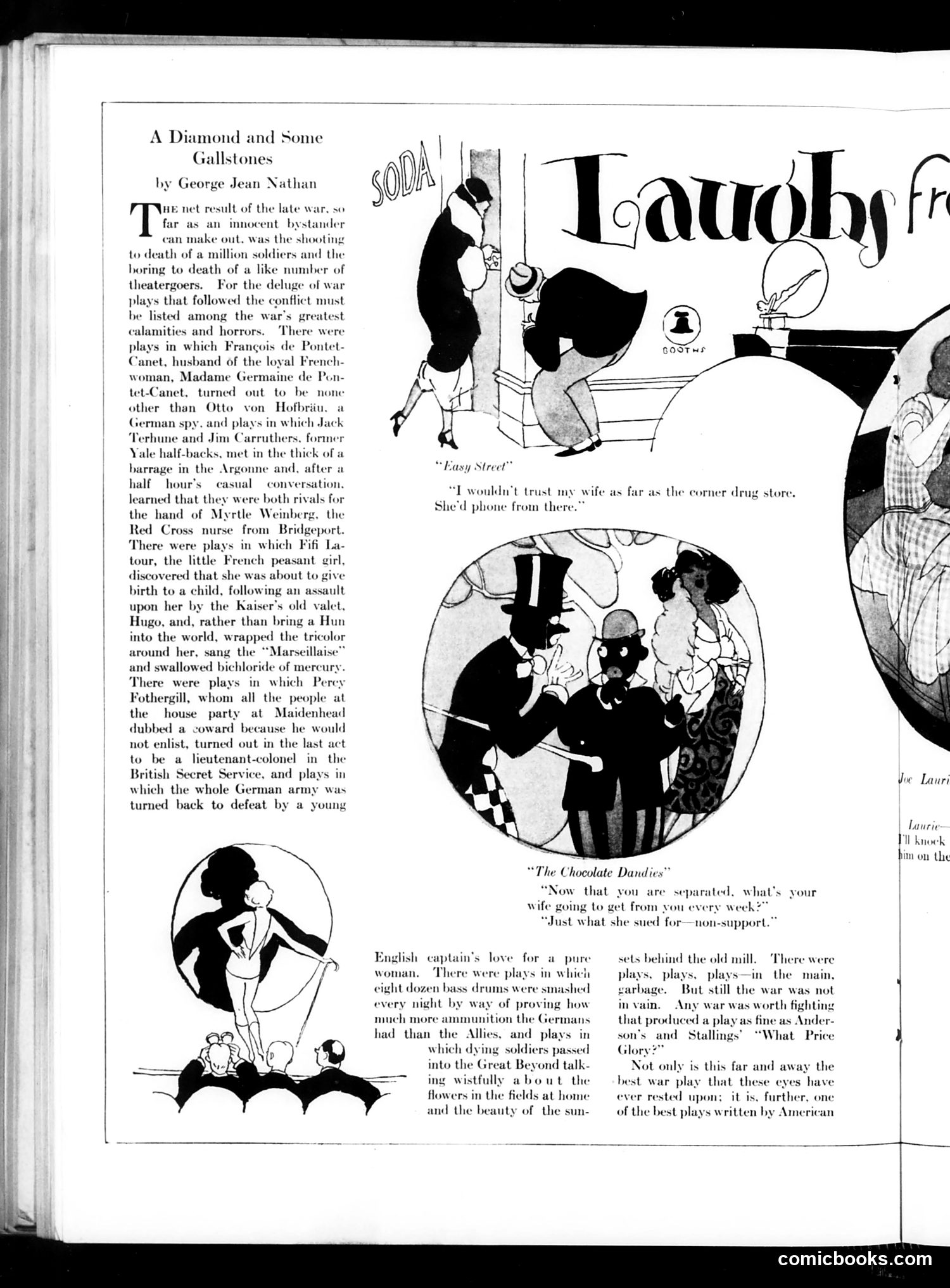
This is a theater critic's essay sarcastically attacking the flood of World War I plays that followed the conflict. Nathan argues these productions were artistically terrible—exploitative melodramas with absurd plots (German spies posing as French aristocrats, cowardly officers revealed as secret agents, peasant girls committing suicide rather than bear "Hun" children). The accompanying cartoons illustrate marital humor unrelated to the essay's main topic. "Easy Street" jokes about spousal distrust; "The Chocolate Dandies" mocks a separated husband's non-support obligations. Nathan's point: the war itself was calamitous, but the theatrical response was worse—cynical cash-ins on public trauma. His sole exception is Anderson and Stallings' *What Price Glory?*, which he praises as genuinely excellent and among the finest American plays ever written. The overall tone: bitingly sarcastic critique of both war profiteering and low artistic standards in American theater.
📄 Transcribed text from this page (OCR, searchable)
Machine-transcribed from the original scan — historical spelling and the odd misread are preserved.
A Diamond and Some Gallstones by George Jean Nathan HE net result of the late war. so ras at innocent. bystander an make out, was the shooting to death of a million soldiers and the boring to death of a like number of theatergoers. For the deluge of war plays that followed the conflict must be listed among the war's greatest alamities and horrors. ‘There were in which Francois de Pontet- Canet, husband of the loyal French- n, Madame Germaine de Pon- tet-Canet, turned out to be none other than Otto von Hofbriiu. a German spy. and plays in which Jack ‘Terhune and Jim Carruthers, former Yale half-backs, met in the thick of barrage in the Argonne and, after half hour's casual conversation, learned that they were both rivals for the hand of Myrtle Weinberg. the Red Cross nurse from Bridgeport. There were plays in which Fifi La- tour, the little French peasant girl, discovered that she was about to give birth to a child, following an assault wom upon her by the Kaiser's old valet, Hugo, and, rather than bring a Hun into the world, wrapped the tricolor around her, sang the “Marseillaise” and swallowed bichloride of mercury. There were plays in which Percy Fothergill, whom all the people at the house party at Maidenhead dubbed a coward because he would not enlist, turned out in the last act to be a lieutenant-colonel in the British Secret Service, and plays in which the whole German army was turned back to defeat by a young “Basy Street” “T wouldn't trust my wife as far as the corner drug store. She'd phone from there.” “The Chocolate Dandies” “Now that you are separated, w wife going to get from you every we it's your “Just what she sued for—non-support.” English captain's love for a pure woman. There were plays in whieh eight dozen bass drums were smashed every night by way of proving how much more ammunition the Germans had than the Allies, and plays in which dying soldiers passed into the Great Beyond talk- ing wistfully about the flowers in the fields at home and the beauty of the sun- sets behind the old mill. ‘There were plays, plays, plays—in the main, garba But still the war was not in vain. Any war was worth fighting that produced a play as fine as Ander- son’s and Stallings’ “What Price Glory?” Not only is this far and away the best war play that these eyes have ever rested upon: it is. further, of the best plays written by American Yor Lauri Laurie Vil knock him on the comicbooks.com