
Judge, 1923-07-07 · page 14 of 36
Judge — July 7, 1923 — page 14: what you’re looking at
What you’re looking at
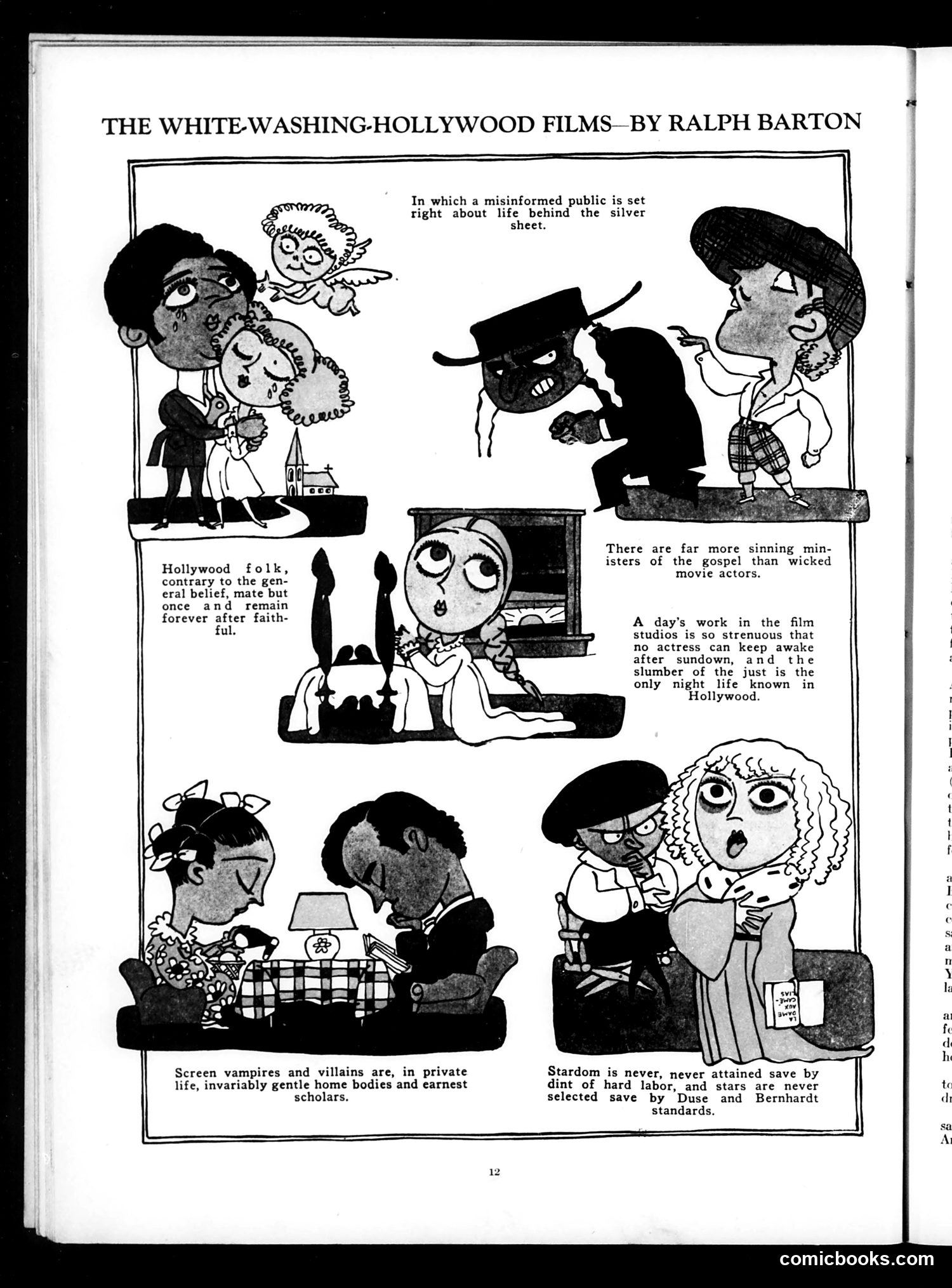
Ralph Barton's cartoon satirizes Hollywood's public relations efforts to rehabilitate the industry's scandalous reputation. During the 1920s, Hollywood faced moral criticism over actors' personal lives—divorces, affairs, and alleged decadence. The studio system responded with "whitewashing" propaganda. Barton's title announces his ironic purpose: he'll reveal the *truth* behind Hollywood's sanitized image. Each panel presents absurd counter-claims: that actors are monogamous, that film work exhausts actresses into virtue, that villainous actors are actually gentle scholars, and that stardom requires legitimate talent (referencing Eleonora Duse and Sarah Bernhardt, respected stage actresses). The caricatured figures represent generic Hollywood types rather than specific people. The satire mocks both the industry's laughable damage-control narratives and the "misinformed public" gullible enough to believe them—suggesting the public knows Hollywood is morally questionable despite official denials.
📄 Transcribed text from this page (OCR, searchable)
Machine-transcribed from the original scan — historical spelling and the odd misread are preserved.
THE WHITE-WASHING-HOLLYWOOD FILMS—BY RALPH BARTON In which a misinformed public is set right about life behind the silver sheet. There are far more sinning min- isters of the gospel than wicked movie actors. Hollywood folk, contrary to the gen- eral belief, mate but once and remain forever after faith- A day’s work in the film studios is so strenuous that no actress can keep awake after sundown, and the slumber of the just is the only night life known in Hollywood. Screen vampires and villains are, in private Stardom is never, never attained save by life, invariably gentle home bodies and earnest dint of hard labor, and stars are never scholars. selected save by Duse and Bernhardt standards. comicbooks.com