
Judge, 1923-04-28 · page 26 of 36
Judge — April 28, 1923 — page 26: what you’re looking at
What you’re looking at
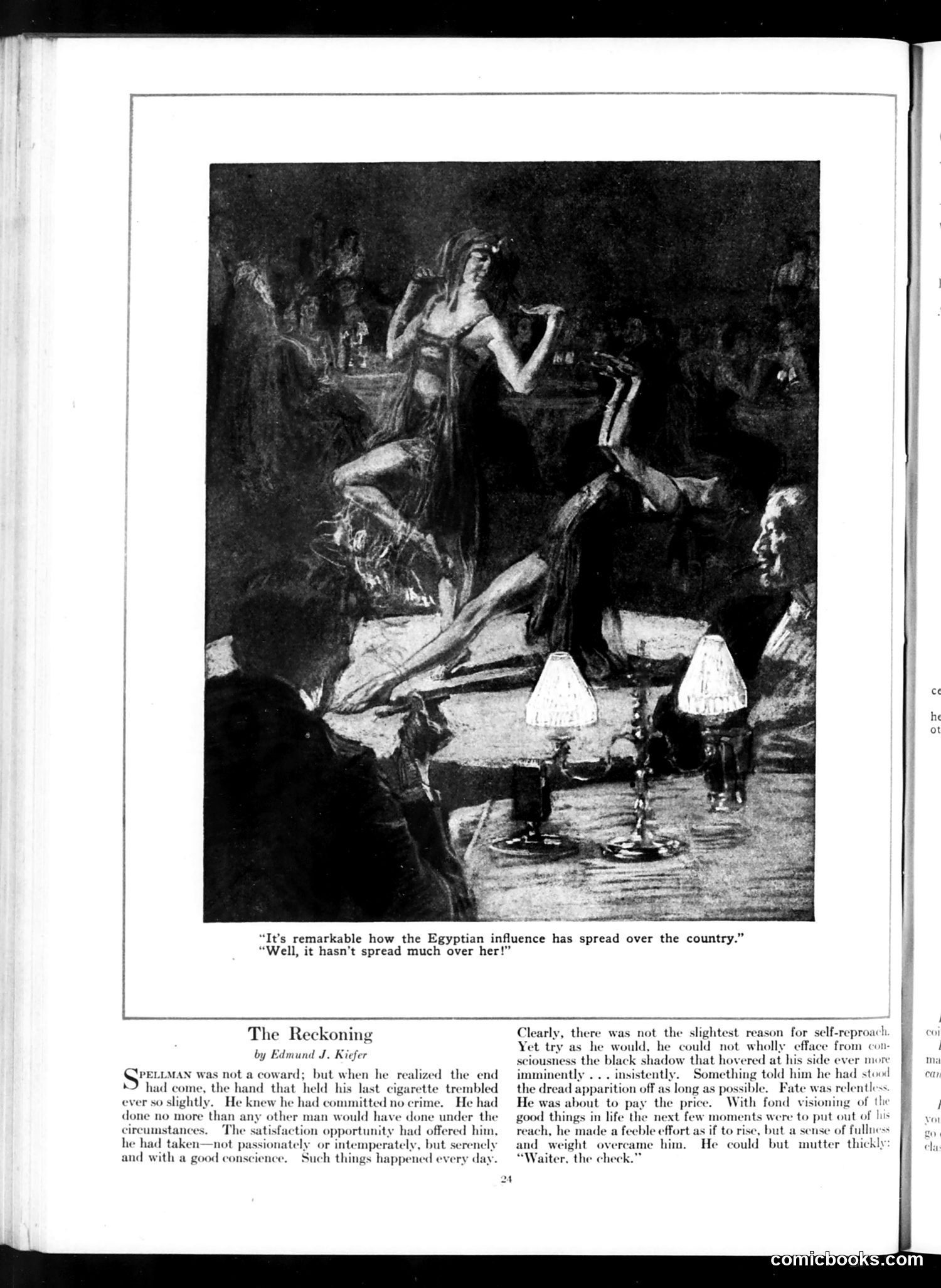
This page contains two separate pieces from Judge magazine: **Top cartoon:** A joke about "Egyptian influence" in fashion/culture. A woman in Egyptian-style dress is shown dancing or posing at what appears to be a social gathering. The humor plays on the 1920s Egyptian revival trend (likely sparked by King Tutankhamun's tomb discovery in 1922), with the punchline suggesting this particular woman hasn't adopted the fashion herself—implying she's either too old, too plain, or otherwise unsuitable for the trend. **Bottom story:** "The Reckoning" by Edmund J. Kiefer is a short fiction piece about a man named Spellman facing consequences for past actions. Despite claiming he committed no crime and acted with good conscience, he experiences mounting dread and guilt. The story ends darkly: his final words to a waiter are "the check"—suggesting either death or financial ruin arrives as his day of judgment.
📄 Transcribed text from this page (OCR, searchable)
Machine-transcribed from the original scan — historical spelling and the odd misread are preserved.
} re | ce | he ot | | | | “It’s remarkable how the Egyptian influence has spread over the country.” “Well, it hasn’t spread much over her!” es a ere : | The Reckoning Clearly, there was not the slightest reason for self-repro: coi iy Edad Rate Yet try as he would, he could not wholly efface from « | Renn eee sciousness the black shadow that hovered at his side ever 1 mia SPELLMAN was no! d; but when he realized the end imminently . . . insistently. Something told him he had st can had come, the hand that held his last cigarette trembled _ the dread apparition off as long as possible. Fate was relent ever so slightly. He knew he had committed no crime. He had He was about to pay the price. With fond visioning of done no more than any other man would have done ur the good things in life the next few moments were to put out s circumstances. The satisfaction opportunity had offered him, reach, he made a feeble effort as if to rise, but a sense of fullness he had taken—not passionately or intemperately, but serenely and weight overcame him. He could but mutter thickly and with a good conscience. Such things happened every “Waiter, the check.” 24 |