
Judge, 1922-09-02 · page 6 of 36
Judge — September 2, 1922 — page 6: what you’re looking at
What you’re looking at
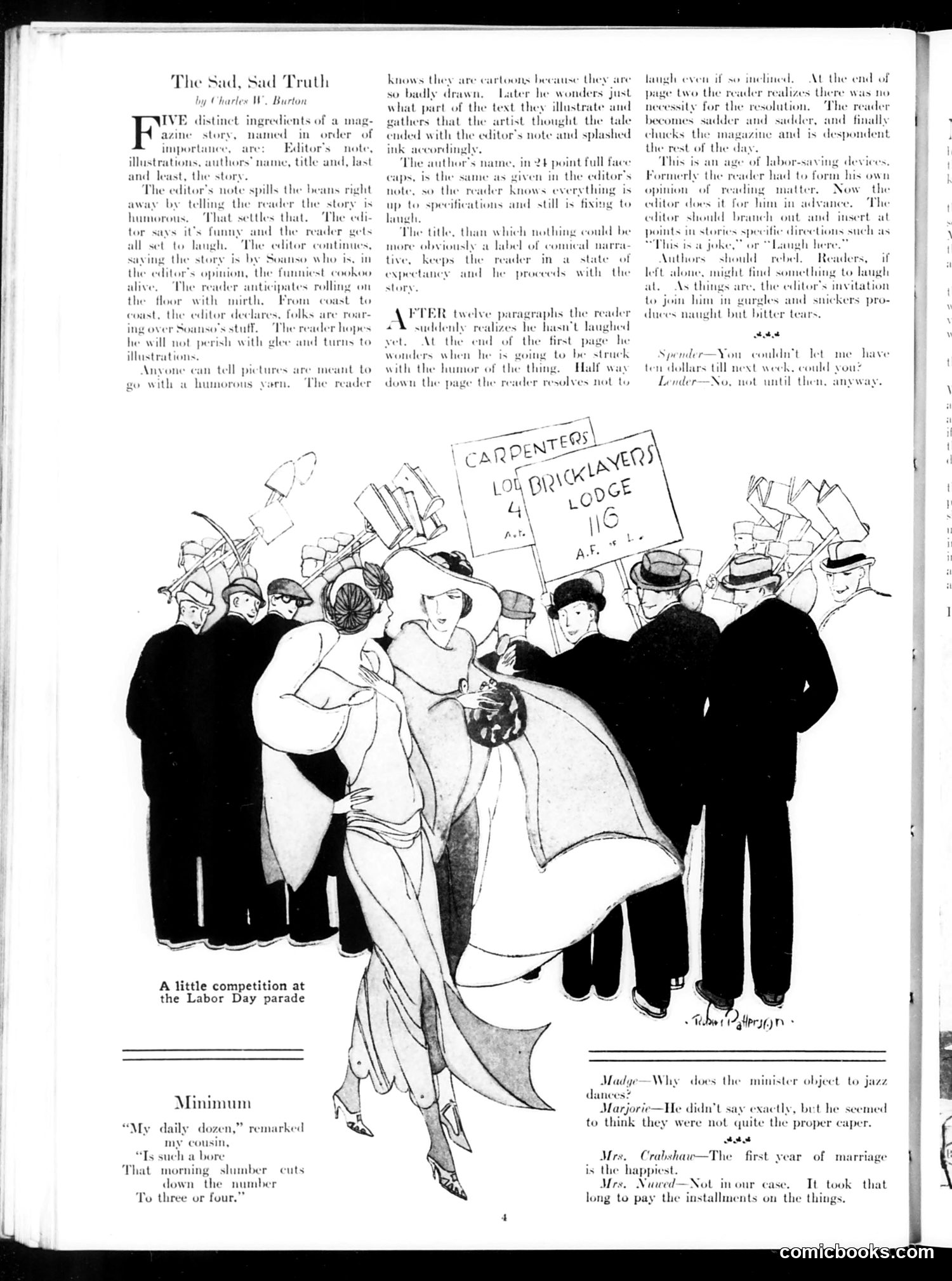
This cartoon satirizes labor union organizing efforts, likely from the early 20th century. The central female figure represents Lady Liberty or America being pulled in competing directions by various labor groups holding signs for different unions and organizations ("Carpenters," "Los Bricklayers Lodge," etc.). The satire suggests that excessive labor union competition and infighting—rather than unified action—creates chaos and actually weakens the labor movement's ability to effectively advocate for workers. The groups are literally tugging at the nation's ideals, portrayed as comical and counterproductive rather than noble. The cartoon critiques fragmentation within organized labor as destructive to their collective goals.
📄 Transcribed text from this page (OCR, searchable)
Machine-transcribed from the original scan — historical spelling and the odd misread are preserved.
The s ‘ W. Burt IVE distinct ingredients of a mag- azine story, named in ore of Importance, are Editor's note, ink accordingly. illustrations, authors’ name, tit and least, the story. Phe editor's note spills the beans right : away by telling the reader the story is up to specifieat humorous. ‘That settles that. tor says it's funny and the r all set to laugh. The editor saying the story is by Soanse: the editor's opinion, the funni alive. The reader anticipates ve with mirth, From coast, the editor declares, folk over Soanso’s stuff. The re ing he will not perish with glee and turns te illustrations ‘ can tell pictures are go with a humorous yarn, d, Sad Truth knows they are cartoon laugh even if so inclined. At the end of two the reader realizes there was no ty for the resolution. The rea nd sadder, and finally azine and is despondent so badly drawn. Later he wonders just pi what part of the text they illustrate and gathers that the artist thought the tale becomes sadde chucks the me ended with the editor's note and splashed ty. of Tabor- terly the reader had to form his own jon of reading matter, Now the devices le and, last 1 in 2b point full face en in the editor's ler knows everything is ns and still is fixing to editor does it for him in advance. ‘The Hd branch ont and insert at uthor’s the san the r The edi wader 4 Phe tithe, than which nothing could be cific directions such as contint more obviously a label of comical narra 1 here.” who tive, keeps the reader in’ a state of r Readers, jest expectaney and he pr with the I . ht find somethi o ha vr’s invitation rolling on story. to join him in g and snickers pro- graphs the reader duees naught but bitter tears. suddenly realizes he hasn't la 1 At the end of the first) page he ving to be struck © thin Half way te «reader resolves not tu coast to Sure roy ader hoy ttt wnder—You couldn't let me have ollars till next week, could you? nder—No, wot until then, anyway. wonders when he meant to with the hu Phe reader down the eer A little competition at the Labor Day parade Minimum “My daily dozen,” remarked my cousin, “Ts such a bore That morning slumber cuts down the number To three or four.” Hers) . Madye—Why does the minister object. to jazz dances? Marjorie—Ue did't say exactly, but he seemed to think they were not quite the proper caper. ate Mrs. Crabshaw—The first year of marriage ) is the happiest. \ Mrs. Nuwed—Not inour case. Tt took that long to pay the installments on the things.