
Judge, 1922-07-08 · page 26 of 36
Judge — July 8, 1922 — page 26: what you’re looking at
What you’re looking at
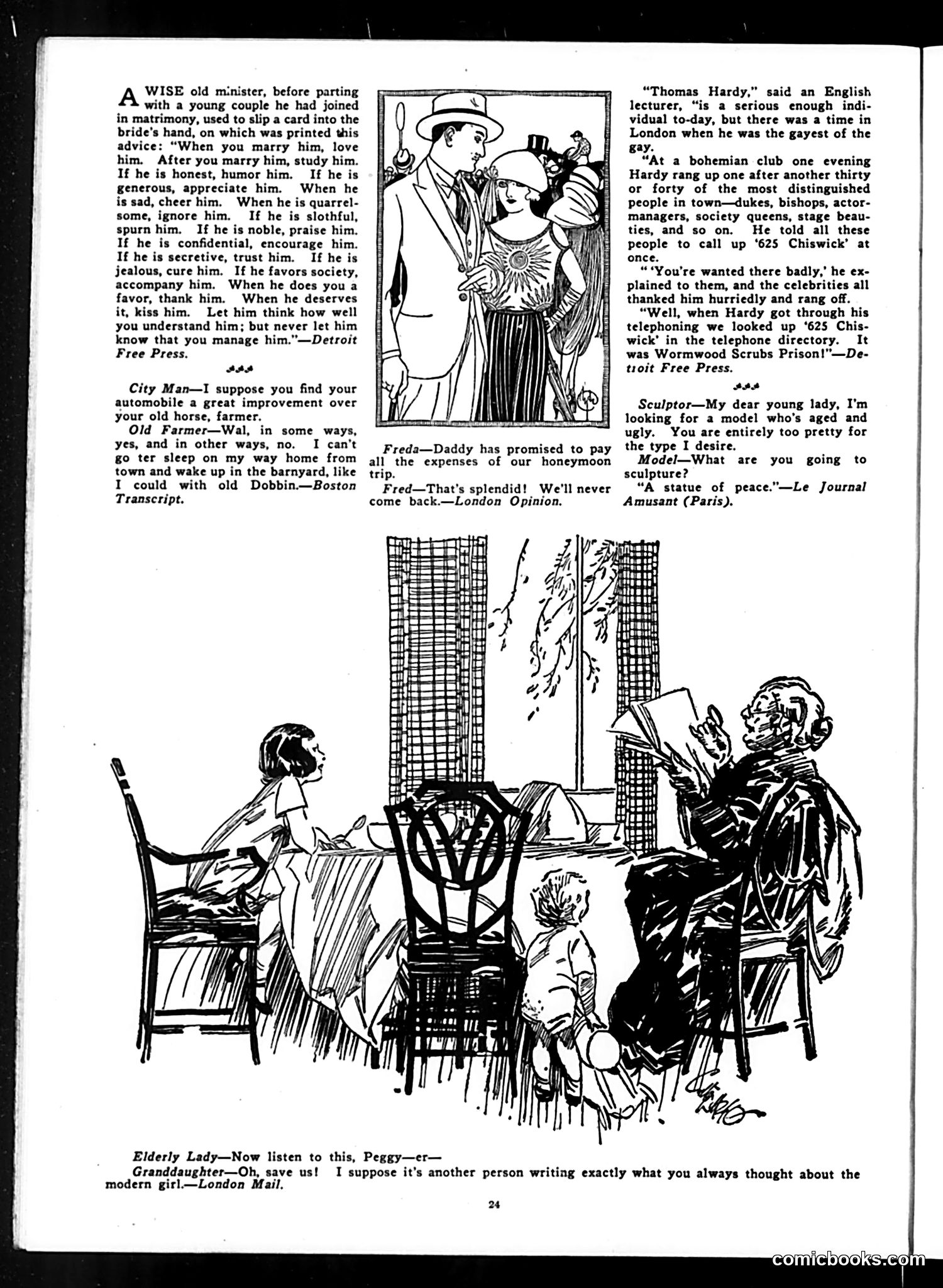
This page from *Judge* contains multiple short humorous pieces typical of early 20th-century American satirical magazines: **The Minister's Marriage Advice** presents traditional gender dynamics—a bride is counseled to subtly "manage" her husband while letting him believe he's in control, reflecting period anxieties about marriage and women's influence. **Three Short Jokes** follow: a farmer prefers horses to automobiles (poking fun at rural resistance to modernity); a couple planning a honeymoon funded by the bride's father, joking they won't return; and a sculptor seeking an ugly model for a "peace" statue (ironic commentary on artistic values or war's ugliness). **The Thomas Hardy Anecdote** mocks the famous writer by claiming he once orchestrated a prank calling forty distinguished people to a prison phone number—satirizing both Hardy's reputation and pretentious society figures. **The Bottom Cartoon** shows an elderly woman reading to a granddaughter, commenting that the letter describes exactly what the modern girl thinks—suggesting generational anxiety about women's changing attitudes and independence. The overall tone reflects early 20th-century concerns about modernity, gender roles, and social propriety.
📄 Transcribed text from this page (OCR, searchable)
Machine-transcribed from the original scan — historical spelling and the odd misread are preserved.
A WISE old minister, before parting with a young couple he had joined in matrimony, used to slip a card into the bride's hand, on which was printed this advice: “When you marry him, love him. After you marry him, study him. If he is honest, humor him. If he is generous, appreciate him. When he is sad, cheer him. When he is quarrel- some, ignore him, If he is slothful, spurn him. If he is noble, praise him. If he is confidential, encourage him. If he is secretive, trust him. If he is jealous, cure him. If he favors society, accompany him. When he does you a favor, thank him. When he deserves it, kiss him. Let him think how well you understand him; but never let him know that you manage him.”—Detroit Free Press. Sas City Man—I suppose you find your automobile a great improvement over your old horse, farmer. Old Farmer—Wal, in some ways, yes, and in other ways, no. I can’t go ter sleep on my way home from town and wake up in the barnyard, like I could with old Dobbin.—Boston Transcript. Freda—Daddy has promised to pay all the expenses of our honeymoon trip. Fred—That's splendid! We'll never come back.—London Opinion. TH Elderly Lady—Now listen to this, Peggy—er— Granddaughter—Oh, save us! modern girl.—London Mail. 24 “Thomas Hardy,” said an English lecturer, “is a serious enough indi- vidual to-day, but there was a time in London when he was the gayest of the gay. “At a bohemian club one evening Hardy rang up one after another thirty or forty of the most distinguished people in town—dukes, bishops, actor- managers, society queens, stage beau- ties, and so on. He told all these people to call up ‘625 Chiswick’ at once. “*You'’re wanted there badly,’ he ex- plained to them, and the celebrities all thanked him hurriedly and rang off. “Well, when Hardy got through his telephoning we looked up ‘625 Chis- wick’ in the telephone directory. It was Wormwood Scrubs Prison!"—De- troit Free Press. Sas Sculptor—My dear young lady, I'm looking for a model who's aged and ugly. You are entirely too pretty for the type I desire. Model—What sculpture? “A statue of peace."—Le Journal Amusant (Paris). are you going to I suppose it’s another person writing exactly what you always thought about the