
Judge, 1922-01-07 · page 11 of 36
Judge — January 7, 1922 — page 11: what you’re looking at
What you’re looking at
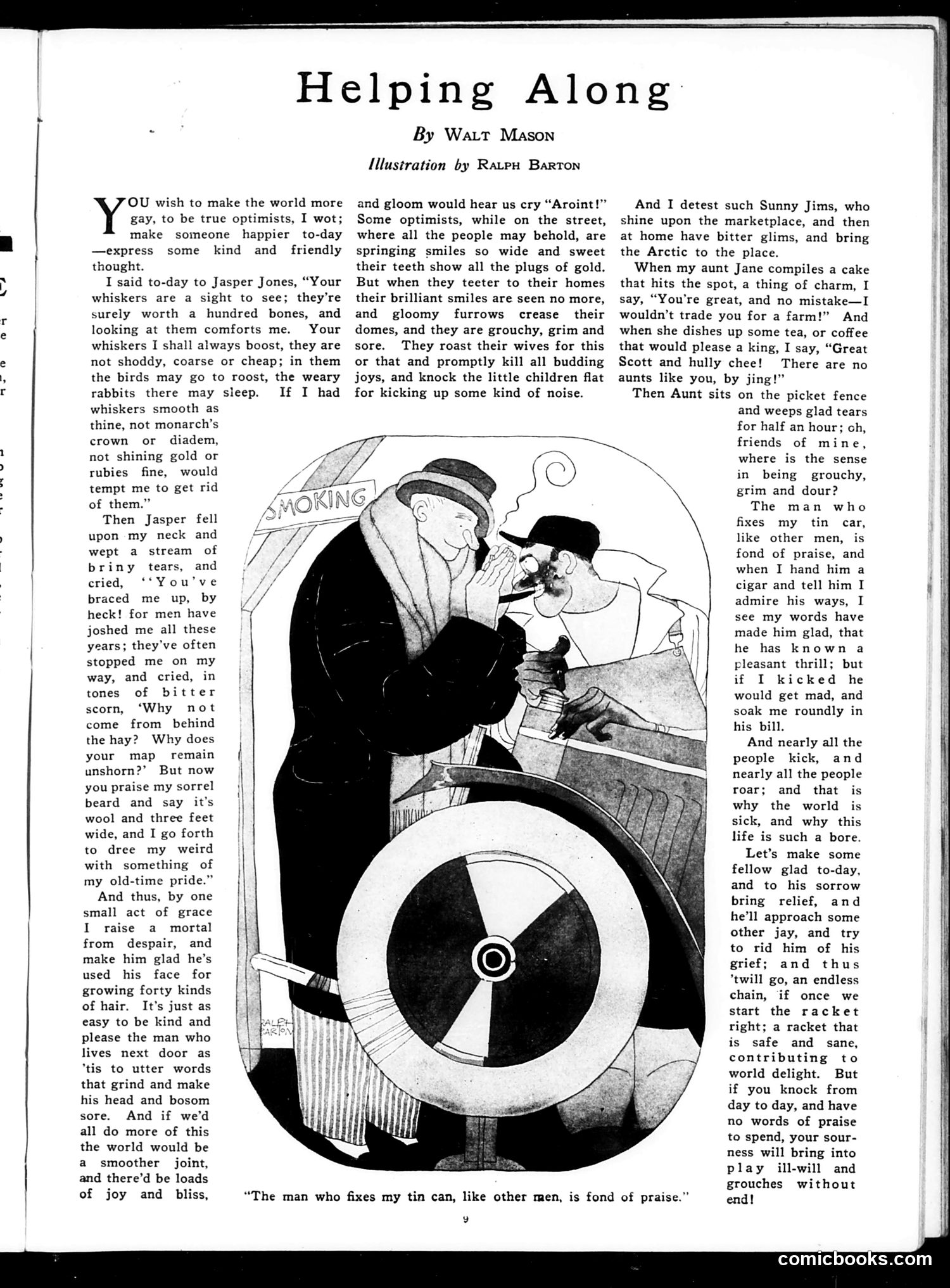
This is a moralizing poem about kindness and its ripple effects, illustrated by Ralph Barton. The narrative depicts the author complimenting Jasper Jones on his unkempt beard and whiskers—something others mock him for. Jones emotionally responds, having been habitually ridiculed. Mason uses this as a springboard for social criticism: he contrasts "Sunny Jims" who display cheerfulness in public but are "grouchy, grim and sore" at home, mistreating their families. The illustration shows a man working on a tin car—another example of someone who responds well to genuine praise and appreciation. The message is straightforward moral instruction for early-20th-century readers: small acts of sincere kindness create positive social chains, while habitual criticism and grouchiness perpetuate unhappiness. This reflects progressive-era optimism about human improvement through behavioral change and positive social influence.
📄 Transcribed text from this page (OCR, searchable)
Machine-transcribed from the original scan — historical spelling and the odd misread are preserved.
Helping Along ) 7 OU wish to make the world more gay, to be true optimists, I wot; make someone happier to-day —express some kind and friendly thought. I said to-day to Jasper Jones, “Your whiskers are a sight to see; they’re surely worth a hundred bones, and looking at them comforts me. Your whiskers I shall always boost, they are not shoddy, coarse or cheap; in them the birds may go to roost, the weary rabbits there may sleep. If I had whiskers smooth as thine, not monarch’s crown or diadem, not shining gold or rubies fine, would tempt me to get rid of them.” Then Jasper fell upon my neck and wept a stream of briny tears, and cried, ‘‘You’ve braced me up, by heck! for men have joshed me all these years; they've often stopped me on my way, and cried, in tones of bitter scorn, ‘Why not come from behind the hay? Why does your map remain unshorn?’ But now you praise my sorrel beard and say it's wool and three feet wide, and I go forth to dree my weird with something of my old-time pride.” And thus, by one small act of grace I raise a mortal from despair, and make him glad he’s used his face for growing forty kinds of hair. It's just as easy to be kind and please the man who lives next door as ‘tis to utter words that grind and make his head and bosom sore. And if we'd all do more of this the world would be a smoother joint, and there’d be loads of joy and bliss, By Watt Mason Illustration by Raupu Barton and gloom would hear us cry “Aroint!” Some optimists, while on the street, where all the people may behold, are springing smiles so wide and sweet their teeth show all the plugs of gold. But when they teeter to their homes their brilliant smiles are seen no more, and gloomy furrows crease their domes, and they are grouchy, grim and sore. They roast their wives for this or that and promptly kill all budding joys, and knock the little children flat for kicking up some kind of noise. y And I detest such Sunny Jims, who shine upon the marketplace, and then at home have bitter glims, and bring the Arctic to the place. When my aunt Jane compiles a cake that hits the spot, a thing of charm, I say, “You're great, and no mistake—I wouldn’t trade you for a farm!” And when she dishes up some tea, or coffee that would please a king, I say, “Great Scott and hully chee! There are no aunts like you, by jing!” Then Aunt sits on the picket fence and weeps glad tears for half an hour; ch, friends of mine, where is the sense in being grouchy, grim and dour? The man who fixes my tin car, like other men, is fond of praise, and when I hand him a cigar and tell him I admire his ways, I see my words have made him glad, that he has known a pleasant thrill; but if I kicked he would get mad, and soak me roundly in his bill. And nearly all the people kick, and nearly all the people roar; and that is why the world is sick, and why this life is such a bore. Let’s make some fellow glad to-day, and to his sorrow bring relief, and he’ll approach some other jay, and try to rid him of his grief; and thus *twill go, an endless chain, if once we start the racket right; a racket that is safe and sane, contributing to world delight. But if you knock from day to day, and have no words of praise to spend, your sour- ness will bring into play ill-will and grouches without “The man who fixes my tin can, like other men, is fond of praise.” end! comicbooks.com