
Judge, 1921-03-05 · page 11 of 32
Judge — March 5, 1921 — page 11: what you’re looking at
What you’re looking at
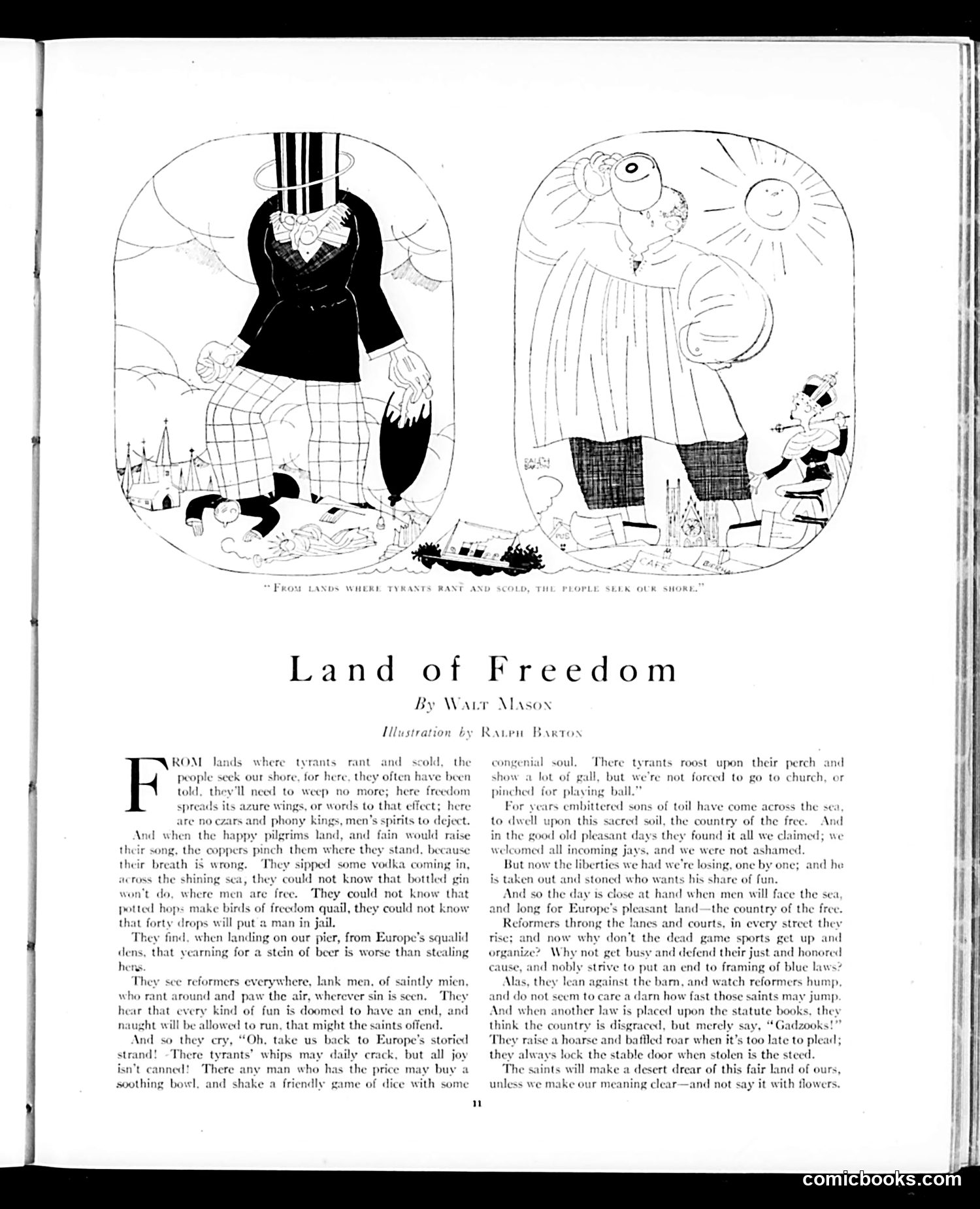
This satirical poem, illustrated by Ralph Barton, critiques American reformers and Prohibition-era restrictions through the perspective of European immigrants. **The satire:** Immigrants arrive expecting American freedom but find it's being systematically eliminated by "reformers"—temperance advocates and moral crusaders who criminalize drinking, gambling, and entertainment. The cartoon contrasts two figures: left shows an immigrant arriving with hopes; right depicts disillusionment. **The joke:** America promises liberty while actually imposing stricter moral controls than European tyrannies. Ironically, immigrants can legally buy alcohol in Europe but face jail time in "free" America for the same behavior. **Political context:** This attacks Prohibition advocates and the broader Progressive Era reform movement that Mason saw as tyrannical busybodies. The poem's final plea urges citizens to actively oppose these "saints" before America becomes a "desert drear"—expressing anti-Prohibition sentiment common in Judge's pages during this period.
📄 Transcribed text from this page (OCR, searchable)
Machine-transcribed from the original scan — historical spelling and the odd misread are preserved.
a Land of Freedom By War Masox IMlustration by ROM Jands ld, the people seek our shore, for here, they often have been told, they'll need to weep no more; here freedom zure wings, or words to that effect; here men’s spirits to deject. re tyrants rant ands spreads its are no czars and phony kir And when the happy pilgrims land, and fain would raise , the coppers pinch them where they stand, because their breath ig wrong. They sipped some vodka coming in ross the shining sea, they could not know that bottled gin won't do, where men are free. They could not know that potted hops make birds of freedom quail, they could not know that forty drops will put a man in jail. They find, when landing on our pier, from Europe's squalid s. that yearning for a stein of beer is worse than stealing hens. They sce reformers everywhere, lank men, of saintly mien, sund and paw the air, wherever sin is seen. They d who rant r that every kind of fun is doomed to have an end, g ght will be allowed to run, that might the saints offend. And so they ery, “Oh, take us back to Europe's storied strand! There tyrants’ whips may daily crack, but all joy isn’t canned! There any man who has the price may buy a soothing bowl, and shake a friendly game of dice with some Raen Bartox congenial soul. ‘There tyrants roost upon their perch and re not forced to go to church, or show a lot gall, but w pinched for playing ball.’ For years embittered toil have come across the to dwell upon this sacred soil, the country of the free. in the good old pleasant days they found it all we claimed; | incoming jays, and we were not ashame by o welcomed But now the liberties we had we're losing, s is taken out and stoned who wants his share of fun. And so the day is close at hand when men will face the sea for Europe’s pleasant land—the country of the free. Reformers throng the lanes and courts, in every street they rise; and now why don’t the dead game sports get up 4 organize? Why not get busy and defend their just and hono' cau ind nobly strive to put an end to framing of blue Alas, they lean against the bam, and watch reformers hump. and do not seem to care a darn how fast those saints may jump. And when another law is placed upon the statute books, they think the country is disgraced, but merely say, “Gadzooks!” ‘They raise a hoarse and baffled roar when it’s too late to plead; they alwa »ck the stable door when stolen is the steed The saints will make a desert drear of this fair land ¢ unless we make our meaning clear—and not say it with flowers. 5 and he and lor ours,