
Judge, 1921-01-15 · page 9 of 32
Judge — January 15, 1921 — page 9: what you’re looking at
What you’re looking at
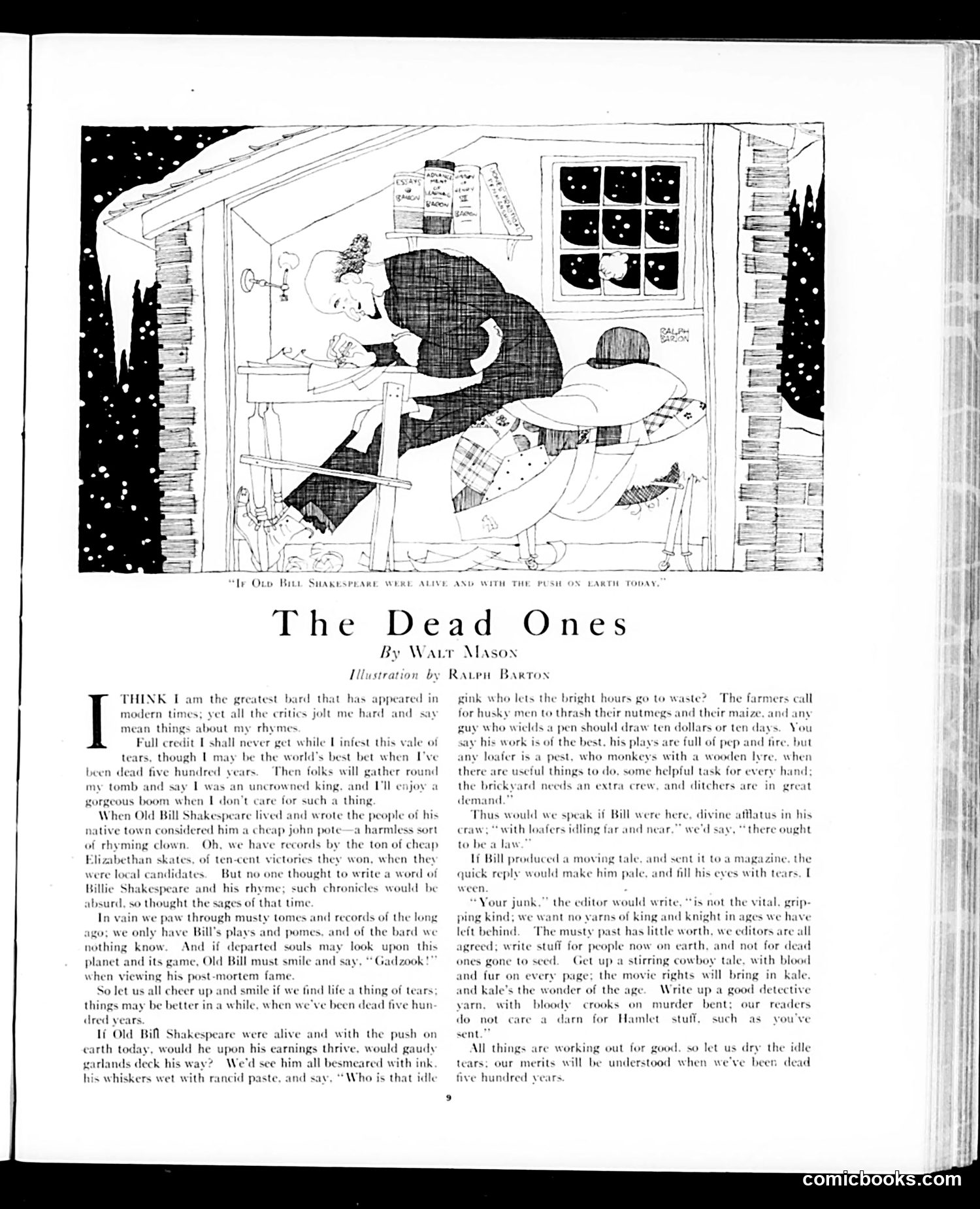
This piece satirizes the paradox of artistic merit and commercial success. Mason argues that great writers like Shakespeare were unappreciated during their lifetimes—dismissed as cheap entertainers by contemporaries—yet gain recognition only after death. The illustration depicts a modern editor rejecting a manuscript, embodying Mason's critique: contemporary publishers demand profitable "cowboy tales" and "detective yarns" with commercial appeal, dismissing serious literary work as worthless "Hamlet stuff." The contrast between Shakespeare's eventual canonization and current editorial indifference suggests that today's rejected artists may become tomorrow's classics. Mason's point: society systematically devalues serious art in favor of commercial entertainment, leaving true merit recognized only posthumously. The satire targets both the literary establishment's short-sightedness and the tension between artistic integrity and market demands—issues that remain relevant today.
📄 Transcribed text from this page (OCR, searchable)
Machine-transcribed from the original scan — historical spelling and the odd misread are preserved.
The De By War / THINK I am the greatest bard that has appeared in modern times; yet all the critics jolt me hard and say ustration by mean things about my rhymes. Full credit I shall never get while [infest this vale of tears, though | may be the world’s best bet when I've been dead five hundred vears. Then folks will gather re my tomb and say I was an uncrowned king. and Ul enjoy a gorgeous boom when I don’t care for such a thing When Old Bill Shakespeare lived and wrote the people of his native town considered him a cheap john pote—a harmless sort of rhyming clown. Oh, we have records by the ton of cheap Elizabethan skates, of ten-cent victories they won, when they ates. But no one thought to write a word of were local candi Billie Shakespeare absurd, so thought the sages of that time In vain we paw through musty tomes and records of the long ago; we only have Bill’s plays and pomes, and of the bard we nothing know. And if departed souls may look upon. this planet and its game, Old Bill must smile and say, “ Gadzo nd his rhyme; such chronicles would be when wing his post-mortem fame So let us all cheer up and smile if we find life a thing of tears things may be better in a while, when we've been dead five hun dred years. If Old Bil Shakespeare were alive and with the push on carth today, would he upon his earnings thrive, would gaudy garlands deck his way? We'd see him all besmeared with ink his whiskers wet with rancid paste, and say, “Who is that idle pb Bite SHAKESPEARE WERE ALIVE i) Ma es dala Ly || AND WITH THE PUSH ON EARTH TODAY ad Ones vt Mason Raren Barros 2 The f. rs call and their maize, and any aste gink who lets the bright hours go to for husky men to thrash their nutmeg guy who wields a pen should draw ten dollars or ten days. You work is of the best. his plays are full of pep and fire, but say’ hi any loafer is a pest, who monkeys with a wooden lyre. when there are useful things to do, some helpful task for every h the brickyard needs an extra crew, and ditehers are ing demand.” Thus would we speak if Bill were here, divine afflatus in his craw; “with loafers idling far and near.” we'd say, “there ought to be a law If Bill produced a moving tale, and sent it toa magazine. the ld make him pale, and fill his eves with tears. I quick reply w ween “Your junk.” the editor would write, “is not the vital, grip- ping kind; we want no yarns of king and knight in : left behind. ‘The musty past has little worth, we editors are all swe have agreed; write stuff for people now on earth, and not for dead a ones gone to seed. Get up a stirring cowboy tale. with bl and fur on every page; the movie rights will bring in kale and kale’s the wonder of the age. Write up a good detective yarn, with bloody crooks on murder bent; our readers do not care a darn for Hamlet stuff, such as you've sent.” MI things are working tears: our merits will be understood when we've been dead out for good, so let us dry the idle five hundred years. comicbooks.com