
Judge, 1921-01-15 · page 11 of 32
Judge — January 15, 1921 — page 11: what you’re looking at
What you’re looking at
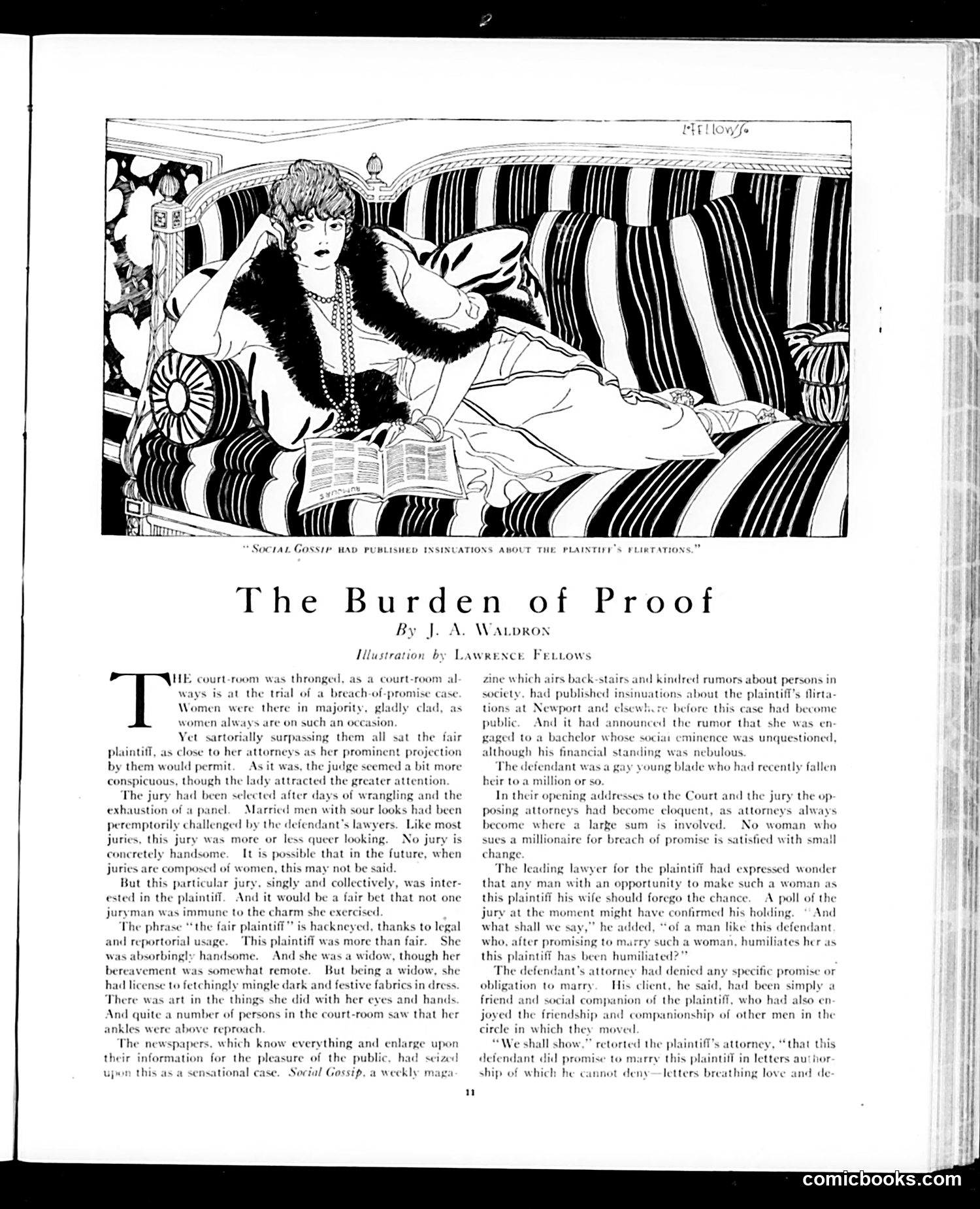
This story satirizes the sensationalism surrounding **breach of promise** litigation—lawsuits common in the early 20th century where women sued men for failing to marry them after alleged promises. The satire targets: 1. **The "fair plaintiff"**: A widow (above reproach socially, dressed fashionably) suing a wealthy "gay young blade" for breaking an engagement promise, seeking financial damages. 2. **Social hypocrisy**: The magazine *Social Gossip* had published rumors about her flirtations at Newport, yet she now presents herself as wronged. The irony is that gossip columns—which thrive on such scandalous talk—helped publicize the very "insinuations" she claims damage her. 3. **Jury manipulation**: The illustration shows her strategically positioned to charm jurors. The text notes jurors are obviously susceptible to her appeal, undermining the legal process. 4. **The absurd burden of proof**: Attorneys grandstand about love letters and broken promises to a millionaire, reducing marriage to a commercial transaction. The satire mocks how such cases became public spectacles driven by newspapers and jury emotion rather than legal merit.
📄 Transcribed text from this page (OCR, searchable)
Machine-transcribed from the original scan — historical spelling and the odd misread are preserved.
SOCIAL GOSSIP HAD PUBLISHED INSINUATIONS ABOUT THE PLAINTIFE’S FLIRTATIONS.” The Burden of Proof By J. A. Watprox Ulustration by Lawrence Fettows HE court-room was thronged, as a court-room al ways is at the trial of a breach-of-promise case Women were there in majority, women alway’ are on such an occasion Yet sartorially surpassing them all sat the fair »rojection clad, as plaintiff, as close to her attorneys as her prominen' by them would permit. As it was, the judge seemed a bit more conspicuous, though the lady attracted the greater attention The jury had been selected after days of wrangling and the exhaustion of a panel. Married men with sour looks had been peremptorily challenged by the defendant's lawyers. Like most juries, this jury was more or less queer looking. No jury is ne. It is possible that in the future, when juries are composed of women, this may not be said But this particular jury. singly and collectively, was inter- ested in the plaintiff. And it would be a fair bet that not one juryman was immune to the charm she exercised The phrase “the fair plaintiff’ is hackneyed, thanks to legal This plaintiff was more than fair. She And she was a widow, though her widow, she concretely hand: and reportorial usage was absorbingly handso' bereavement was somewhat remote. But bein; had license to fetchingly mingle dark and festive fabrics in dress. There was art in the things she did with her eves and hands And quite a number of persons in the court-room saw that her ankles were above reproach The newspapers, which know everything and en their information for the pleasure of the public, had seized 1 sensational case. Social Gossip, a weekly r rge upon upon this zine which airs back-stairs and kindred rumors about persons in ations about the plaintiff’s flirta bef ced the rumor that she was en- society, had published in tions at Newport and clsew! public. And it had gaged to a bachelor whose sociai eminence was unquestioned, te this case had become although his financial standing was nebulous. The defendant was a gay young blade who had recently fallen heir to a million or so. In their opening posing attorneys had become cloquent, as attorneys always become where larke sum is involved. No woman who sues a millionaire for breach of promise is satisfied with small Iresses to the Court and the jury the op change. The leading lawyer for the plaintiff had expressed wonder that any man with an opportunity to make such a woman as this plaintiff his wife should forego the chance. A poll of the jury at the r nt might have confirmed his holding And what shall we say,” he added, “of a man like this defendant to marry such a woman, humiliates her as who, after promisin this plaintiff has been humiliated?” The defendant’s attorney had denied any specific promise or obligation urry. His client, he said, had been simply a friend and social companion of the plaintiff, who had also en joyed the friendship and companionship of other men in the circle in which they moved “We shall show.” retorted the plaintiff's attorney, “that this defendant did promise to marry this plaintiff in letters author ship of which he cannot deny—letters breathing love and de comicbooks.com