
Judge, 1920-12-11 · page 9 of 32
Judge — December 11, 1920 — page 9: what you’re looking at
What you’re looking at
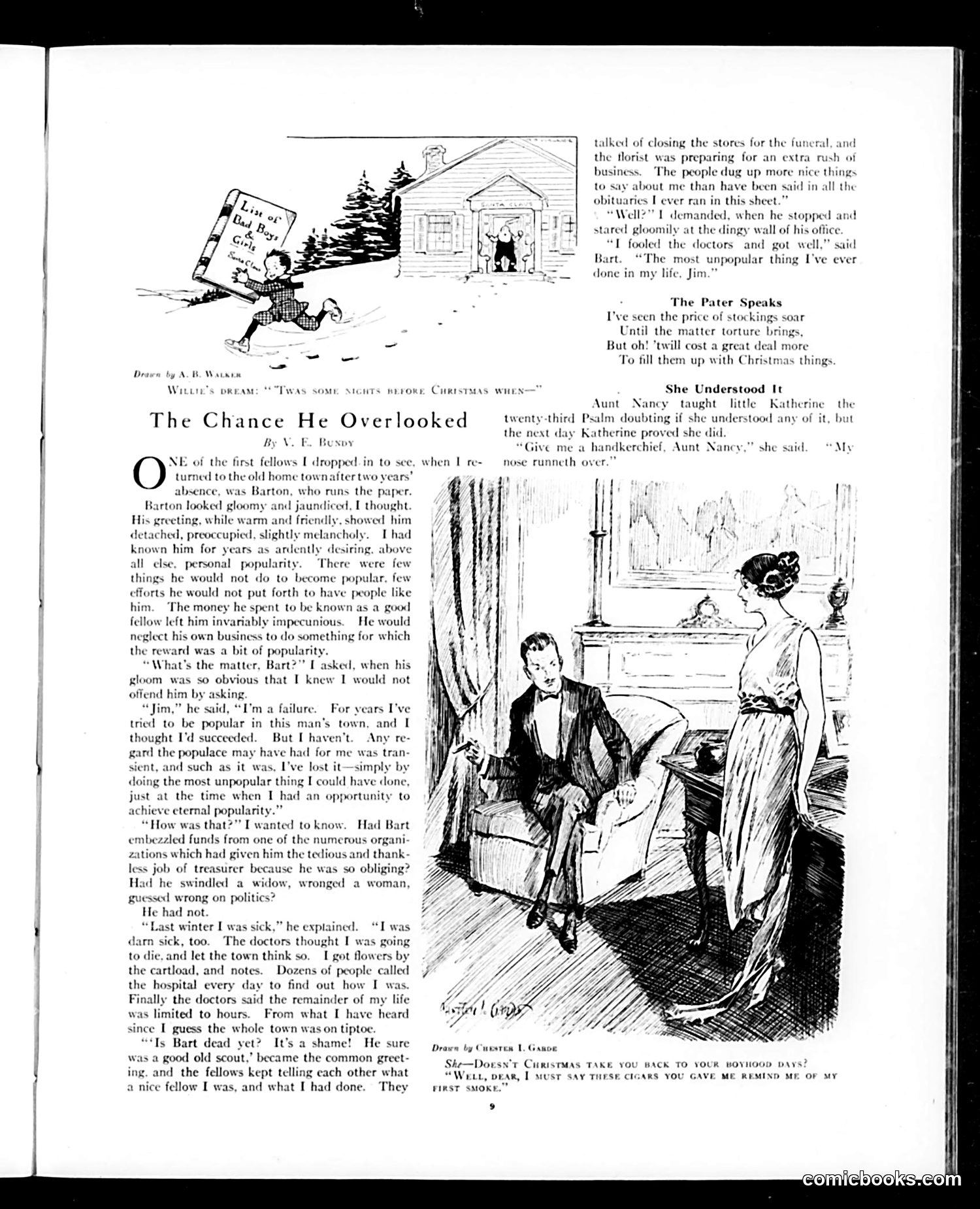
This story satirizes small-town social dynamics and the pursuit of popularity. Bart, a newspaper editor obsessed with being liked, orchestrates his own popularity by appearing to be dying—the town floods him with sympathy, flowers, and praise. However, when he recovers and lives, he becomes "unpopular" again, having squandered his chance at "eternal popularity" through the unforgivable act of *not dying*. The satire mocks both Bart's pathetic desperation for approval and the town's fickle sentimentality—people are kind only to the dying, not the living. By recovering, Bart commits "the most unpopular thing I could have done," exposing how shallow community affection truly is. The other brief items (holiday shopping costs, a child misunderstanding scripture) are light filler typical of Judge's format.
📄 Transcribed text from this page (OCR, searchable)
Machine-transcribed from the original scan — historical spelling and the odd misread are preserved.
talked of closing the stores for the funeral, and the florist was preparing for an extra rv business. The people dug up more nice things to say about me than have been said in all the obituaries I ever ran in this sheet.” “Well?” 1 demanded, when he stopped and stared mily at the dingy wall of his office. “T fooled the doctors and got well,” said Bart. “The most unpopular thing I've ever done in my life, Jim.” h h of es The Pater Speaks I've seen the price of stockings soar Until the matter torture brings, But oh! ‘twill cost a great deal more To fill them up with Christmas things Drown by AB. Wataen Wirure’s prea: "Twas sos sicuts nerone Ciristaas wires She Understood It Aunt Nancy taught little Katherine the The Chance He Overlooked twenty-third Psalm doubting if she understood any of it, but the next day Katherine proved she did By V. E. Buxvy “Give me a handkerchief, Aunt Nancy,” she said. “My NE of the first fellows [ dropped. in to sec, when I re= nose runneth over.” turned to the old home townafter two y absence, was Barton, who runs the paper. { Barton looked gloomy: and jaundiced, I thought His greeting, while warm and friendly, showed him detached, preoccupied, slightly melancholy. Thad known him for years as ardently desiring. abov all else, personal popularity. ‘There were few things he would not do to become popular, few efforts he would not put forth to have people like him. The money he spent to be known as a good fellow left him invariably impecunious. He would neglect his own business to do something for which the reward was a bit of popularity. “What's the matter, Bart?” [ asked, when his gloom was so obvious that I knew 1 would not offend by asking. “Jim,” he said, “I'm a failure tried to be popular in this man’s town, and I thought I'd succeeded. But I haven't. Any re- gard the populace may have had for me was tran- sient, and such as it was, I've lost it—simply by doing the most unpopular thing I could have done, just at the time when I had an opportunity to achieve eternal popularit “How was that?” IT wanted to know. Had Bart embezzled funds from one of the numerous organi zations which had given him the tedious and thank- less job of treasurer because he was so obliging? Had he swindled a widow, wronged a woman, guessed wrong on politics? He had not “Last winter I was sick,” he explained. “I was larn sick, too. The doctors thought I was going to die, and let the town think so. I get flowers by the cartload, and notes. Dozens of people called the hospital day to find out how I was. Finally the doctors said the remainder of my life was limited to hours. From what [ have heard since I guess the whole town was on tiptoe. “Is Bart dead yet? It’s a shame! He sure was a good old scout,’ became the common greet- rs’ or years I've Drawn by Cursten 1. Ganoe She—Doesn’t CuristMas TAKE YOU BACK TO YOUR BOYHOOD DAYS? ing. and the fellows kept telling each other what “Wert, bear, | UST SAY THESE CIGARS YOU GAVE ME REMIND sth OF sty a nice fellow I was, and what [had done. They — riest sstoxe.” 9