
Judge, 1920-11-13 · page 11 of 32
Judge — November 13, 1920 — page 11: what you’re looking at
What you’re looking at
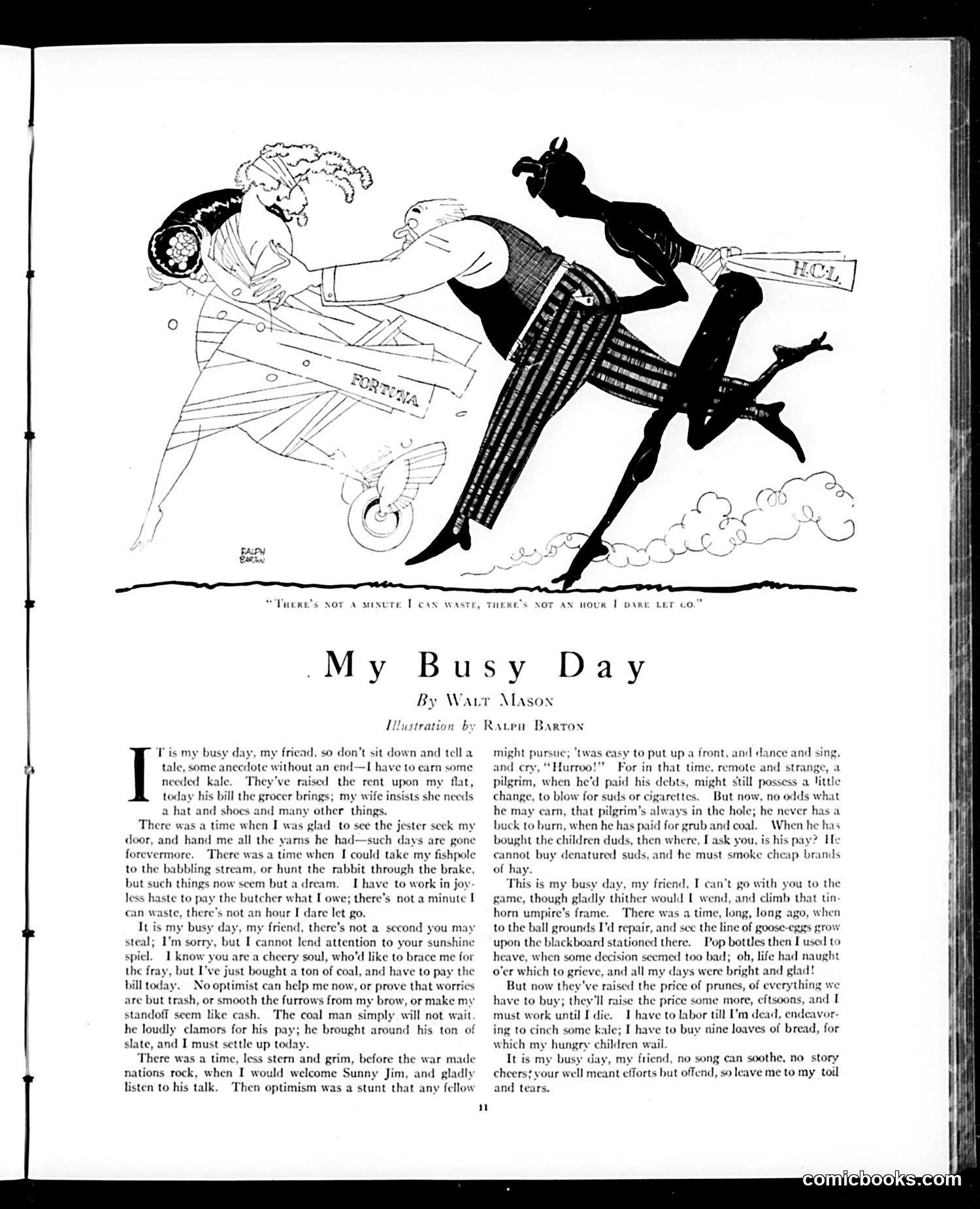
This 1910s story/cartoon illustrates post-WWI American economic anxiety. The illustration shows a man being pulled in opposite directions—one figure labeled "Fortuna" (Lady Luck) on the left, and a darker, more aggressive figure on the right holding what appears to be a bill or debt notice. The text by Walt Mason contrasts pre-war optimism with current hardship. The author laments lost leisure time and "Sunny Jim" cheerfulness, blaming wartime economic disruption. He catalogs relentless expenses: raised rent, groceries, coal bills, children's clothing, and food—all while wages remain stagnant. The satire targets both the false optimism of pre-war times and the false comfort of motivational speakers ("no optimist can help me now"). For modern readers, this captures how WWI inflation and economic strain transformed American middle-class life from one of modest leisure into grinding, endless labor with no financial relief possible.
📄 Transcribed text from this page (OCR, searchable)
Machine-transcribed from the original scan — historical spelling and the odd misread are preserved.
“Turre’s Not T caw was My Bu By Wa stration b A MINUTE y, my friead, so don’t sit down and tell a Jote without an end—I have to carn some needed kale. They've raised the rent upon my flat, today his bill the grocer brings; my wife insists she needs a hat and shoes and many other things. There was a time when I was glad to sce the jester seck my door, and hand me all the yarns he had—such days are gone forevermore. There was a time when I could take my fishpole to the babbling stream, or hunt the rabbit through the brake, but such things now scem but a dream. I have to work in joy less haste to pay the butcher what I owe; there’s not a minute I can waste, there’s not an hour I dare let go. It is my busy day, my friend, there’s not a second you may steal; I'm sorry, but I cannot lend attention to your sunshine spiel. I know you are a cheery soul, who'd like to brace me for the fray, but I've just bought a ton of coal, and have to pay the bill today. No optimist can help me now, or prove that worries are but trash, or smooth the furrows from my brow, or make my standoff seem like cash. The coal man simply will not wait he loudly clamors for his pay; he brought around his ton of slate, and I must settle up today. here was a time, less stern and grim, before the war made nations rock, when I would welcome Sunny Jim, and gladly listen to his talk. Then optimism was a stunt that any fellow T is my busy d tale, some ane » THERE'S NOT AN nour I pare Ler co.” sy Day n it \LAson Rate Barton might pursue; ‘twas casy to put up a front, and dance and sing. and cry, “Hurroo!"’ For in that time, remote and strange, pilgrim, when he'd paid his debts, might still possess a little change, to blow for suds or cigarettes. But now, no odds what he may carn, that pilgrim’s always in the hole; he never has a buck to burn, when he has paid for grub and coal. When he has bought the children duds, then where, [ ask you, is his pay? He cannot buy denatured suds, and he must smoke cheap brands of hay. This is my busy day, m: friend, I can't go with you to the game, though gladly thither would | wend, and climb that tin horn umpire’s frame. There was a time, long, long ago, when to the ball grounds I’d repair, and sce the line of goose-eggs grow upon the blackboard stationed there. Pop bottles then I used to heave, when some decision seemed too bad; oh, life had naught o'er which to grieve, and all my days were bright and glad! But now they've raised the price of prunes, of everything v have to buy; they'll raise the price some more, eftsoons, and I must work until I die. I have to labor till I’m dead, endeavor- ing to cinch some kale; I have to buy nine loaves of bread, for which my hungry children wail It is my busy my friend, no song can soothe, no story cheers? your well meant efforts but offend, so leave me to my toil and tears.